
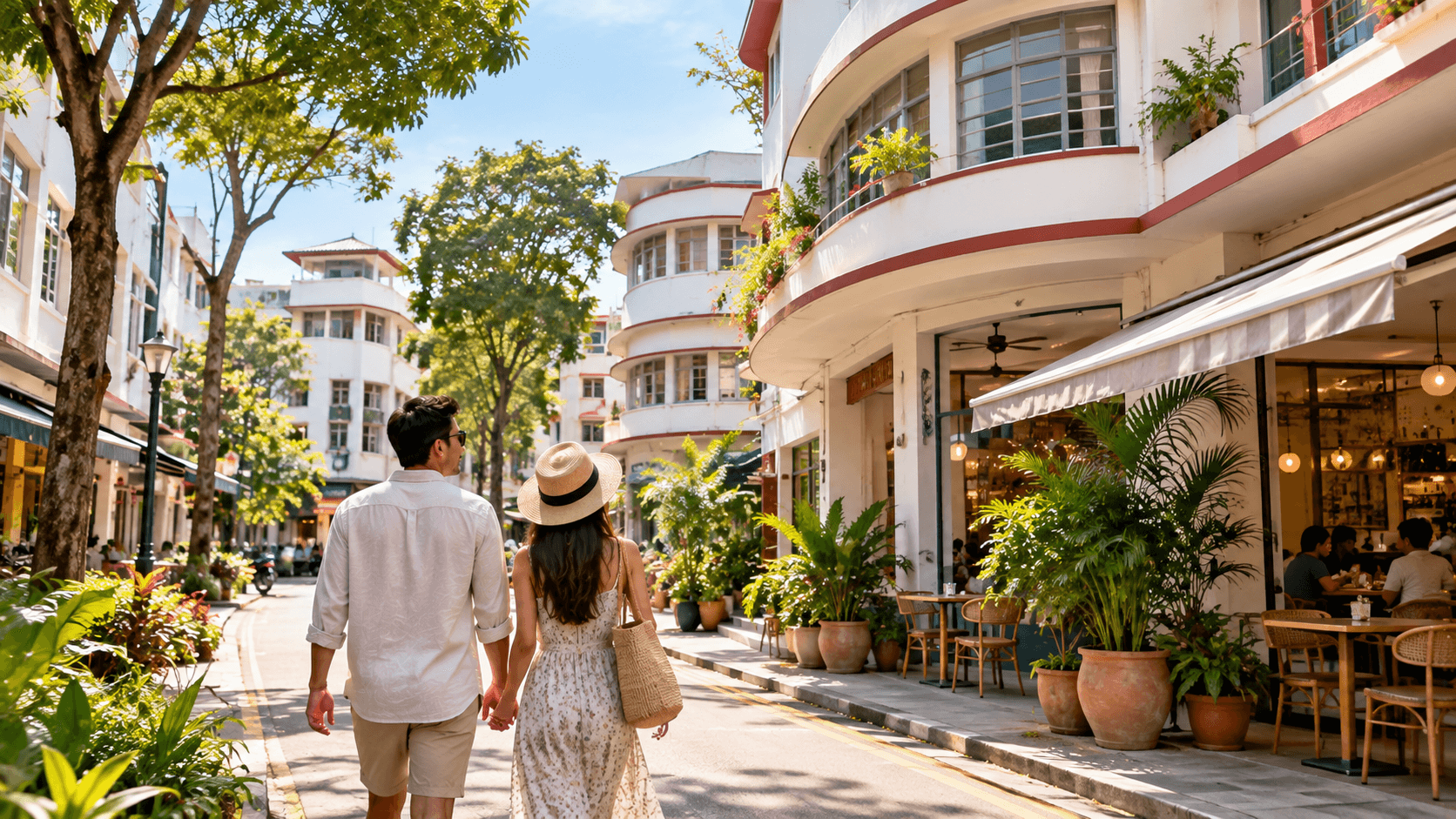
Things to Do in Tiong Bahru at a Glance
| Quick Information | Details |
|---|---|
| Location | Central Singapore |
| Known for | Art Deco architecture, heritage, hawker food, cafés and independent shops |
| Main highlights | Tiong Bahru Heritage Trail, Tiong Bahru Market, historic murals and Yong Siak Street |
| Best for | Heritage, food, architecture, cafés and relaxed neighbourhood walks |
| Recommended visit time | Half a day to a full day |
| Getting there | Tiong Bahru MRT Station, followed by a short walk |
| Getting around | Mostly on foot |
| Best time to explore | Morning for the market and heritage sights; later afternoon for cafés and shops |
Explore Tiong Bahru's Heritage and Architecture
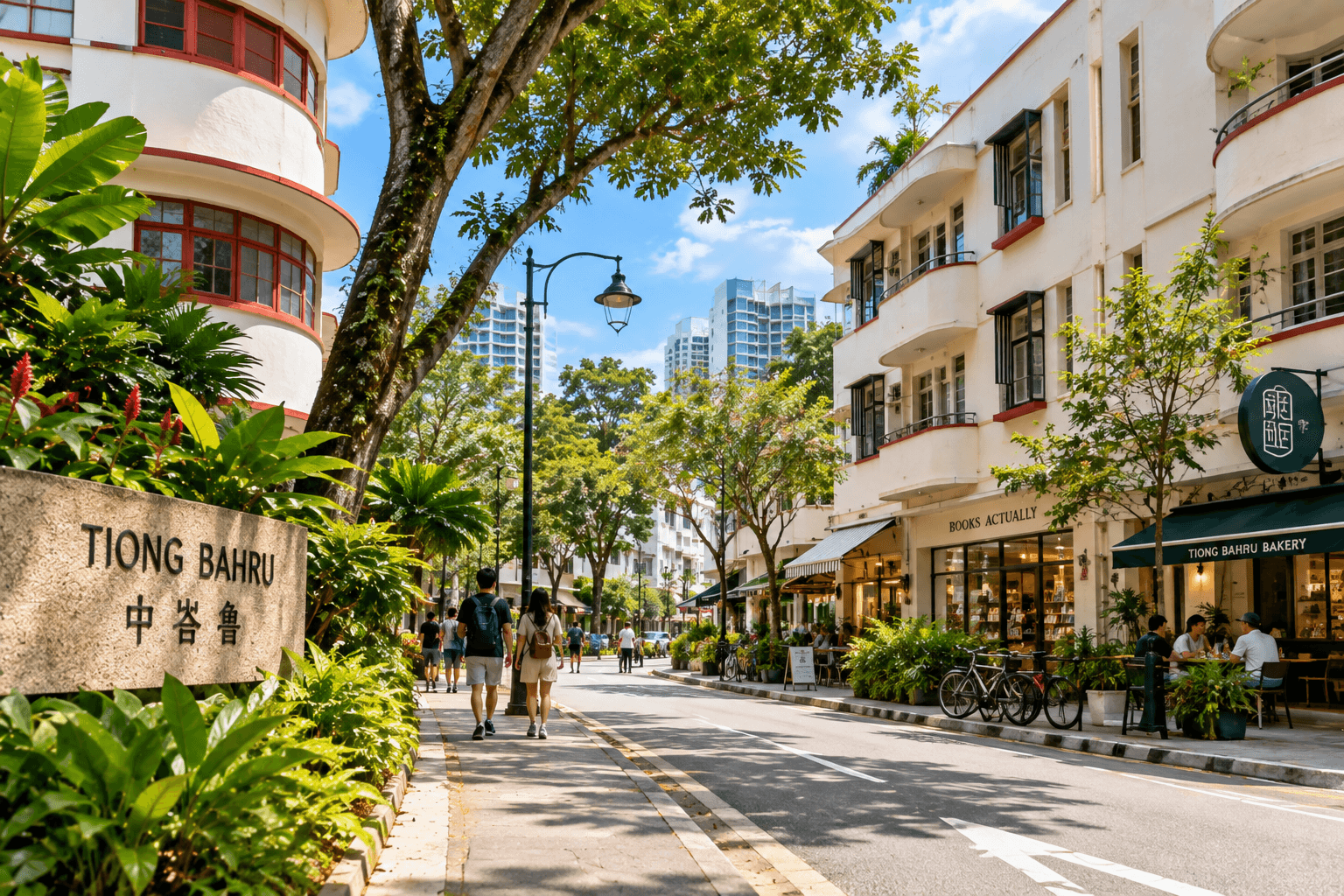
Tiong Bahru's appeal goes beyond its cafés and food scene. The neighbourhood is known for its pre-war residential blocks, distinctive architecture, historic places of worship, and public art. Its heritage trail brings many of these features together, making a walk through the area one of the best ways to understand how old and new Tiong Bahru fit together.
1. Walk the Tiong Bahru Heritage Trail
The Tiong Bahru Heritage Trail is a great starting point for exploring the neighbourhood's history. The trail connects several marked sites that highlight Tiong Bahru's development, architecture, community life, and cultural landmarks.
Along the route, you can come across:
- Historic residential blocks
- Heritage markers and information panels
- Seng Poh Garden and its Dancing Girl sculpture
- Qi Tian Gong Temple
- The Horseshoe Block
- Conserved areas of the original estate
You don't need to rush through the trail. Take your time to notice the older buildings, quiet streets, community spaces, and architectural details that are easy to miss when you're simply moving between cafés and shops.
The trail also works well as a starting point for exploring other parts of the neighbourhood, including Tiong Bahru Market, murals, cafés, and independent shops.
2. Admire Tiong Bahru's Art Deco Architecture
Architecture is one of the biggest reasons to slow down while exploring Tiong Bahru. The neighbourhood's early residential blocks have a distinctive Streamline Moderne style, with rounded corners, horizontal lines, curved balconies, and other details that give the estate its recognisable appearance.
Rather than looking for one single landmark, wander through streets such as Seng Poh Road, Moh Guan Terrace, Lim Liak Street, and Guan Chuan Street. The low-rise buildings and unusual shapes make this part of Singapore feel very different from its modern high-rise districts.
As you walk, look out for:
- Curved corners and balconies
- Long horizontal windows
- Rounded stairwells
- Geometric architectural details
- Low-rise residential blocks
You don't need a ticket or a separate attraction visit to appreciate the architecture. Simply walking through the conserved neighbourhood gives you a chance to see these details up close.
3. Visit Qi Tian Gong Temple
For a different side of Tiong Bahru heritage, stop at Qi Tian Gong Temple, also known as the Monkey God Temple. The temple is dedicated to Sun Wukong, the Monkey King from the Chinese classic Journey to the West, and has been part of the neighbourhood's religious life for generations.
The temple dates back to 1920, when it began as a small hut before moving to its current location. Its present building dates to 1938, adding another layer of history to the surrounding residential estate.
This is an active place of worship rather than a conventional tourist attraction. If you visit, keep your voice low, dress respectfully, and avoid interrupting people who are praying.
4. Discover Tiong Bahru's Historic Murals
The Tiong Bahru murals add colour to the neighbourhood while offering glimpses into its earlier community life. Several artworks around the estate depict scenes inspired by traditional trades, local characters, and everyday activities from old Tiong Bahru.
Two murals worth looking for are:
- Pasar and the Fortune Teller: a scene inspired by the neighbourhood's former market culture.
- Bird Singing Corner: artwork reflecting the traditional bird-singing culture associated with the area.
The murals don't need a separate stop on your itinerary. They are easy to include while walking between the heritage sites, residential blocks, and market area.
5. See the Iconic Horseshoe Block at Moh Guan Terrace
One of the most recognisable Tiong Bahru attractions is Block 78 at Moh Guan Terrace, better known as the Horseshoe Block because of its distinctive curved shape.
Built between 1939 and 1940, the block is notable for more than its unusual appearance. It is one of the largest blocks in the neighbourhood and stretches across Moh Guan Terrace and Guan Chuan Street. It also contains a purpose-built air-raid shelter, reflecting the area's history during the early years of public housing.
Walk around the surrounding streets to appreciate the building's curved layout and how it fits into the wider residential estate. It's particularly worthwhile if you're already following the Heritage Trail, as the Horseshoe Block is one of the neighbourhood's recognised heritage sites.
Quick tip: Wear comfortable shoes for this part of your visit. The heritage sites are spread across several streets, and walking between them lets you experience Tiong Bahru Singapore, as a neighbourhood rather than a collection of individual attractions.
Experience Tiong Bahru's Food and Market Culture
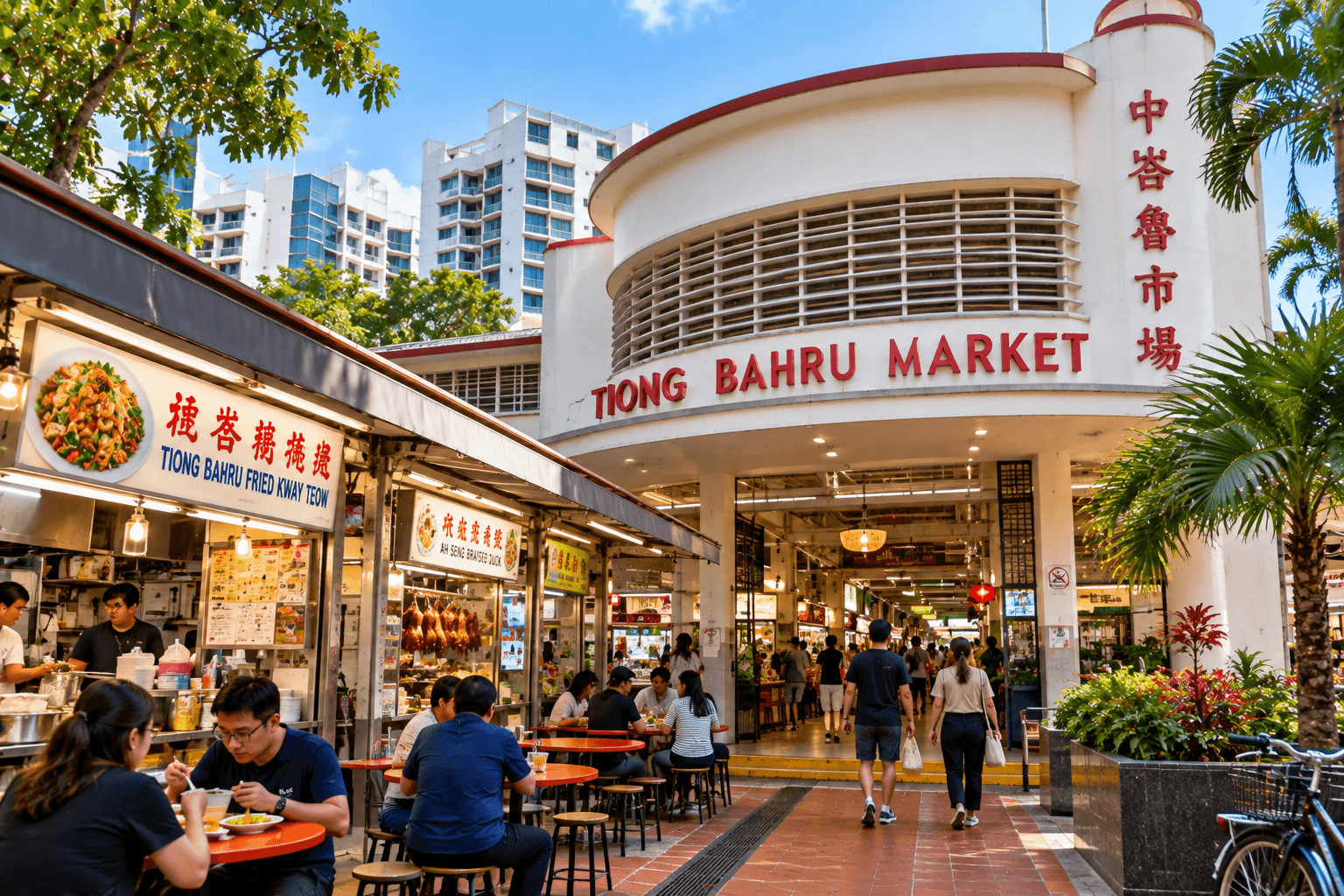
Food is one of the easiest ways to experience Tiong Bahru's local character. The neighbourhood brings together a traditional market, a busy wet market, established hawker stalls, and a newer café scene. You can start with a local breakfast, explore the market, and then move on to coffee and pastries without leaving the neighbourhood.
6. Explore Tiong Bahru Market
Tiong Bahru Market is one of the neighbourhood's central landmarks and a natural stop during a day of exploring. The market combines everyday shopping with a busy food centre, so you can see both sides of local life in one place.
Rather than heading straight to a food stall, take a few minutes to walk through the market first. The ground level is where you'll find the wet market, while the upper level is home to the hawker centre.
The market is worth visiting because it gives you a feel for the neighbourhood beyond its trendy cafés and boutiques. It is a place where residents shop, eat, and go about their daily routines.
Good reasons to include it in your itinerary:
- See a traditional Singaporean market environment
- Browse fresh produce and everyday groceries
- Explore the hawker centre upstairs
- Combine it with the nearby heritage trail and murals
- Experience one of the neighbourhood's long-standing community spaces
7. Browse the Wet Market
The wet market is the more traditional side of Tiong Bahru Market. Stalls sell fresh vegetables, fruit, seafood, meat, and other ingredients used in everyday cooking.
For most visitors, the experience is about observing local life rather than doing a full grocery shop. Go slowly through the aisles, and you'll see the practical side of the neighbourhood that can be easy to miss among its cafés and design-led shops.
A morning visit is particularly useful because:
- More stalls are typically active earlier in the day.
- You'll see residents doing their regular shopping.
- Fresh produce and seafood are displayed throughout the market.
- You can combine the visit with breakfast at the hawker centre.
Be considerate when walking through the market, especially when the aisles are busy. It is an active shopping area, not simply a sightseeing attraction.
8. Try Tiong Bahru's Famous Hawker Food
The hawker centre is where you can focus on Tiong Bahru food. Instead of trying to cover everything in one meal, look for a few local favourites and share them if you're travelling with others.
Some dishes to look for include:
- Chwee kueh: Steamed rice cakes topped with preserved radish
- Hainanese chicken rice: Tender chicken with fragrant seasoned rice
- Roast meats: Commonly served with rice or noodles
- Fish soup: A lighter meal with fish and savoury broth
- Lor mee: Noodles served in a thick, savoury gravy
- Traditional desserts: A simple way to finish a hawker meal
Tiong Bahru's food centre is particularly useful if you want to try several Singaporean dishes in one stop. You can order a small portion, walk around to see what other stalls are serving, and return for another dish rather than committing to one large meal.
For a food-focused visit, allow enough time to eat rather than treating the market as a quick photo stop.
9. Visit the Neighbourhood's Cafés and Bakeries
The café scene is one of the reasons Tiong Bahru cafes have become so closely associated with the neighbourhood. Several established names are clustered around Yong Siak Street and Eng Hoon Street, making it easy to turn your walk into a relaxed coffee-and-pastry stop.
A few current places worth knowing are:
- Tiong Bahru Bakery: At 56 Eng Hoon Street, this bakery is known for French-style pastries, including croissants and kouign-amann. Its current location information lists the Tiong Bahru branch as open daily.
- Plain Vanilla Tiong Bahru: The flagship at 1D Yong Siak Street offers its range of baked goods alongside brunch and coffee. The store also has a small selection of homeware and grocery products.
- Pralet: Located on Eng Hoon Street, this long-running neighbourhood bakery and café is another option for cakes, pastries, and café fare.
- Creamier: On Yong Siak Street, this café is a good choice if you'd rather finish your walk with handcrafted ice cream and coffee than another pastry.
You don't need to visit all of them. Pick one based on what you want from the stop: Tiong Bahru Bakery for pastries, Plain Vanilla for bakes and brunch, Pralet for cakes and desserts, or Creamier for ice cream.
The contrast between the traditional hawker centre and these newer cafés is part of what makes the neighbourhood interesting. You can have chwee kueh in the morning and finish your walk with a coffee or pastry only a few streets away.
Browse Shops, Books and Local Businesses
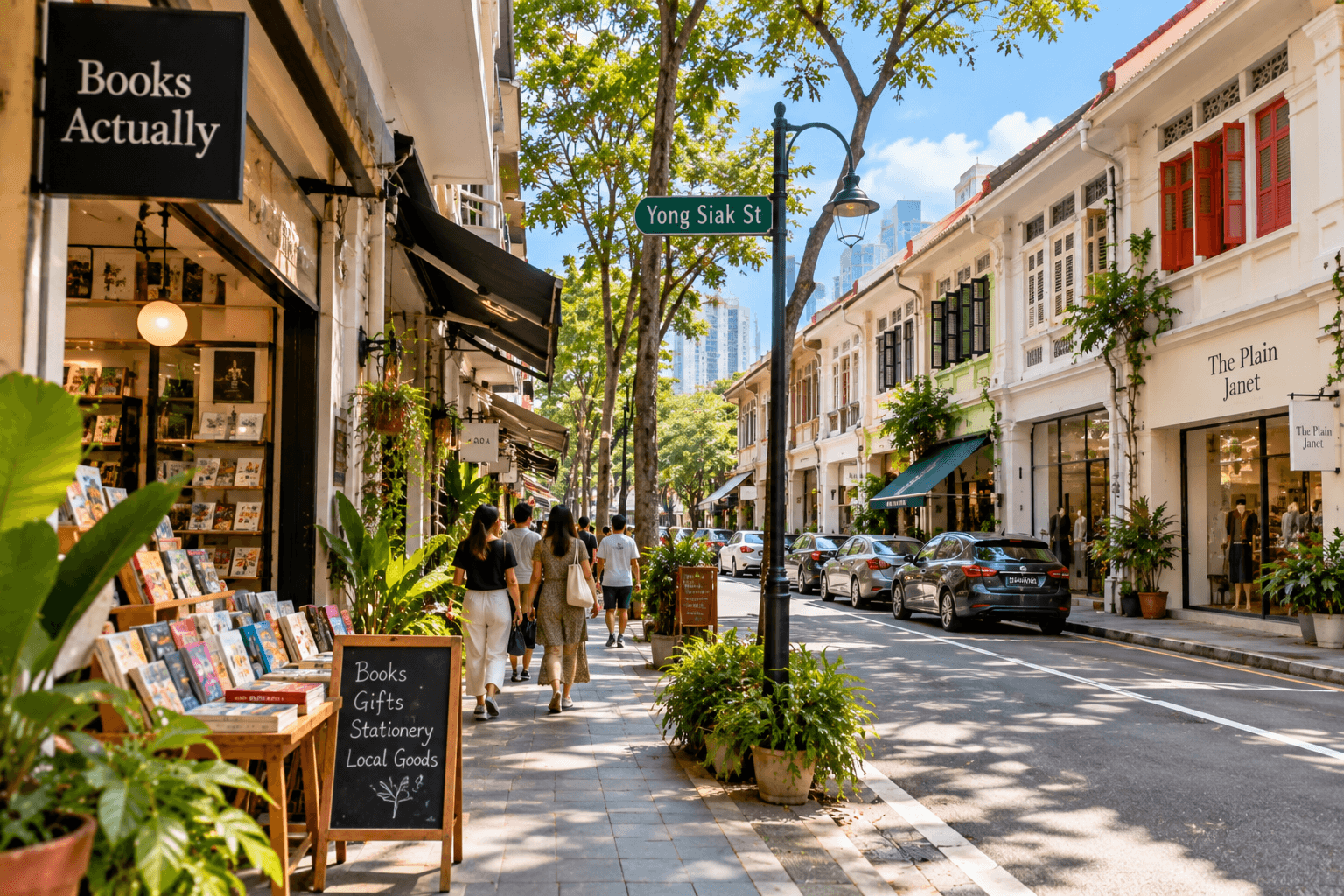
Tiong Bahru's shopping scene is smaller and more independent than Singapore's large retail districts. Instead of department stores and major chains, you'll find Tiong Bahru shops focused on books, fashion, design, gifts, stationery, and locally oriented products. The best way to experience this side of the neighbourhood is to browse slowly around Yong Siak Street and the nearby residential blocks.
10. Explore Yong Siak Street
Yong Siak Street is one of the neighbourhood's main spots for independent retail and lifestyle businesses. The short street is easy to explore on foot, and you can combine shopping with the cafés and bakeries nearby.
As you walk along the street, you'll find places such as Plain Vanilla Tiong Bahru, Cat Socrates, and Woods in the Books, alongside other small businesses. The mix changes over time, so the appeal is as much about browsing the street as it is about visiting one particular shop.
It's a good place to slow down after visiting Tiong Bahru Market. You can grab a coffee, browse a shop, and continue along the surrounding streets without needing a fixed shopping itinerary.
11. Browse Independent Boutiques and Local Shops
Beyond Yong Siak Street, Tiong Bahru has a collection of smaller businesses that make the neighbourhood interesting for slow shopping. You won't find the scale of Orchard Road here; instead, the focus is on individual shops with their own character.
A few places to look out for include:
- Cat Socrates: A gift and lifestyle shop with books, stationery, curios, and locally oriented products.
- Nana & Bird: A boutique known for women's fashion and accessories from independent regional designers.
- First Stitch x STRANGER: A clothing and creative space on Seng Poh Road.
- Cheng's @ 27: A pastry shop on Yong Siak Street if you want to combine browsing with something sweet.
The smaller scale makes Tiong Bahru Singapore, particularly suited to casual browsing. You don't need to plan a full shopping route; simply explore the streets around Yong Siak, Seng Poh, and Eng Hoon and step inside the shops that catch your attention.
12. Visit Woods in the Books
For book lovers, Woods in the Books is one of the most distinctive places to visit in Tiong Bahru. The independent bookstore specialises in illustrated books and children's literature, with a carefully selected collection that goes beyond the usual mainstream titles.
The shop first opened on Club Street before moving to Yong Siak Street in Tiong Bahru in 2013. Its focus on picture books, illustration, and children's reading gives it a different feel from a conventional bookstore.
Even if you're not travelling with children, it's worth stepping inside to browse the artwork and unusual book designs. The store also runs reading and creator programmes, making it more than simply a place to buy books.
Tip: If you're specifically looking for Tiong Bahru shops, give yourself at least an hour to explore this part of the neighbourhood rather than rushing through it. Yong Siak Street and the surrounding blocks are compact enough to explore on foot, but the small independent stores are best enjoyed at a slower pace.
Slow Down and See More of Tiong Bahru
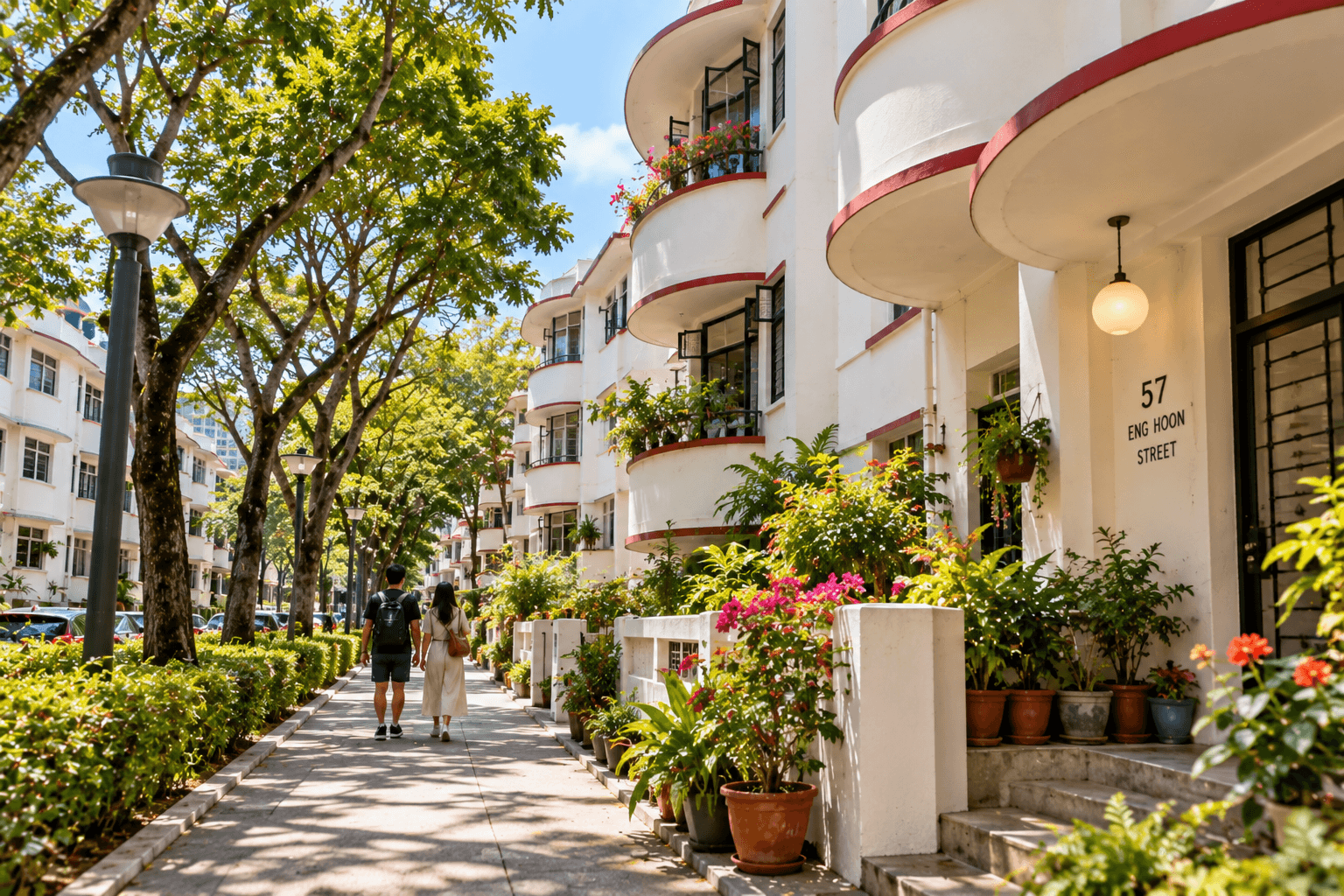
Some of the best places to visit in Tiong Bahru are not formal attractions. The neighbourhood is designed around low-rise blocks, open spaces, small streets, and pockets of greenery, so simply walking beyond the main food and shopping areas can reveal another side of Tiong Bahru.
13. Walk Through the Conserved Residential Blocks and Side Streets
Take some time to wander beyond the main attractions and explore the streets around Moh Guan Terrace, Seng Poh Road, Lim Liak Street, and Tiong Poh Road. This is where you can see Tiong Bahru's conserved residential architecture in its everyday setting rather than as a series of individual landmarks.
The neighbourhood's pre-war blocks were designed with open spaces, footpaths, and communal areas between buildings. Many of the details that make the estate distinctive become easier to notice when you're not rushing from one attraction to another.
Look out for:
- Curved building corners and balconies
- Porthole-style windows and ventilation features
- Older shopfronts beneath residential blocks
- Open grass areas and pedestrian paths
- Small courtyards and quieter residential lanes
This is also a good opportunity to see how Tiong Bahru heritage continues to exist alongside modern cafés, boutiques, and everyday residential life. Just remember that these are people's homes, so keep noise down and avoid entering private areas.
14. Relax at Tiong Bahru Park
For a change of pace, head to Tiong Bahru Park, a 3.3-hectare public park along Tiong Bahru Road and Lower Delta Road. It is around a five-minute walk from Tiong Bahru MRT station and is open 24 hours.
The park is especially useful if you're travelling with children. Its playground features a life-sized tilting train, while the park also has a therapeutic garden designed around sensory experiences.
The therapeutic garden is divided into four planting zones:
- Fragrance Zone: Fragrant flowering plants
- Biodiversity Zone: Plants that attract butterflies, dragonflies, and birds
- Edibles and Medicinal Zone: Herbs, spices, fruits, and vegetables
- Colours and Textures Zone: Plants selected for different colours and textures
You don't need to spend hours here. A short walk through the park can be a pleasant break after exploring the market, heritage buildings, and busy streets of Tiong Bahru.
Tip: If you're travelling with children or simply want some quiet time during your visit, put Tiong Bahru Park towards the end of your walking route. It gives you an easy place to slow down before continuing to your next stop.
Best Time to Visit Tiong Bahru
Tiong Bahru can be explored throughout the year, but morning is generally the most practical time to start if you want to combine the market, heritage sights, and a walking route. The timing also depends on what you want to experience, since the market, cafés, shops, and residential streets each have a slightly different rhythm.
Best Time of Day to Explore
Morning is ideal for the market and heritage sights. Start at Tiong Bahru Market, browse the wet market, and have breakfast at the hawker centre before heading out along the Heritage Trail.
Late morning and afternoon work well for the neighbourhood's cafés, bakeries, shops, and bookshops. Places around Yong Siak Street and Eng Hoon Street are better suited to a slower café-and-shopping itinerary.
For a comfortable walking experience:
- Morning: Market, wet market, heritage trail and architecture
- Late morning: Murals, temple and residential streets
- Afternoon: Cafés, bakeries, shops and Woods in the Books
- Late afternoon: Tiong Bahru Park or a relaxed final walk
Singapore's tropical weather can be hot and humid, so starting your walking route earlier also means spending less time outdoors during the strongest midday heat.
How Long to Spend in Tiong Bahru
Allow at least half a day if you want to experience the main highlights without rushing. This gives you enough time for the market, heritage sights, food, and a café or two.
A full day makes more sense if you want to explore slowly, stop for several meals, browse the independent shops, and include Tiong Bahru Park.
A simple half-day plan could look like:
- Start at Tiong Bahru Market and have breakfast.
- Explore the Heritage Trail and conserved architecture.
- Find the neighbourhood's murals and visit Qi Tian Gong Temple.
- Have a hawker lunch or stop at a café.
- Browse Yong Siak Street and Woods in the Books.
If you're mainly interested in Tiong Bahru food and cafés, you can see the main spots in a shorter visit. For the full neighbourhood experience, however, giving yourself several hours makes the walk much more enjoyable.
How to Get to Tiong Bahru
Tiong Bahru is well connected to the rest of Singapore, and the MRT is the easiest option for most visitors. Once you arrive, the main heritage, food, and shopping areas are close enough to explore on foot.
Getting to Tiong Bahru by MRT
The nearest station is Tiong Bahru MRT Station, which is on the East-West Line. From the station, you can walk towards Tiong Bahru Market and the conserved neighbourhood.
If you're coming from central Singapore, the MRT is particularly convenient because you can avoid dealing with traffic and parking. Once you leave the station, signs and maps around the area can help you orient yourself before starting your walk.
A simple route is:
- Take the East-West Line to Tiong Bahru MRT Station.
- Exit the station and walk towards Tiong Bahru Market.
- Start your food or heritage exploration from there.
- Continue towards the conserved residential blocks, Yong Siak Street, and nearby attractions.
Getting Around the Neighbourhood
Walking is the best way to explore most of Tiong Bahru. The neighbourhood's attractions are spread across several streets, but many are close enough to combine into one walking route.
You can comfortably connect:
Tiong Bahru Market → Heritage Trail → Murals → Horseshoe Block → Yong Siak Street → Cafés and Shops
If you're travelling with young children, carrying luggage, or visiting during particularly hot weather, taxis and ride-hailing services can be useful for covering longer distances. Otherwise, walking lets you notice the architecture, murals, small businesses, and residential streets that you would easily miss from a vehicle.
Tiong Bahru Visitor Tips
A little planning can make exploring Tiong Bahru much easier, especially if you want to combine its heritage sites, market, food, and independent shops in one visit.
- Start early: Begin at Tiong Bahru Market if you want to see the wet market and have breakfast before the neighbourhood gets busier.
- Wear comfortable shoes: The best way to explore the area is on foot, and the heritage sights are spread across several streets.
- Carry water: Singapore's weather can be hot and humid, so keep a bottle with you during longer walks.
- Carry some cash: While many businesses accept cards and digital payments, having some Singapore dollars is useful at smaller food stalls and market vendors.
- Dress comfortably: Lightweight clothing is practical for walking outdoors, but bring something modest if you plan to enter a temple.
- Respect residential areas: Tiong Bahru is a working neighbourhood, not an open-air museum. Keep noise low and avoid entering private spaces while photographing the architecture.
- Check individual opening hours: Markets, cafés, bookshops, and boutiques can operate on different schedules, so check before making a particular business the main stop on your itinerary.
- Leave time to wander: Don't plan every minute. Some of the neighbourhood's charm comes from its side streets, architecture, small shops, and unexpected food stops.
Final Thoughts
The best things to do in Tiong Bahru are not limited to one type of experience. You can follow the neighbourhood's heritage trail, admire its distinctive architecture, visit historic murals and temples, and then switch gears with a hawker meal, coffee, or some browsing around Yong Siak Street.
If you have only a few hours, prioritise Tiong Bahru Market, the Heritage Trail, the conserved residential blocks, and one of the neighbourhood's cafés or bookshops. With a full day, you can take your time with the food, shopping, murals, and Tiong Bahru Park instead of rushing between stops.
What makes Tiong Bahru particularly enjoyable is this mix of old and new. Historic housing sits alongside independent businesses, traditional food stalls, bakeries, and creative spaces, giving the neighbourhood a character that is best experienced by walking through it rather than simply checking off individual attractions.