
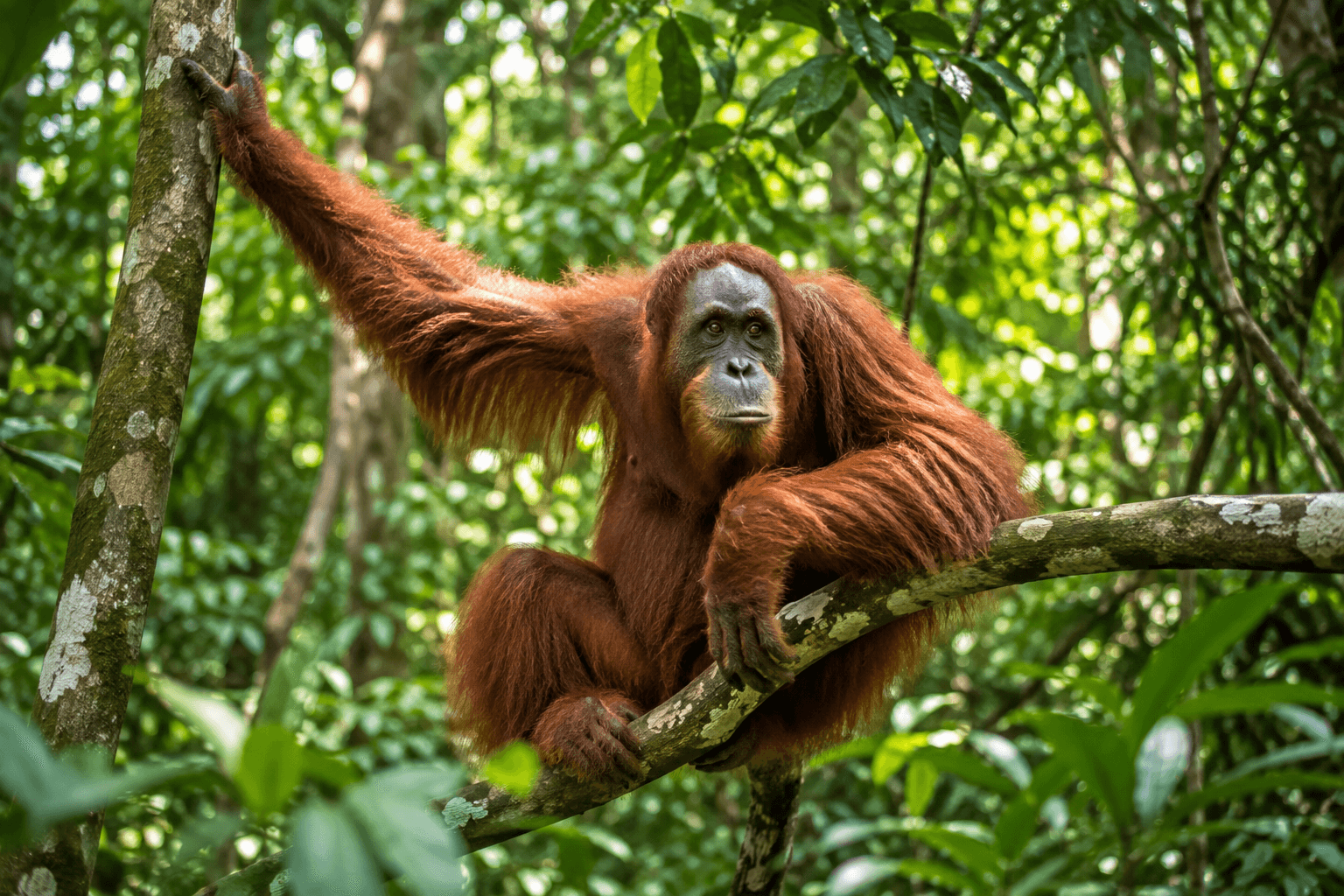
Wildlife in Malaysia offers travelers the chance to explore rainforests, rivers, mountains, and other natural habitats where animals live in the wild. From orangutans in Borneo to hornbills flying through the rainforest canopy, each region offers a different wildlife experience.
You might spot proboscis monkeys along a riverbank, hear birds calling from the trees, or see signs of wildlife while walking through a national park. Sightings are never guaranteed, but choosing the right destination and joining a guided tour can make your experience more rewarding.
In this guide, you'll discover where to see Malaysia's wildlife, which animals to look for, the best ways to explore their habitats, and how to enjoy these experiences responsibly.
Wildlife in Malaysia at a Glance
| Wildlife experience | Where to look |
|---|---|
| Orangutans | Sabah and Sarawak, especially Sepilok and Kinabatangan |
| Proboscis monkeys | Kinabatangan River and Bako National Park |
| Asian elephants | Royal Belum State Park and protected forests in Sabah |
| Malayan tigers | Protected forests and national parks in Peninsular Malaysia |
| Sun bears | Forests and wildlife conservation centres in Borneo |
| Hornbills | Rainforests across Sabah and Sarawak |
| River wildlife | Kinabatangan River and other protected wetland areas |
| Rainforest wildlife | Taman Negara, Bako, Gunung Mulu, and other national parks |
Why Malaysia Is One of Asia's Best Wildlife Destinations
Malaysia gives travelers the chance to look for wildlife across very different natural settings. You can follow rainforest trails, take river cruises, explore mangroves, or visit protected parks where animals live in their natural habitats.
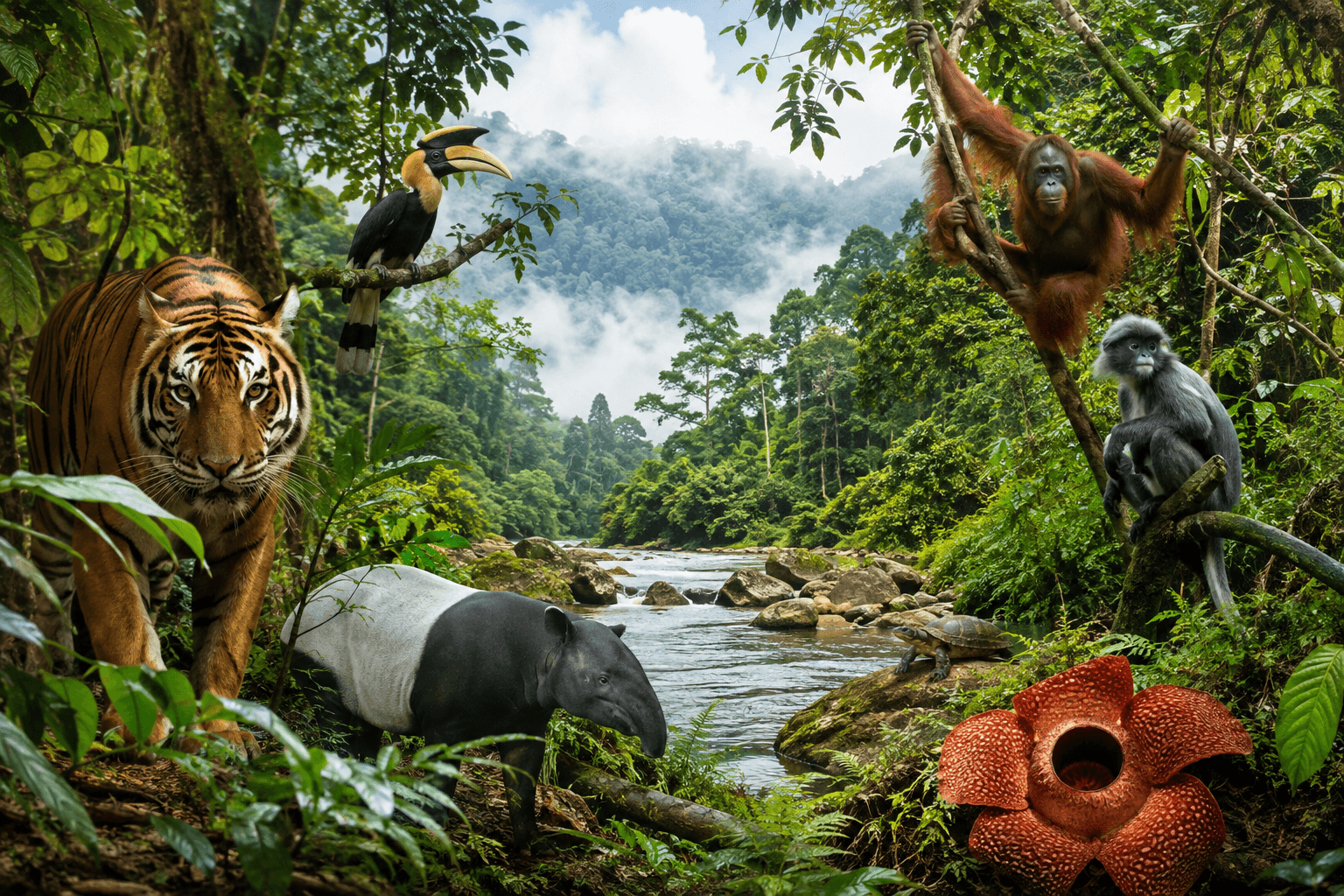
Wildlife across different habitats
The type of habitat you visit affects the animals you are most likely to encounter:
- Rainforests: Orangutans, hornbills, sun bears, monkeys, and other forest species
- Rivers: Proboscis monkeys, crocodiles, birds, and Asian elephants in some areas
- Mangroves: Monkeys, birds, reptiles, and other wetland wildlife
- Highland forests: Birds, insects, frogs, and mountain species
This variety means you can choose a destination based on the Malaysian wildlife you hope to see, rather than visiting a national park without knowing what to expect.
Why guided wildlife experiences are useful
Wildlife can be difficult to spot, even in places where animals are commonly found. A local guide can make Malaysia’s wildlife easier to experience by helping you recognize animal calls, tracks, feeding signs, and movement in the trees that you might otherwise miss.
Depending on the destination, you can:
- Join a guided jungle walk to look for animals and signs of wildlife.
- Take a river cruise to watch animals along the riverbanks.
- Join a birdwatching tour with someone who knows local species.
- Explore protected areas with guides familiar with the terrain and park rules.
The experience is less about seeing as many animals as possible and more about knowing where to look, when to go, and how to observe wildlife without disturbing it.
One important thing to remember
Wildlife sightings are never guaranteed, especially when exploring Malaysia’s wildlife in large natural habitats. Animals move freely, and sightings can vary from one day to another.
Choosing the right destination and allowing enough time for observation can improve your chances of seeing the species you're hoping to find.
Iconic Animals You Can Find in Malaysia
Malaysia's forests and rivers are home to some of Southeast Asia's most distinctive wildlife. The experience differs by species: orangutans are best associated with Sabah and Sarawak, proboscis monkeys are often seen along Borneo's rivers, while Malayan tigers are much harder to encounter in the wild.

Orangutans
Orangutans are found in the Malaysian states of Sabah and Sarawak on Borneo. They spend much of their time in the forest canopy, where they feed on fruit, leaves, bark, and other plant material.
For a better chance of seeing them, consider:
- Sepilok Orangutan Rehabilitation Centre in Sabah for rescued orangutans in a forest setting.
- Kinabatangan River for guided river and rainforest experiences where wild orangutans may be spotted.
- Protected forests in Sabah and Sarawak where orangutans still occur naturally.
Wild sightings are never guaranteed, so patience is an important part of the experience.
Malayan Tiger
The Malayan tiger is one of Malaysia's most elusive animals. It lives in the forests of Peninsular Malaysia and is rarely seen because it is solitary, wide-ranging, and naturally avoids people.
Rather than planning a trip around seeing one, travelers can learn more about wildlife in Malaysia and the species through:
- Wildlife and conservation centres
- National park visitor facilities
- Guided experiences in protected forests
- Conservation programmes
For most visitors, simply knowing that these forests provide habitat for the Malayan tiger adds another layer to a rainforest experience.
Asian Elephants
Asian elephants can be found in several parts of Malaysia, including Royal Belum State Park and protected areas of Sabah. They usually move through forests in family groups and may travel considerable distances in search of food and water.
If you're hoping to see them, guided wildlife experiences can be more useful than exploring independently. Depending on the destination, you may encounter Malaysia’s wildlife listed below:
- Elephant tracks and feeding signs
- Herds near forest edges or waterways
- Other wildlife sharing the same habitat
Wild elephant sightings are never guaranteed, so guides may focus on signs and sounds as well as direct encounters.
Sun Bears
The Malayan sun bear is the world's smallest bear species and can be identified by the distinctive golden or white chest marking found on each individual.
They are difficult to spot in the wild because they spend much of their time in forested areas and are generally shy. Visitors interested in learning more about them can look for wildlife conservation centres and protected forest habitats in Borneo.
Sun bears are particularly interesting to watch because they are excellent climbers and use their long tongues to reach honey and insects.
Proboscis Monkeys
Proboscis monkeys are native to Borneo and are strongly associated with riverine and coastal forest habitats. Their large noses, reddish-brown bodies, and loud calls make them easier to identify than many other rainforest animals.
Good places to look for them include:
- Kinabatangan River in Sabah
- Bako National Park in Sarawak
- Mangrove and riverine forests across Borneo
Early morning and late afternoon river cruises can be particularly useful for experiencing wildlife in Malaysia, as groups are often more active around these times.
Hornbills
Malaysia is home to several hornbill species, and these striking birds can be encountered in rainforest habitats across the country. Their large bills, distinctive calls, and powerful wingbeats make them especially rewarding for birdwatchers.
You may encounter hornbills while:
- Exploring rainforest trails
- Taking river cruises
- Joining dedicated birdwatching tours
- Visiting protected forest areas
Tip: Bring binoculars if birdwatching is one of your main goals. Hornbills often perch high in the canopy, where they can be difficult to see clearly from the ground.
Best Places to Experience Wildlife in Malaysia
The best wildlife destination in Malaysia depends on what you want to see and how you want to explore it. Taman Negara offers guided rainforest walks and night excursions; Royal Belum State Park combines forest and Lake Temenggor, while the Kinabatangan River is known for wildlife viewing from boats.
Sarawak also offers dedicated orangutan experiences at Semenggoh Wildlife Centre and rainforest trails at Bako National Park.
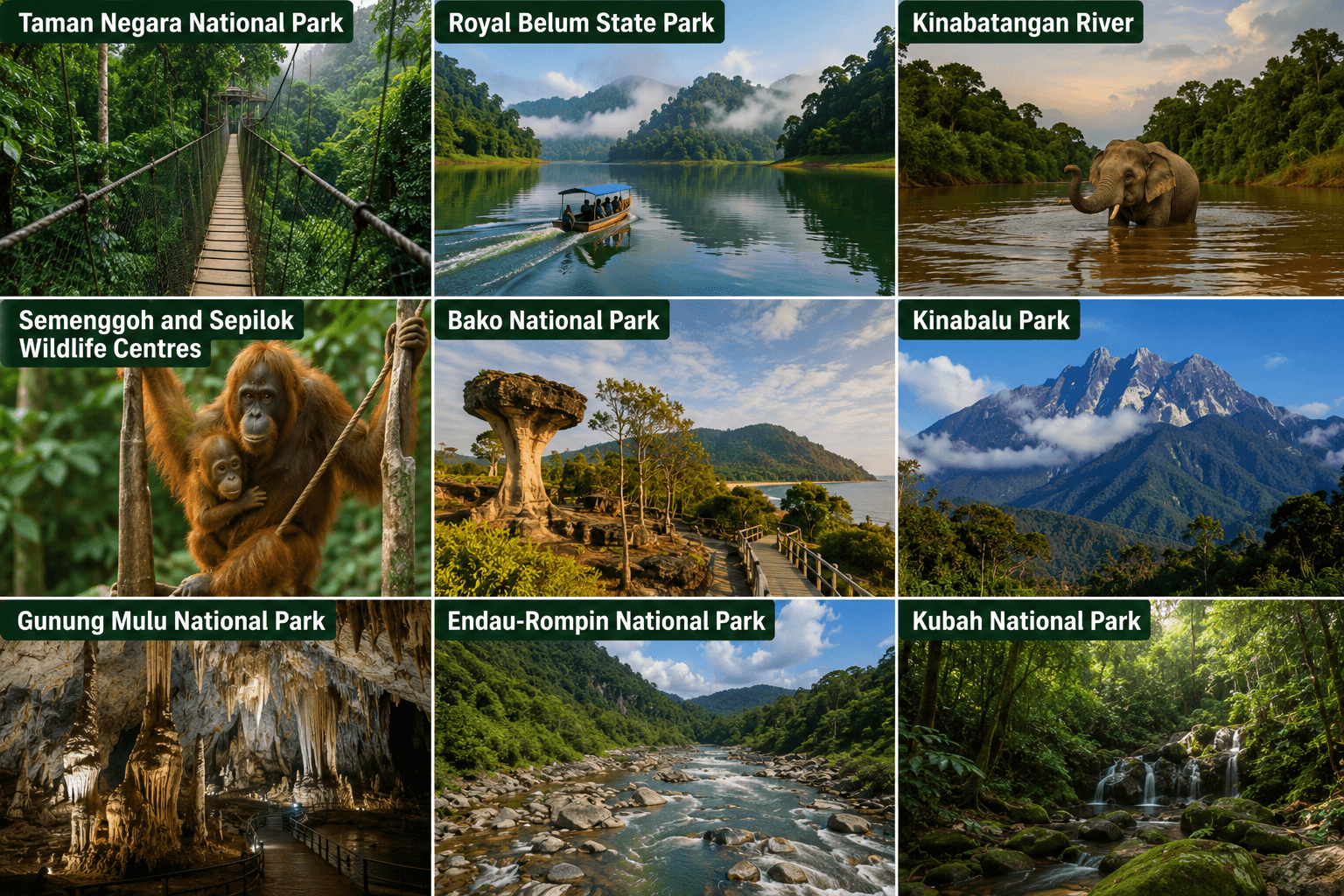
Taman Negara National Park
Taman Negara is a strong choice if you want to explore Peninsular Malaysia's rainforest through guided walks, river trips, and night excursions.
Rather than visiting for guaranteed animal sightings, the experience is about exploring the forest and learning to recognize signs of wildlife.
You may encounter:
- Long-tailed macaques
- Deer
- Hornbills
- Monitor lizards
- Forest insects and birds
A guided jungle walk can help you identify animal tracks, calls, feeding signs, and movement in the vegetation. A night tour offers a different experience, with opportunities to look for nocturnal species.
Royal Belum State Park
Royal Belum State Park offers a different type of wildlife experience, with much of the exploration taking place around Lake Temenggor and the surrounding rainforest.
Boat trips can take you deeper into the park, while guided walks provide opportunities to look for birds, mammals, and other forest wildlife.
Popular activities include:
- Boat trips across Lake Temenggor
- Guided jungle walks
- Birdwatching
- Wildlife spotting
- Exploring rainforest trails
Royal Belum is worth considering if you want to combine lake scenery, rainforest, and wildlife in one trip.
Kinabatangan River
The Kinabatangan River is one of the strongest choices for travellers who want to watch wildlife from a boat.
River cruises allow you to scan the banks and trees while moving through one of Sabah's important wildlife habitats. Depending on the area and season, you may see:
- Proboscis monkeys
- Orangutans
- Crocodiles
- Hornbills
- Bornean pygmy elephants
Morning and late-afternoon cruises are popular because animals can be more active during the cooler parts of the day. A local guide can also help you spot animals that are difficult to notice from the boat.
Semenggoh and Sepilok Wildlife Centres
If orangutans are high on your list, Sabah and Sarawak offer two well-known places to learn about and observe these animals. Sepilok Orangutan Rehabilitation Centre near Sandakan focuses on rehabilitating rescued and orphaned orangutans.
In Sarawak, Semenggoh Wildlife Centre near Kuching is known for its semi-wild orangutans, which roam the surrounding forest and may return to the centre during feeding times.
At Semenggoh, visitors can:
- Observe orangutans during scheduled feeding sessions.
- Learn about orangutan rehabilitation and conservation.
- Walk through the surrounding forest reserve.
- Look for other wildlife and birds in the area.
Semenggoh is a practical choice if orangutans are a priority, but you do not want to rely entirely on a deep-rainforest expedition to see them.
Bako National Park
Bako National Park is a good option if you want to combine hiking with wildlife watching near Kuching. Its network of trails passes through rainforest, mangroves, and coastal habitats, creating opportunities to see different types of wildlife.
Keep an eye out for:
- Proboscis monkeys
- Bearded pigs
- Silvered langurs
- Monitor lizards
- Forest and coastal birds
Because Bako contains several habitats within a relatively compact area, it works well for travellers who have limited time in Sarawak but still want a rainforest wildlife experience.
Kinabalu Park
Kinabalu Park is better suited to travellers interested in Sabah's highland ecosystems, birds, plants, and smaller wildlife rather than large-mammal sightings. Its trails and botanical areas offer opportunities to explore the biodiversity around Mount Kinabalu. You can:
- Explore the park's nature trails.
- Visit the botanical gardens.
- Look for birds and other forest species.
- Enjoy views of Mount Kinabalu and the surrounding highlands.
Its plant diversity is one of its major strengths, making it a good place to experience a different side of Malaysia’s wildlife.
Gunung Mulu National Park
Gunung Mulu National Park offers a very different wildlife experience because rainforest exploration can be combined with its extensive cave systems. The park supports bats, birds, insects, and other smaller wildlife.
During your visit, you can:
- Explore Deer Cave and Clearwater Cave.
- Walk through rainforest trails.
- Take a canopy walk.
- Watch for birds and other forest species.
Deer Cave is especially notable for its large bat population, with bats emerging from the cave around dusk.
Endau-Rompin National Park
Endau-Rompin National Park is a good option for travellers who prefer a quieter rainforest experience in Peninsular Malaysia. Its forests, rivers, and waterfalls provide a natural setting for guided exploration.
Popular activities include:
- Guided jungle trekking
- Exploring rainforest trails
- Visiting waterfalls
- Looking for birds, monkeys, and other forest wildlife
Wildlife sightings are not guaranteed, so a local guide is particularly useful for identifying animal calls, tracks, and other signs along the trails.
Kubah National Park
Located near Kuching, Kubah National Park is convenient for travellers who want a rainforest experience without travelling deep into Sarawak's interior. It is particularly known for its frogs, birds, palms, and other tropical plant life.
You can:
- Follow marked rainforest trails.
- Look for frogs and birds.
- Visit forest waterfalls.
- Photograph tropical plants and wildlife.
Kubah is also close to Matang Wildlife Centre, where visitors can learn about wildlife rehabilitation and see protected animals, including orangutans.
Meet Malaysia's Endangered Wildlife
Some of Malaysia's most distinctive wildlife faces pressure from habitat loss, hunting, and changes to natural ecosystems. This is one reason protected forests and responsible wildlife tourism are important when exploring the country's national parks and reserves.
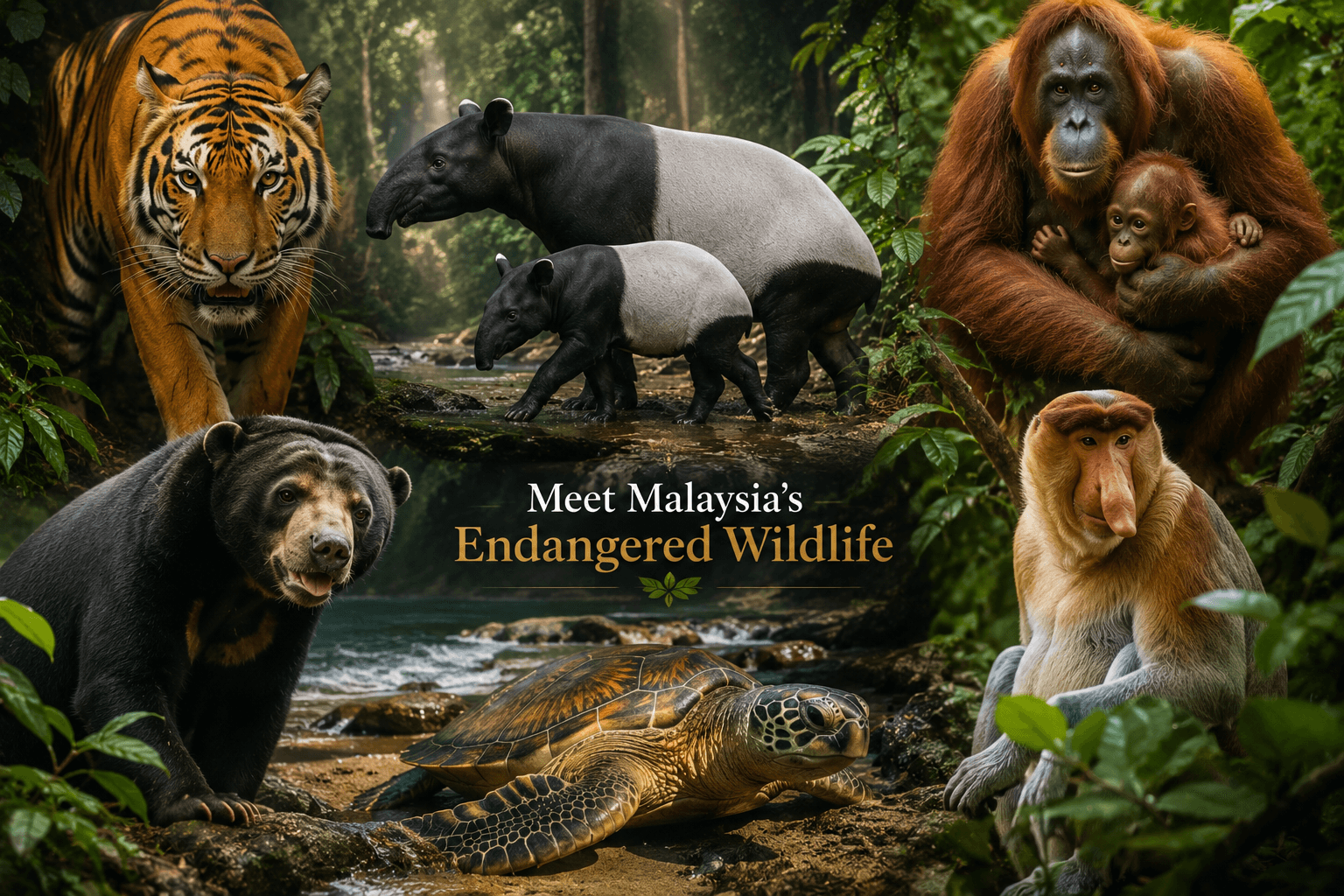
Why are some species at risk?
The biggest threats vary by species and location, but travelers may encounter conservation information about:
- Habitat loss and fragmentation caused by changes in land use.
- Illegal hunting and wildlife trade affecting vulnerable species.
- Human-wildlife conflict, particularly where natural habitats overlap with human activity.
- Climate and environmental changes that can affect food sources and habitats.
These pressures are particularly important for species such as Malayan tigers, orangutans, Asian elephants, sun bears, and Malayan tapirs.
Where can you learn about conservation?
You don't have to visit a separate conservation centre to learn about endangered wildlife. Many protected areas and wildlife attractions provide opportunities to understand the species found there and the work being done to protect them.
Depending on your itinerary, you can:
- Learn about orangutan rehabilitation at Sepilok Orangutan Rehabilitation Centre.
- Discover rainforest conservation while visiting Royal Belum State Park.
- Learn about Bornean wildlife during guided experiences along the Kinabatangan River.
- Visit protected national parks where conservation and habitat protection are part of park management.
This gives travelers a better understanding of Malaysia’s wildlife rather than treating wildlife encounters as simple sightseeing.
How can visitors help?
Responsible behavior matters most when you're actually in an animal's habitat. You can help by:
- Keeping a safe distance from wildlife.
- Never feeding or attempting to touch animals.
- Staying on marked trails and following park rules.
- Choosing responsible, licensed guides or tour operators.
- Taking rubbish with you.
- Avoiding souvenirs made from wildlife or protected natural materials.
Small choices help reduce disturbance and allow animals to continue behaving naturally.
Wildlife Safari Malaysia: The Best Ways to See Animals
A wildlife safari in Malaysia is different from the classic African-style safari, where visitors usually watch animals from a vehicle across open grasslands.
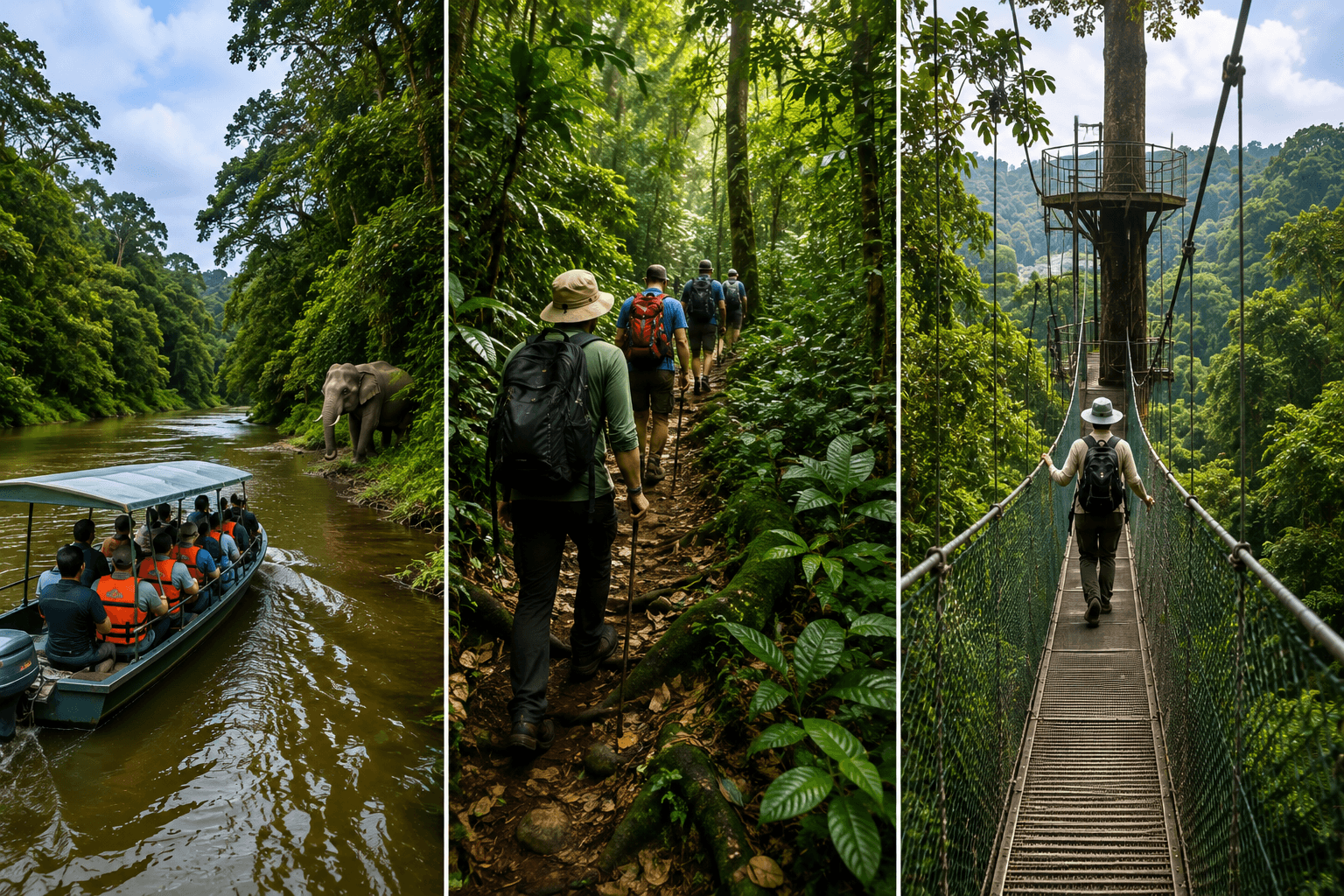
In Malaysia, wildlife experiences are more often built around river cruises, guided jungle walks, night tours, canopy trails, and rainforest excursions.
The experience depends on the habitat and the animals you hope to find, so choosing the right activity can make a big difference.
River Safaris
River safaris are especially useful in places such as the Kinabatangan River, where boats allow you to cover more ground while quietly scanning the riverbanks and trees.
Depending on the destination, you may see:
- Proboscis monkeys
- Orangutans
- Crocodiles
- Hornbills
- Bornean pygmy elephants
Morning and late-afternoon cruises are popular because many animals are more active during the cooler parts of the day. Keep your binoculars ready, as wildlife may be high in the trees or partly hidden by vegetation.
Jungle Trekking
Jungle trekking gives you a closer look at the forest itself, even when you don't see a large animal. A guide can help you spot signs of Wildlife in Malaysia, including tracks, calls, feeding marks, nests, and movement in the vegetation.
You might notice:
- Animal footprints and tracks
- Tropical birds
- Colourful insects
- Monkey calls
- Rainforest plants and feeding signs
A guided trek is particularly useful for first-time visitors because experienced guides know what signs to look for and can explain the relationships between different species and their habitat.
Canopy Walks
Canopy walks give you a different perspective by taking you above the forest floor. From the elevated walkway, you can look into the upper layers of the rainforest where many birds, squirrels, and monkeys spend much of their time.
You may spot:
- Hornbills
- Squirrels
- Monkeys
- Forest birds
- Other canopy-dwelling species
Bring binoculars if possible, and avoid making unnecessary noise while crossing the walkway. The higher viewpoint can also make it easier to see movement in the treetops.
Guided Wildlife Tours
A guided wildlife tour can be especially valuable when you're visiting an unfamiliar forest or hoping to find a particular species. Local guides know the terrain and can often identify animal calls, tracks, nests, and feeding areas that visitors might overlook.
Depending on the destination, a tour may include:
- Wildlife tracking
- Birdwatching
- Jungle walks
- River cruises
- Information about local species and habitats
The key advantage is not a guarantee of sightings, but better knowledge of where to look and how to observe Malaysia's wildlife without disturbing it.
Responsible Wildlife Tourism in Malaysia
Seeing wildlife in its natural habitat comes with a responsibility to avoid disturbing the animals or damaging the places they depend on. A few simple choices can make wildlife experiences safer and more respectful.
Respecting natural habitats
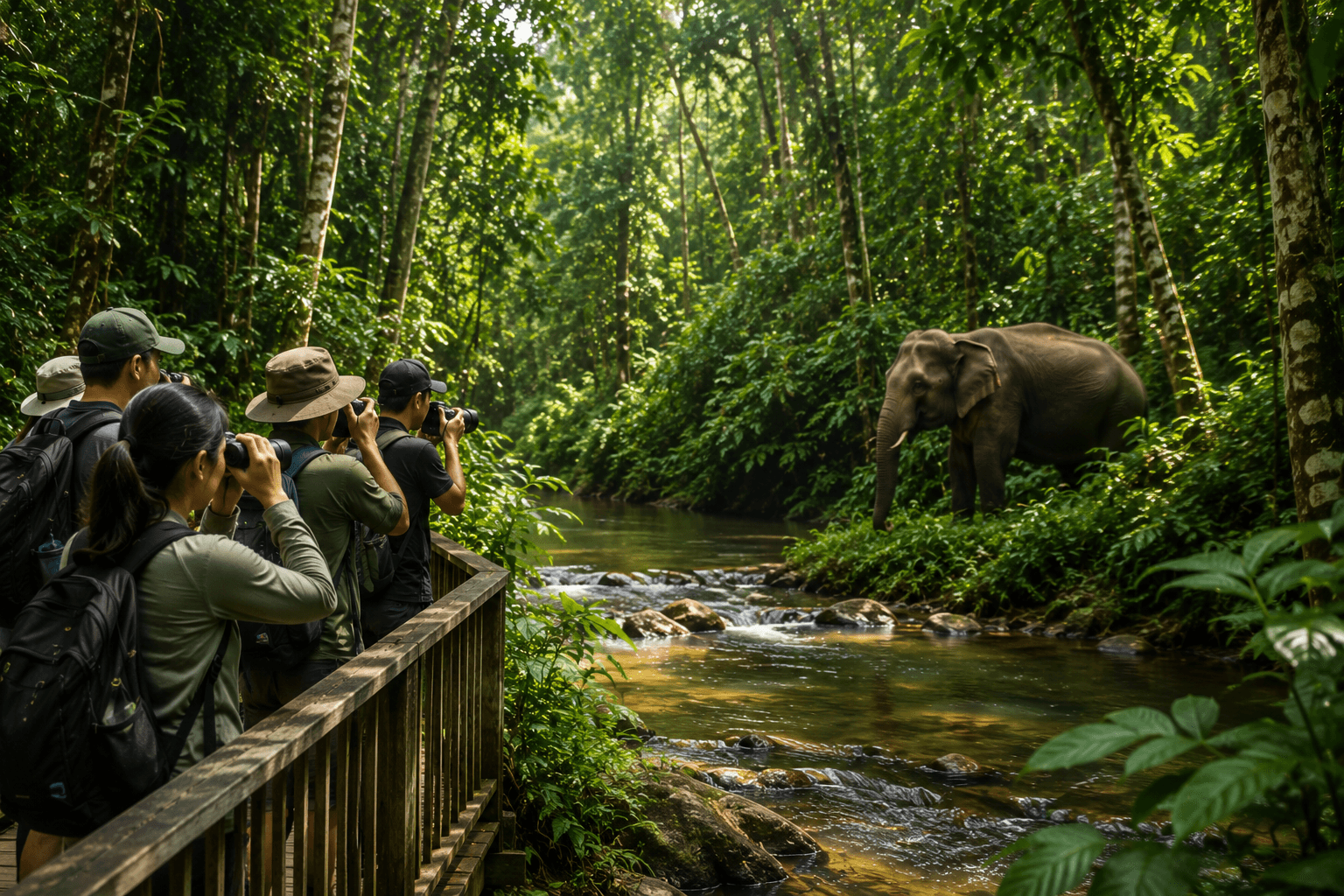
Keep your distance and let animals decide how close they want to come. When observing wildlife in Malaysia, avoid following, surrounding, calling to, or trying to attract animals for a better view or photograph.
Remember to:
- Stay on marked trails and designated viewing areas.
- Keep a safe distance from animals.
- Keep your voice low, especially near resting or feeding animals.
- Never feed or touch wild animals.
- Follow instructions from park staff and guides.
Ethical wildlife photography
A good wildlife photograph should capture natural behaviour without interfering with it. Use your camera's zoom rather than moving closer, and avoid using flash when it could disturb an animal.
For better wildlife photography:
- Turn off the flash when photographing animals.
- Use a zoom lens or camera zoom instead of approaching.
- Never block an animal's path or surround it for a photograph.
- Wait quietly rather than making sounds to attract its attention.
*Don't chase an animal just to get a better photograph. If it moves away, give it space.*
Choosing a responsible wildlife tour
The operator you choose can also affect the quality of your experience observing Malaysia’s wildlife. Look for guides and companies that follow park regulations and do not encourage close encounters or feeding.
Before booking, check whether the operator:
- Uses licensed or authorized local guides where required.
- Follows national park and wildlife regulations.
- Keeps appropriate distances from animals.
- Avoids feeding or baiting wildlife.
- Explains responsible viewing practices to guests.
Leave No Trace
Wildlife habitats can be affected by small amounts of litter and unnecessary disturbance. Take everything you bring into the forest or reserve back out with you.
- Take your rubbish with you.
- Don't pick plants or flowers.
- Don't remove rocks, shells, feathers, or other natural objects.
- Carry a reusable water bottle where practical.
- Follow the rules of the park or wildlife reserve.
Essential Tips for Wildlife Watching in Malaysia
Good preparation can make wildlife watching more comfortable and improve your chances of spotting animals. Before exploring wildlife in Malaysia, check local weather, activity times, and conditions at your chosen destination.
Best time of year
Wildlife can be seen year-round, but weather conditions can affect hiking, river trips, and other outdoor activities. Animals are often more active during the cooler parts of the day.
For a better experience:
- Start early when your chosen tour or park allows it.
- Consider a late-afternoon wildlife tour.
- Check the local weather forecast before travelling.
- Allow extra time, as wildlife sightings can require patience.
What to wear
Your clothing should be comfortable for walking and suitable for warm, humid conditions. What you need can also vary depending on whether you're hiking, taking a river cruise, or visiting a cooler highland area.
| What to wear or bring | Why it helps |
|---|---|
| Comfortable walking shoes | Useful for jungle trails, uneven paths, and longer walks. |
| Lightweight, breathable clothing | Keeps you comfortable in warm and humid conditions. |
| Long trousers | Provide extra protection from insects, plants, and scratches on forest trails. |
| Light rain jacket | Useful because tropical rain can arrive quickly. |
| Hat and sunscreen | Helpful when walking in exposed areas or travelling by boat. |
| Insect repellent | Useful when spending time in forests, wetlands, and other outdoor areas. |
| Binoculars | Helpful for spotting birds and animals high in trees or across waterways. |
Staying safe around wildlife
Wild animals should always be observed from a safe distance. When experiencing wildlife in Malaysia, follow your guide's instructions and never attempt to touch, feed, or attract an animal.
- Stay on marked trails and designated viewing areas.
- Keep a safe distance from wildlife.
- Avoid loud noises.
- Never feed wild animals.
- Follow instructions from park staff and guides.
Choosing reputable tour operators
A knowledgeable guide can help you understand the local habitat and spot animals without disturbing them. Before booking, check whether the operator:
- Uses licensed or authorized local guides where required.
- Follows park and wildlife regulations.
- Keeps appropriate distances from animals.
- Avoids feeding or baiting wildlife.
- Explains responsible wildlife-viewing practices.
Final Thoughts
Malaysia is one of the best places in Southeast Asia to see wildlife in its natural habitat. From ancient rainforests and national parks to river safaris and guided tours, there are many ways to explore wildlife in Malaysia.
With a little planning and responsible travel, you can enjoy amazing wildlife experiences while helping protect nature. Whether you want to see orangutans, hornbills, elephants, or other rare animals, Malaysia offers unforgettable opportunities for every nature lover.
Respect wildlife, follow park rules, and take your time; you never know what incredible animal you might discover along the way.