
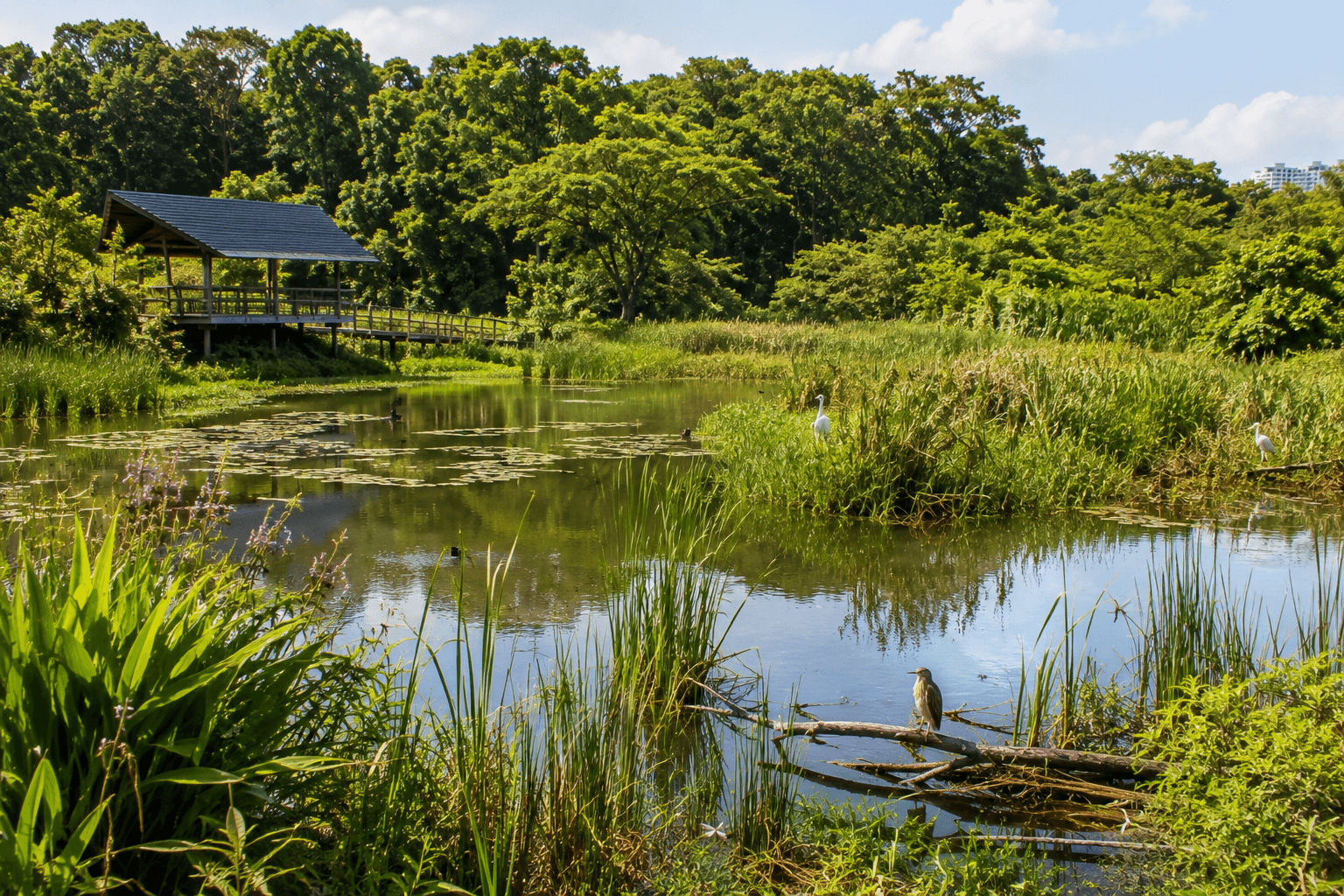
Tampines Eco Green is easy to overlook if you're expecting another landscaped park with wide paths, trimmed lawns, and playgrounds. Instead, the Tampines Eco Green trails take you through freshwater ponds, marshland, grassland, and secondary forest, with each part of the park offering a different setting to explore.
The changing scenery is what makes the walk memorable. Along the Diversity Trail, you can watch dragonflies around the ponds and open greenery. The Marsh Trail takes you past wetland vegetation, while the Forest Trail gives you a cooler, more shaded walk beneath secondary forest.
Wildlife is another reason to slow down. The park's bird hides give you a quiet place to watch birds, while butterflies, dragonflies, and other small creatures are often easier to notice when you stop rather than simply walking from one end to the other.
What makes Tampines even more unusual is that the park was designed around nature rather than trying to reshape it. From vegetated swales to green-roofed shelters and a waterless eco-toilet, its features show how recreation and habitat can share the same space.
This guide takes you through the three trails, wildlife to look for, the park's clever eco-features, and what to know before your visit, so you can decide how to explore it rather than simply turning up and following the first path you see.
What Makes Tampines Eco Green Different?
Tampines Eco Green doesn't feel like a park that was built first and landscaped afterward. Its paths wind through habitats that include marshland, freshwater ponds, open grassland, and secondary forest, creating a landscape that changes noticeably as you walk.
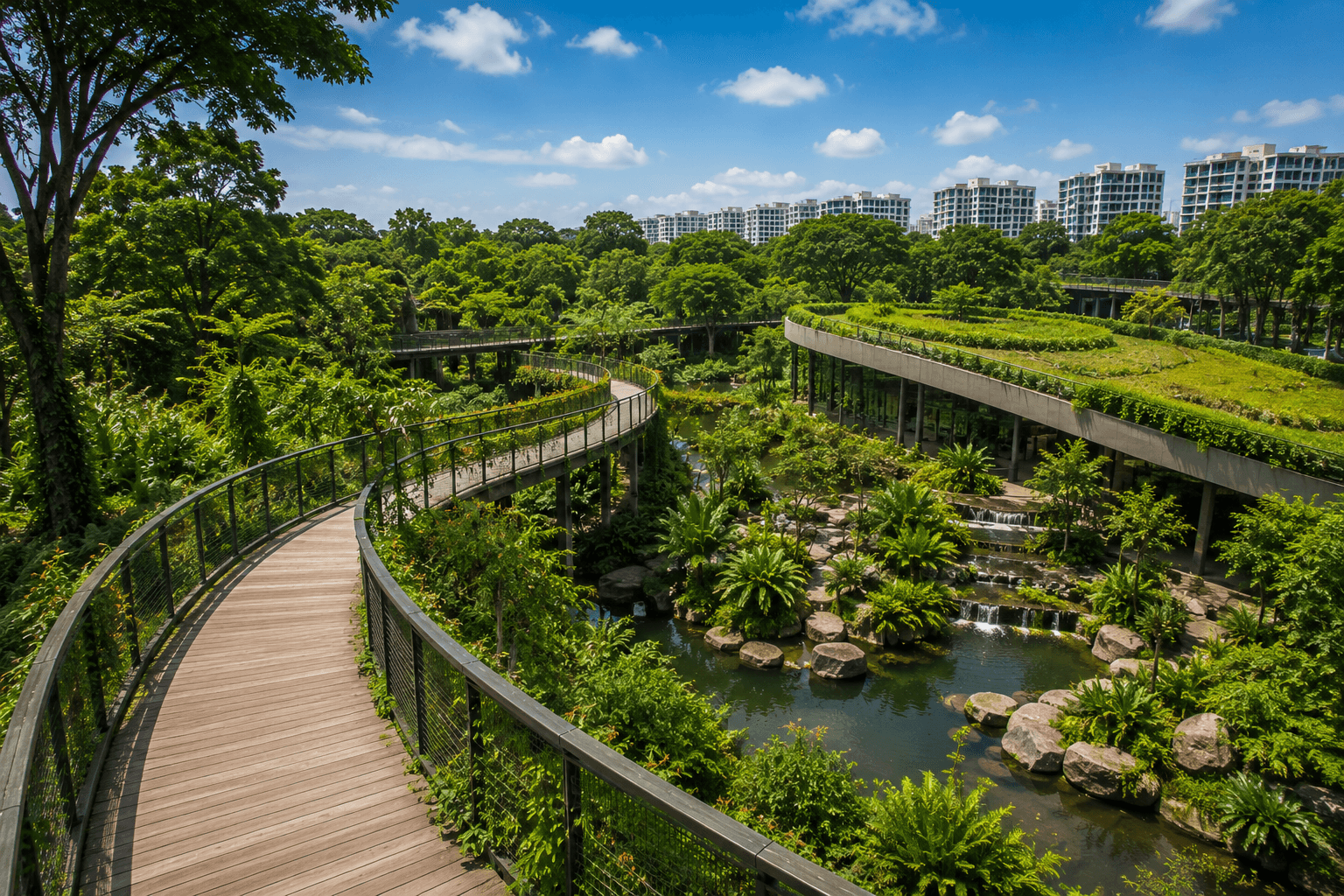
A Wild-Looking Ecological Park in the Tampines Heartland
The park sits beside a developed residential area, but once you're on the trails, the surrounding buildings quickly become less noticeable. Instead of broad paved promenades, much of the park uses natural-looking paths and narrow walking routes that pass through different habitats.
This is especially noticeable around the ponds and marshy areas, where tall grasses and aquatic vegetation are allowed to grow rather than being kept perfectly trimmed.
As you move through the park, the changing scenery takes you from open water and wetland areas into denser stretches of forest, giving the walk a sense of discovery along the way.
You might start in an open section with plenty of sunlight, and then move into thicker vegetation only a few minutes later.
How Marshland, Freshwater Ponds, and Secondary Forest Shape the Landscape
The park is divided into several habitat types rather than one uniform green space.
| Habitat | What you can expect |
|---|---|
| Freshwater ponds | Open water, aquatic vegetation, dragonflies, and birds |
| Marshland | Wetland plants, shallow water, and insects |
| Grassland | Open views, flowering plants, butterflies, and smaller birds |
| Secondary forest | More shade, thicker vegetation, and a cooler walking environment |
These habitats also help explain why Tampines Eco Green attracts such a range of wildlife. A Purple Heron looking for food around a pond has very different needs from a butterfly moving through grassland, so having several environments close together gives more species somewhere suitable to feed, shelter, and breed.
Why the Park Was Designed With Minimal Disturbance to Nature
One of the most interesting things about this ecological park is that nature is not simply decoration around the walking trails. The park was planned around its existing ecological features, with recreation fitted into the landscape rather than completely reshaping it.
That approach can be seen in the way the trails pass around habitats instead of cutting straight through them. Drainage is also handled through vegetated swales, which help manage rainwater while adding another type of planted habitat.
Even the decision to leave certain dead trees in place has a purpose. They can provide shelter and food for insects and other organisms, while fallen wood gradually becomes part of the natural cycle.
So, when you're walking through Tampines Eco, some of the things that may look untidy or untouched are actually deliberate. The rougher edges are part of what makes this park an ecological space rather than simply a landscaped recreation area.
Explore the Tampines Eco Green Trails
The easiest way to understand Tampines Eco Green is to walk its three trails. Together, the Diversity Trail, Marsh Trail, and Forest Trail cover about 3 km, but they don't feel like three versions of the same walk. Each pass through a different part of the park and gives you a different chance to spot wildlife.
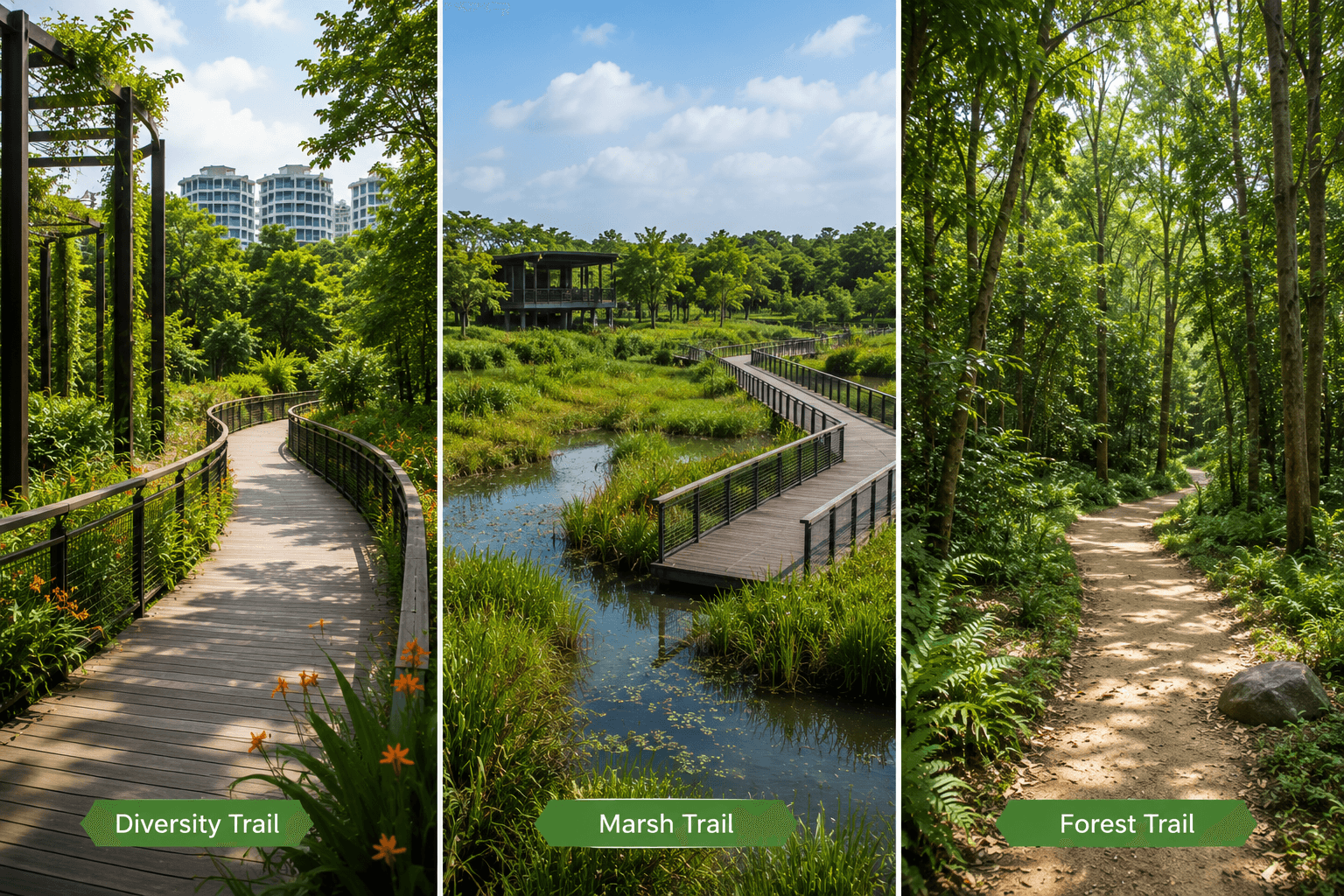
| Trail | What you'll see | Best for |
|---|---|---|
| Diversity Trail | Freshwater ponds, open greenery, and dragonflies | A first visit and wildlife spotting |
| Marsh Trail | Wetland vegetation and vegetated swales | Seeing the park's wetter habitats |
| Forest Trail | Shaded secondary forest and thicker vegetation | A quieter, more sheltered walk |
Diversity Trail: Ponds, Dragonflies and Open Greenery
The Diversity Trail is a good place to start if you want to see the park's more open landscapes. The route passes around freshwater ponds and grassland, giving you wider views than the more enclosed Forest Trail.
The ponds are good spots for wildlife watching, particularly on sunny days when dragonflies are active around the vegetation. Keep an eye on the water and nearby plants for birds, insects, and other small creatures.
This trail also gives you a quick introduction to why the park supports different habitats within such a compact area. You're moving between open grassland and wet areas rather than following one continuous forest path.
Marsh Trail: Vegetated Swales and Wetland Habitats
The Marsh Trail has a wetter character, with marsh vegetation and vegetated swales shaping much of the route. These swales also help manage rainwater naturally while creating habitat for insects and other small species.
The dense vegetation along the swales makes this a good place to pause and look for movement among the plants, particularly butterflies, dragonflies, and smaller birds.
Forest Trail: A Shaded Route Through Secondary Forest
The Forest Trail changes the atmosphere again. Once you enter the secondary forest, the open views give way to thicker vegetation and more shade. It is the most suitable section if you're looking for a quieter nature walk rather than spending most of your time around ponds and open grassland.
The dense vegetation also creates different opportunities for wildlife spotting, although animals can be harder to see when they are deeper inside the foliage. The trail is relatively easy, but the natural setting means you should still watch your footing, especially after rain.
Wildlife to Look For at Tampines Eco Green
Tampines Eco Green has recorded 75 bird species, along with butterflies and dragonflies, so there is plenty to look for beyond the usual urban park birds. The key is knowing what to watch for around the ponds, grassland, marshes, and forest instead of simply walking through the trails.
Birdwatching From the Park's Bird Hides
There are three bird hides at Tampines. These are useful stopping points if you want to watch birds without approaching the habitat directly.
Rather than walking past quickly, spend a few minutes scanning:
- Freshwater ponds: Look for birds around the water and pond edges.
- Tall grasses: Baya Weavers and other grassland birds may be easier to spot here.
- Trees and deadwood: Keep an eye out for birds using snags as feeding or nesting sites.
- Marsh vegetation: Check the edges rather than only looking across the open water.
Birdwatching in Tampines is particularly interesting because different habitats attract different species.
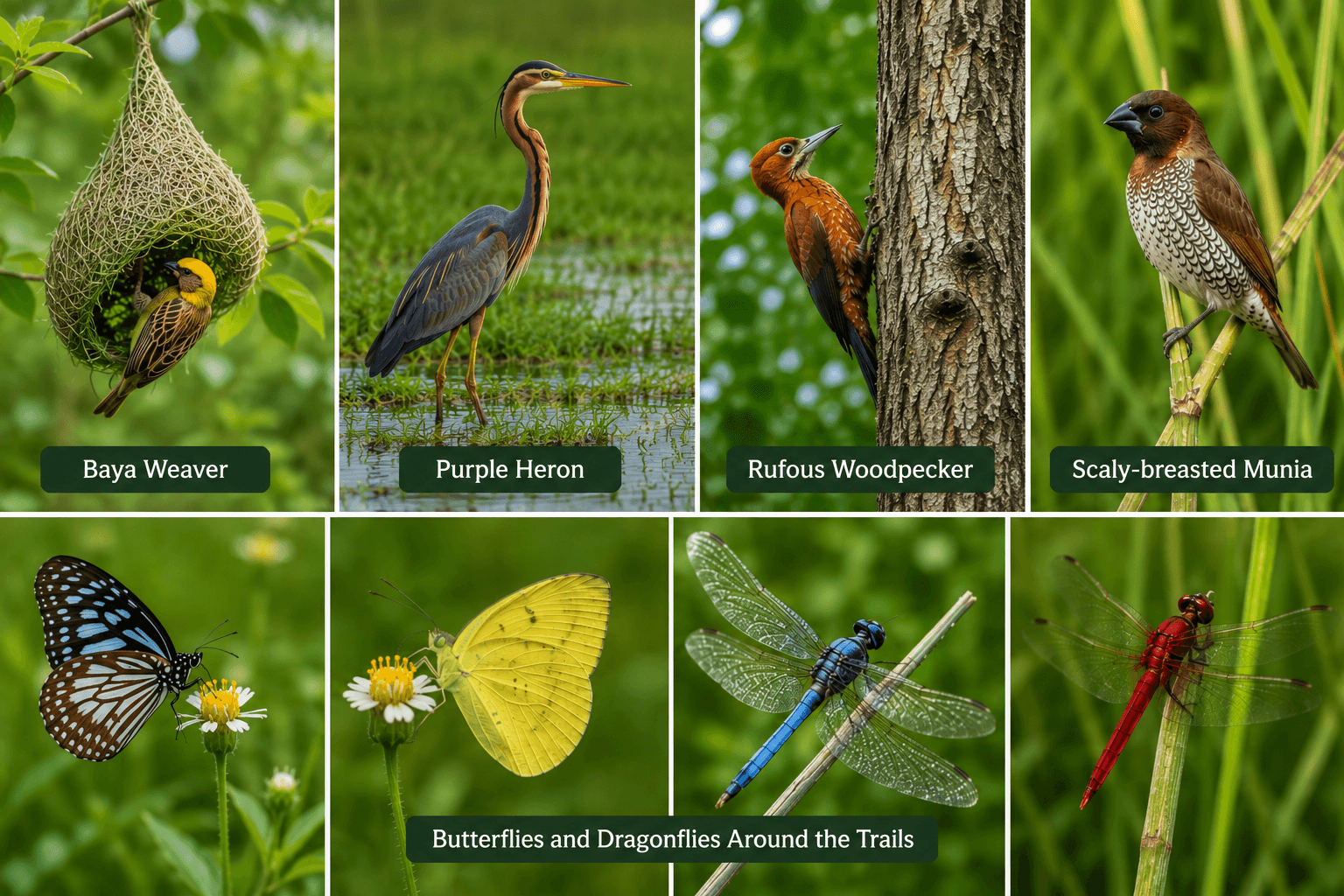
Baya Weavers, Purple Herons and Other Birdlife
Two species specifically highlighted at the park are the Baya Weaver and Purple Heron.
| Species | What to look for |
|---|---|
| Baya Weaver | Males have a yellow crown and dark mask; they are associated with grassland and wetland habitats. |
| Purple Heron | A large wetland bird that can reach about 1 metre in height; look around ponds and marshy areas. |
| Rufous Woodpecker | A less commonly seen Singapore bird found in well-wooded areas, including Tampines Eco Green. |
| Scaly-breasted Munia | A small grassland bird with distinctive scaly markings on its breast and belly. |
The Rufous Woodpecker is particularly interesting for birdwatchers because it is less commonly encountered, while the Scaly-breasted Munia is associated with tropical grasslands and urban parks.
Butterflies and Dragonflies Around the Trails
The insects here are not just background details. They are among the easiest wildlife to notice if you slow down. On the Diversity Trail, the Common Parasol and Blue Dasher are among the dragonflies associated with the freshwater pond.
The trail also has standing dead trees, or snags, which provide feeding and nesting opportunities for birds. The Forest Trail is a better place to look for butterflies. The Blue Pansy and Common Grass Yellow can be found around the vegetation and shaded forest environment.
The park has recorded 13 dragonfly species and 12 butterfly species, adding another layer to the wildlife experience beyond birdwatching.
How to Observe Wildlife Without Disturbing It
The best wildlife sightings here usually come from stopping rather than chasing. Stay on the designated trails, use the bird hides where available, and watch quietly from a distance. Avoid entering vegetation to get closer to a bird or butterfly, and don't feed the animals.
The park's dead trees, ponds, and vegetation have been deliberately retained or managed to support wildlife, so keeping these areas undisturbed is part of enjoying the park responsibly. And if you don't spot a Purple Heron or Baya Weaver on your first walk, don't consider the visit a failure.
Wildlife sightings depend on the day, weather, and animal activity. The more useful approach is to know where to look and give yourself enough time to notice what is actually moving through the habitat.
Eco-Friendly Features That Make the Park Special
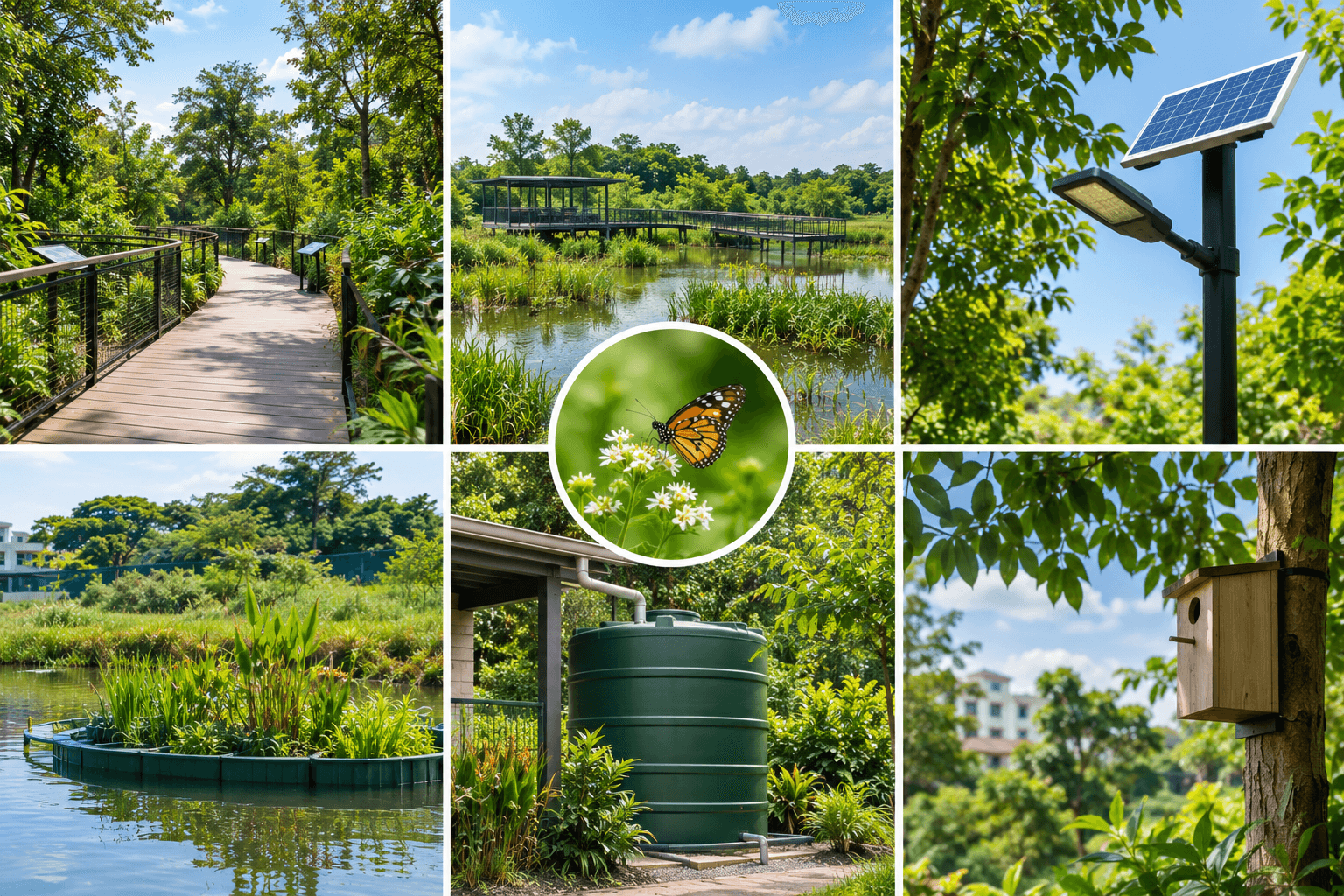
Tampines Eco Green is not simply a nature park with a few recycled materials added afterward. Several features were built specifically to work with the existing habitats and reduce the need for conventional infrastructure.
The Waterless Eco-Toilet and How It Works
One of the park's most unusual features is its waterless eco-toilet. Instead of using a conventional flush system, it uses a dry sanitation approach that reduces the amount of water required for toilet use.
For visitors, it may seem like a small detail, but it fits the larger idea behind this ecological park: providing visitor facilities without creating unnecessary pressure on the surrounding environment.
Why Dead Trees Are Deliberately Left in the Landscape
Don't assume every dead tree or fallen trunk has been forgotten by the park's maintenance team. Tampines Eco Green deliberately retains standing dead trees, known as snags, where they can safely remain.
These provide useful habitat for insects and can give birds places to feed, perch, or nest. This is particularly noticeable along the Diversity Trail, where snags form part of the habitat rather than being removed simply because they don't look like conventional landscaping.
So, if you see deadwood during your walk, it's worth looking closer. What may appear to be an untidy part of the landscape can actually be supporting wildlife.
Green-Roofed Shelters and Recycled Park Materials
The shelters around this ecological park were designed to blend into the natural setting rather than stand out as large concrete structures. Some use green roofs, where vegetation grows over the roof surface.
Besides helping the shelters visually blend into the surrounding landscape, the planted roofs reflect the park's broader approach to reducing the impact of built structures.
Recycled and repurposed materials are also incorporated into parts of the park, reinforcing the idea that visitor facilities can be functional without dominating the natural setting.
Vegetated Swales and the Park's Natural Approach to Drainage
The vegetated swales are one of the more practical features to notice while walking through the park. Instead of relying entirely on conventional drains to move rainwater away, these shallow planted channels help slow, collect, and filter surface runoff as water moves through the landscape.
That matters particularly in a park containing freshwater ponds and marsh habitats. The drainage system becomes part of the landscape rather than something hidden beneath it. Taken together, these features show what makes Tampines Eco Green different from a typical landscaped park.
Its sustainability is visible in the way the park handles water, wildlife, buildings, and even dead vegetation, rather than being limited to a sign explaining that the site is eco-friendly.
Planning a Tampines Eco Green Nature Walk
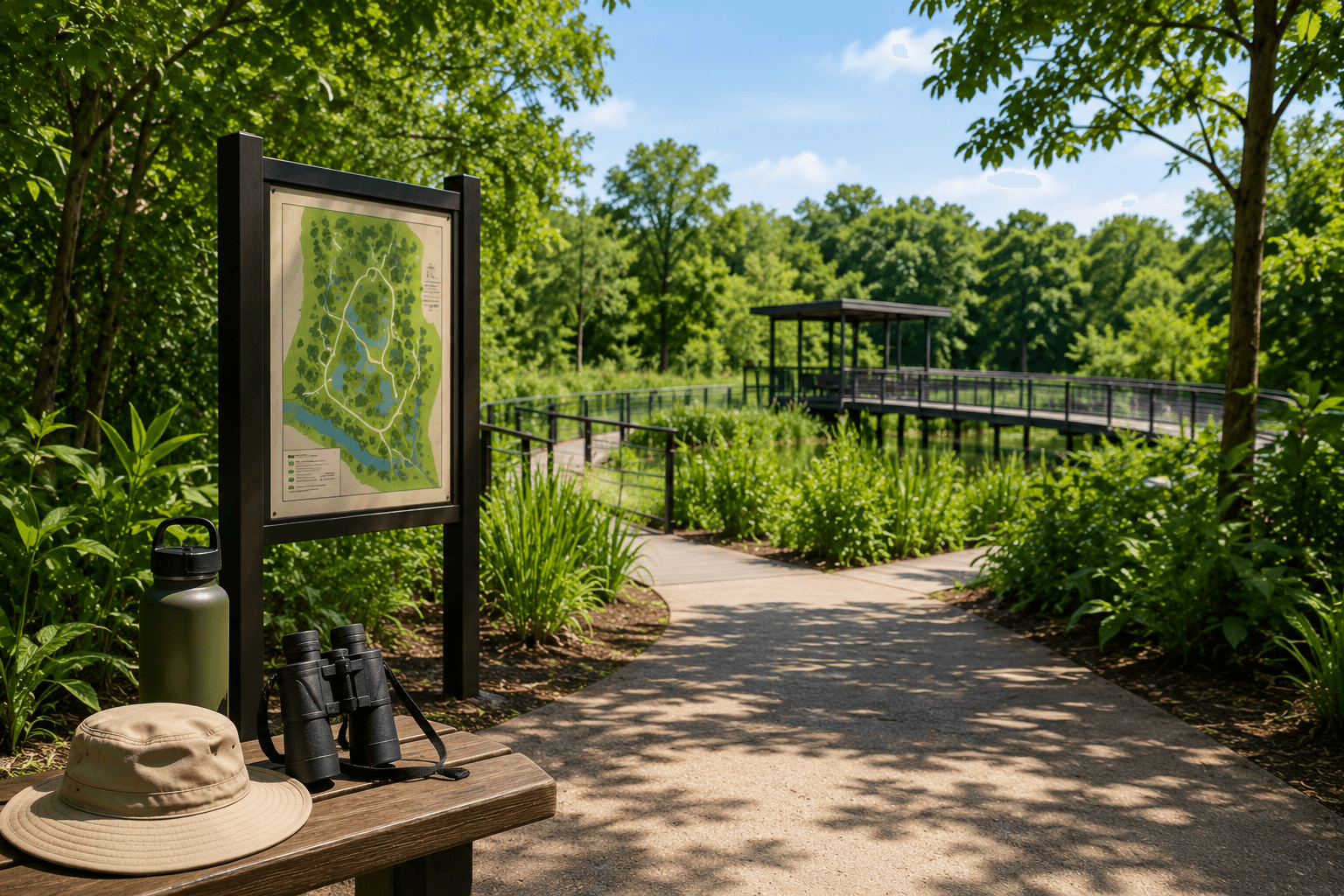
You don't need a complicated plan for this ecological park, but a little preparation makes a difference because the inner trails are deliberately kept natural rather than paved and highly manicured.
How to Get to Tampines Eco Green
It is located around Tampines Avenue 9 and Tampines Avenue 12, with Tampines MRT Station listed as the nearest MRT station. You can also reach the park through the surrounding park-connector network, including the route along Sungei Tampines.
If you're coming from Tampines MRT, you can walk through Sun Plaza Park before reaching the Eco Green area. The route takes roughly 15 to 20 minutes on foot, depending on your starting point.
What to Wear and Bring
The trails are easy to moderate, but some sections have grass, soil, and natural surfaces rather than smooth paving. Lightweight trainers or trail shoes with good grip are suitable for most visits, while waterproof shoes can be useful after heavy rain when the ground is wetter or muddy.
For clothing, choose lightweight, breathable clothes that are comfortable for walking in Singapore's warm, humid weather. Long trousers can provide extra protection from insects and vegetation, especially on the forest and marsh sections.
A light rain jacket or poncho is also useful if showers are expected. For a comfortable walk, bring:
- Water, especially if you're exploring all three trails
- Insect repellent for the marsh and forest areas
- Sun protection, such as a hat and sunscreen
- Binoculars if you're coming mainly for birdwatching
- A small rubbish bag so you can take your waste with you
- A lightweight rain jacket or poncho during wetter weather
After heavy rain, some natural sections may be wetter and muddy. Shoes with good grip are particularly useful in these conditions, and if the weather becomes severe, consider postponing your walk rather than attempting slippery trails.
Accessibility of the Trails and Perimeter Paths
There is an important distinction between the park's perimeter path and its nature trails. The perimeter footpath is wheelchair accessible, but the dirt trails inside Tampines Eco Green are not wheelchair accessible.
This means visitors using wheelchairs can still enjoy the outer route, but they should not expect to take the Diversity, Marsh, or Forest trails themselves. Visitors with strollers or mobility aids should stick to the accessible perimeter path, as the inner nature trails have natural, uneven surfaces.
The park's easy trail rating refers to walking difficulty, not universal accessibility.
Tampines Eco Green: What to Know Before You Go
This ecological park is intentionally less manicured than many of Singapore's parks, which is part of its appeal. It also means there are a few rules and conditions worth knowing before you arrive, especially if you're planning to explore the inner trails.
Why Visitors Should Leave Before Dark
The park is not a night-time attraction. The park's natural setting and lack of extensive lighting make it unsuitable for exploring after dark. Plan your walk so you have enough daylight to finish the trails comfortably.
This is particularly important if you're stopping frequently for birdwatching or photography, as those pauses can make a short walk take considerably longer.
Why Pets and Cycling Are Not Allowed Inside
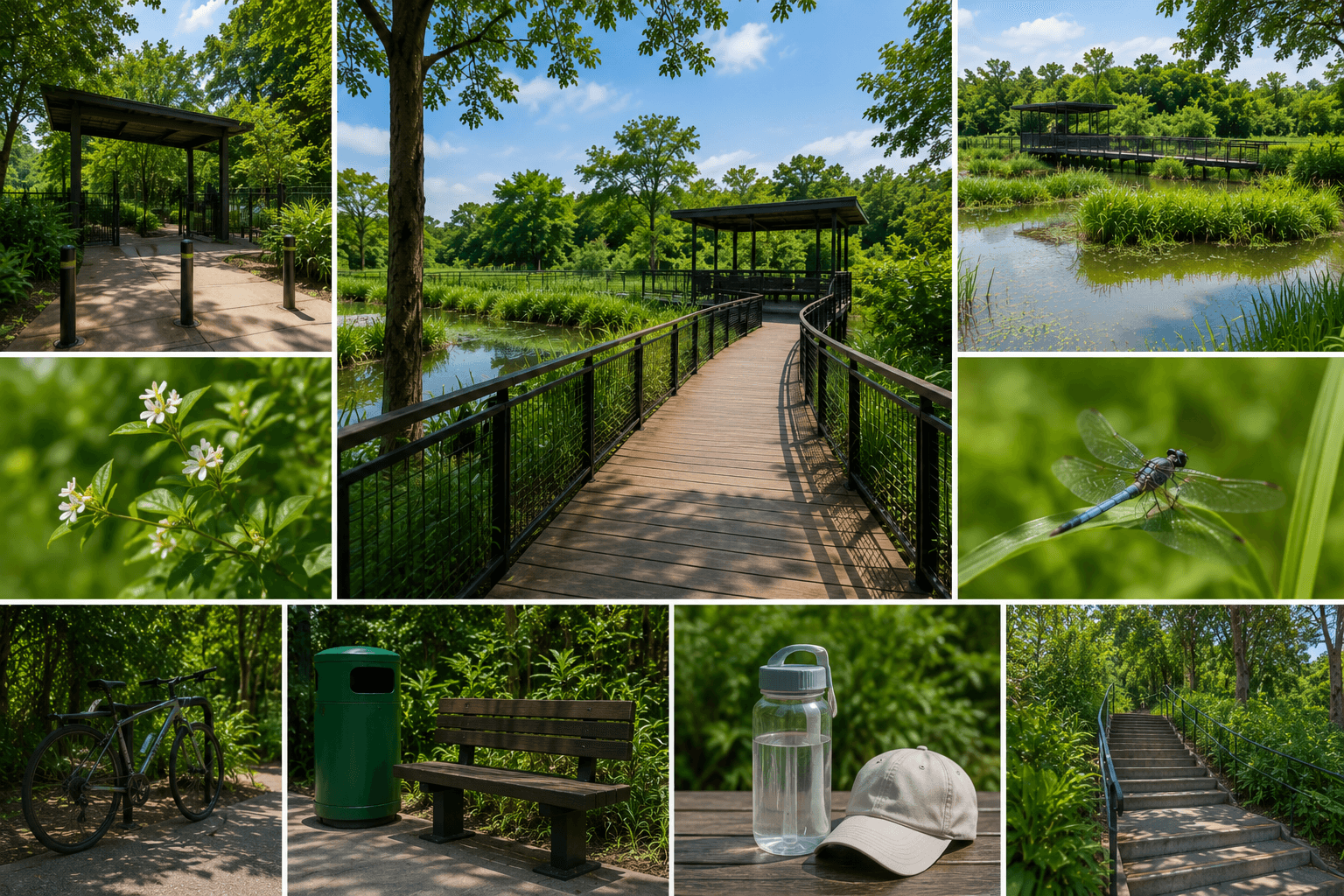
Tampines Eco Green is managed as an ecological park rather than a general-purpose recreation ground. Cycling is not permitted on the nature trails, and pets are not allowed inside the park.
These restrictions help limit disturbance to the habitats and wildlife that the park was designed to protect. If you're cycling through the eastern part of Singapore, you can use the surrounding park connectors and leave your bicycle outside the nature-park area before exploring on foot.
What Happens to the Trails After Heavy Rain
Rain can change the trail conditions quickly. Because several sections use natural earth and grass surfaces, heavy rainfall can leave parts of the route wet, muddy, or slippery.
The freshwater ponds and marsh areas can also look quite different after rain, but that doesn't mean it's a good time to explore them. If there has been heavy rainfall or a thunderstorm, wait until conditions improve rather than entering the trails immediately.
Keep to Designated Paths and Protect the Wildlife
Tampines Eco Green works because its habitats are allowed to function with relatively little disturbance. Staying on the designated trails is therefore more than a basic park rule. Don't enter the marsh, grassland, or forest vegetation to get closer to a bird or butterfly.
Avoid touching plants or disturbing deadwood, and never feed the wildlife. If you're carrying a camera or binoculars, give animals space and observe from the trails or bird hides. You may see less by moving closer, while a quiet few minutes in one spot can reveal birds, dragonflies, or butterflies that you would otherwise walk straight past.
Final Thoughts
Tampines Eco Green is the kind of place that rewards you for slowing down rather than trying to see everything quickly. Its three trails may cover only about 3 km, but the experience changes from freshwater ponds and open grassland to marsh vegetation and shaded secondary forest as you move through the park.
What makes the visit especially interesting is how much wildlife and ecological detail is packed into this relatively compact space. You might stop at a bird hide looking for a Purple Heron, notice a Baya Weaver moving through the grass, or spot dragonflies skimming across the freshwater pond.
And then there are the details you might otherwise walk past: standing dead trees left for wildlife, vegetated swales managing rainwater, and green-roofed shelters blending into the landscape. These aren't simply features added to make the park look "green." They explain how it was designed to let people enjoy nature without completely reshaping it.
If you're already exploring Singapore's eastern side, set aside a couple of hours and walk without rushing. You don't need to be a serious birdwatcher or experienced hiker to enjoy it.
Just give yourself enough time to notice what is happening around the trail, because that's where this ecological park becomes much more than an ordinary park.