
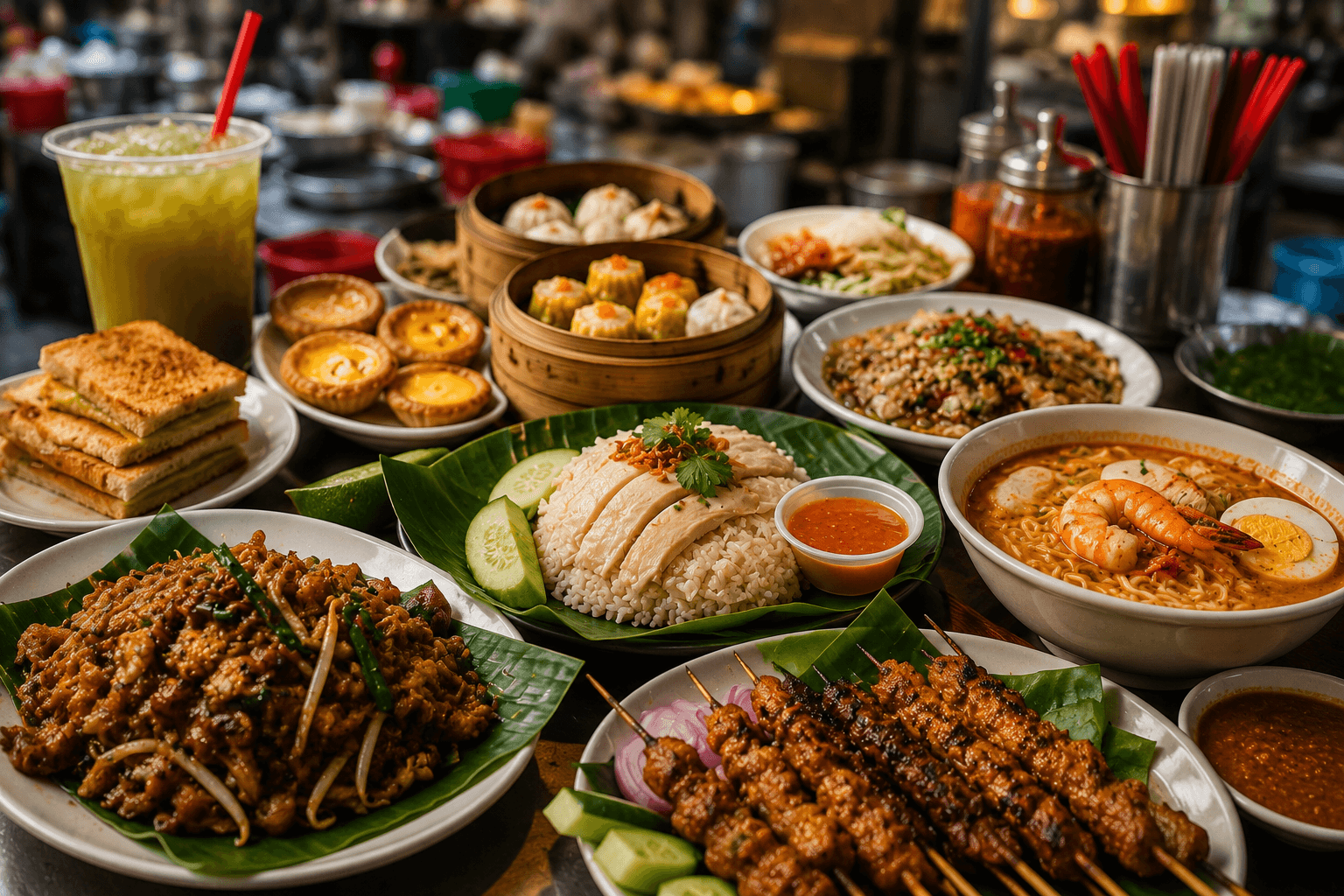
Singapore street food was honestly one of the main things I was excited about before landing in the city. Everyone talks about the skyline and attractions, but the real experience starts at the hawker centres. I still remember walking through Lau Pa Sat late in the evening with the smell of grilled satay filling the entire street.
Within one hour, I had tried chicken rice, sugar cane juice, and a bowl of laksa that was way better than I expected. The best part? None of it was expensive. If you’re visiting Singapore for the first time, this guide will help you find the best hawker centres, famous local dishes, and cheap food spots locals actually love.
Singapore Street Food: What Makes It So Famous?

Singapore’s food scene is one of the most exciting in Asia. You can eat at a busy hawker centre, try recipes passed down for generations, and still spend less than a restaurant meal. That mix of quality, culture, and affordability is what makes Singapore street food stand out.
Why is hawker culture unique in Singapore
Hawker culture is a huge part of daily life in Singapore. Locals don’t just visit hawker centres for cheap meals. They go there to meet friends, grab breakfast before work, or enjoy family dinners late at night.
What makes these places special is the variety. One row can have Chinese, Malay, Indian, and Peranakan food stalls side by side. That’s why trying different dishes feels so easy here.
Some things visitors notice quickly:
- Food is made fresh in front of you
- Many stalls specialize in only one dish
- Recipes are often decades old
- Meals are fast, affordable, and filling
For many travelers, this becomes the real must try food in Singapore because it feels local and authentic from the moment you arrive.
Singapore street food also feels very organized compared to other cities in Asia. Hawker centres are clean, easy to navigate, and comfortable even for first-time visitors.
UNESCO recognition of Singapore hawker culture
Singapore’s hawker culture received global attention in 2020 when UNESCO added it to its Intangible Cultural Heritage list. For locals, this was a proud moment because hawker centres have always been a big part of everyday life in the city.
What makes these places special is the mix of people they bring together. It’s normal to see tourists, students, office workers, and families all sharing tables and eating side by side during busy meal hours.
The recognition also helped shine a light on older hawker stalls that have been serving the same recipes for generations. Some owners still cook dishes exactly the way their parents and grandparents did many years ago.
Today, many travelers visit hawker centres not only to eat well but also to experience the culture behind Singapore street food firsthand.
What tourists should expect at hawker centres
First-time visitors are often surprised by how large hawker centres can be. Some have more than 100 food stalls, each serving something different.
Most places are casual and self-service. You usually:
- Find a table first
- Order food at the stall
- Carry your tray back yourself
Peak lunch and dinner hours can get busy. If you want shorter queues, try visiting before noon or after 2 PM.
A few useful things to know:
- Many stalls have picture menus
- English is commonly spoken
- Food is usually prepared within minutes
- Some famous stalls may have long waiting times
Singapore street food is also much cleaner than many travelers expect. Government hygiene rules are strict, which makes hawker dining feel comfortable even for cautious visitors.
Average food prices in Singapore hawker centres
One of the best things about eating at hawker centres is the price. You can try famous local dishes without spending too much.
Here’s a quick idea of average costs:
| Food Item | Average Price |
|---|---|
| Chicken rice | SGD 4–6 |
| Laksa | SGD 5–7 |
| Satay set | SGD 7–10 |
| Kaya toast set | SGD 4–6 |
| Fresh juice or kopi | SGD 2–4 |
Even in tourist areas, Singapore street food stays fairly affordable compared to restaurants and cafes.
If you want cheaper meals, head slightly outside major tourist zones. Places like Old Airport Road Food Centre and Tekka Centre usually offer bigger portions at lower prices.
If you’re traveling on a budget, hawker centres make it surprisingly easy to enjoy good food in Singapore without spending too much.
Best Hawker Centres in Singapore for First-Time Visitors
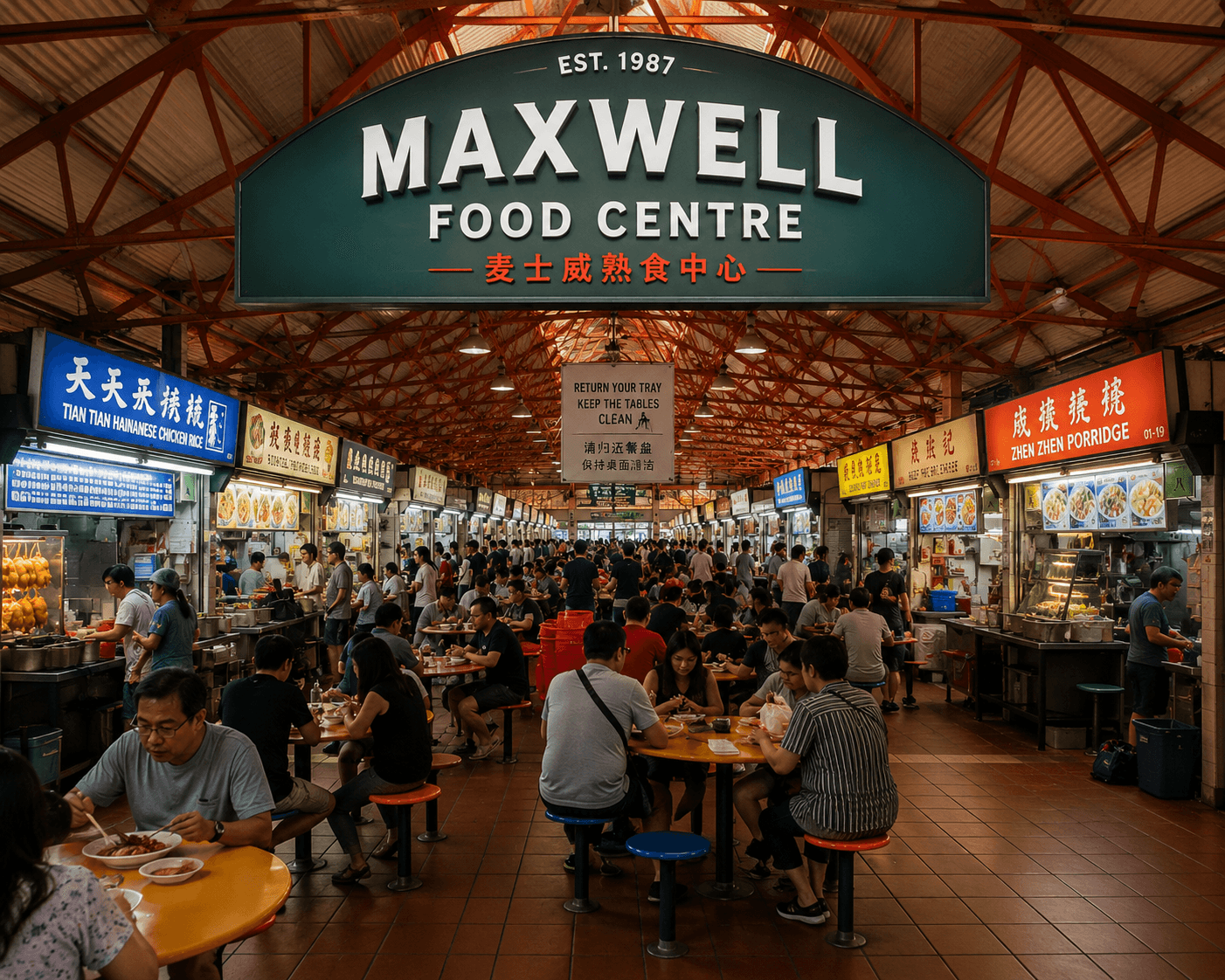
If you’re visiting Singapore for the first time, hawker centres are the best place to understand the city’s food culture. Each one has its own atmosphere, famous stalls, and local favorites worth trying.
Maxwell Food Centre
Maxwell Food Centre is one of the most famous food spots in the city, especially for first-time visitors. It sits close to Chinatown and is known for its relaxed local feel and long list of traditional dishes.
The biggest crowd usually gathers around Tian Tian Hainanese Chicken Rice. Even with long queues, most people say it’s worth the wait. The chicken is soft, the rice is rich in flavor, and the chilli sauce adds the perfect kick.
Other popular dishes here include:
- Fish soup
- Oyster cake
- Fresh sugar cane juice
- Cantonese porridge
Prices are reasonable, with most meals costing around SGD 4 to 8. Singapore street food feels very approachable here because the centre is clean, organized, and easy to explore even during busy hours.
If you arrive before lunch rush, finding seats is much easier.
Lau Pa Sat
Lau Pa Sat is probably the most beautiful hawker centre in Singapore. The old Victorian-style building gives it a very different atmosphere compared to other food centres in the city.
During the day, it feels busy but relaxed. At night, the nearby street turns into a satay market with smoke, grilling sounds, and packed outdoor tables. This becomes one of the real must try food in Singapore for many travelers.
What people usually come here for:
- Satay skewers
- BBQ seafood
- Chicken wings
- Fried carrot cake
- Local desserts
Lau Pa Sat is also a good option for tourists because it stays lively late into the evening. Singapore street food feels more social here, especially after sunset when groups gather outside for dinner and drinks.
Food here can cost a little more compared to smaller local hawker centres, but many visitors still come for the lively atmosphere and central location.
Old Airport Road Food Centre
Old Airport Road Food Centre feels much more local compared to the busy tourist spots around Marina Bay or Chinatown. The first thing you notice here is that most people eating are actually residents, office workers, and regular customers who already know exactly which stall they want.
The place itself is simple and a little old-school, but that’s honestly part of the charm. Some stalls have been here for decades, and a few are still run by the same families.
A few dishes people come here for:
- Char kway teow
- Hokkien mee
- Roast duck rice
- Lor mee
- Satay bee hoon
The portions are good, and prices still feel reasonable for Singapore. You can easily eat well here without spending too much. Many Singapore hawker food guide recommendations include this spot because the food feels more authentic and less tourist-focused.
Singapore street food also feels a bit calmer here during non-peak hours. If possible, avoid the lunch rush because finding a table can get difficult very quickly.
Chinatown Complex Food Centre
The first time I visited Chinatown Complex Food Centre, I honestly spent more time walking around than eating because there was just so much happening everywhere. The place is huge, a little noisy, and packed with food stalls selling everything from roast duck to handmade dumplings.
Most tourists head straight for the famous soy sauce chicken rice stalls, but some of the smaller family-run stalls are just as good. A few of them have been around for decades, and you can usually tell which ones locals trust by the long lunch queues.
Some dishes worth trying here:
- Claypot rice
- Roast pork and duck rice
- Traditional dim sum
- Dumplings
- Chinese desserts
What makes this place fun is the variety. You can order small dishes from different stalls and slowly try your way through the food centre. Singapore street food feels much more local here compared to polished food courts in shopping malls.
Tekka Centre
Tekka Centre feels very different from the bigger tourist-heavy hawker spots in Singapore. The area is louder, busier, and full of strong food smells the second you walk in. You’ll notice people flipping prata on hot pans, curry being served onto metal trays, and long queues forming around popular stalls.
Located in Little India, this place is well known for Indian and Muslim food. A lot of locals stop here for breakfast, tea, or quick meals during the day, so it almost always feels active.
Some dishes worth trying:
- Briyani
- Roti prata
- Murtabak
- Fish curry
- Teh tarik
The meals here are usually filling and reasonably priced, especially compared to restaurants nearby. Singapore street food also feels much more varied at Tekka Centre because you can try several different cooking styles under one roof.
If you like spicy food, rich curries, and heavier meals, you’ll probably end up enjoying this place a lot.
Singapore Street Food Dishes You Must Try
One of the best parts about visiting Singapore is how easy it is to try different local dishes in one day. Hawker centres are packed with meals that locals grow up eating, and tourists end up remembering long after the trip.
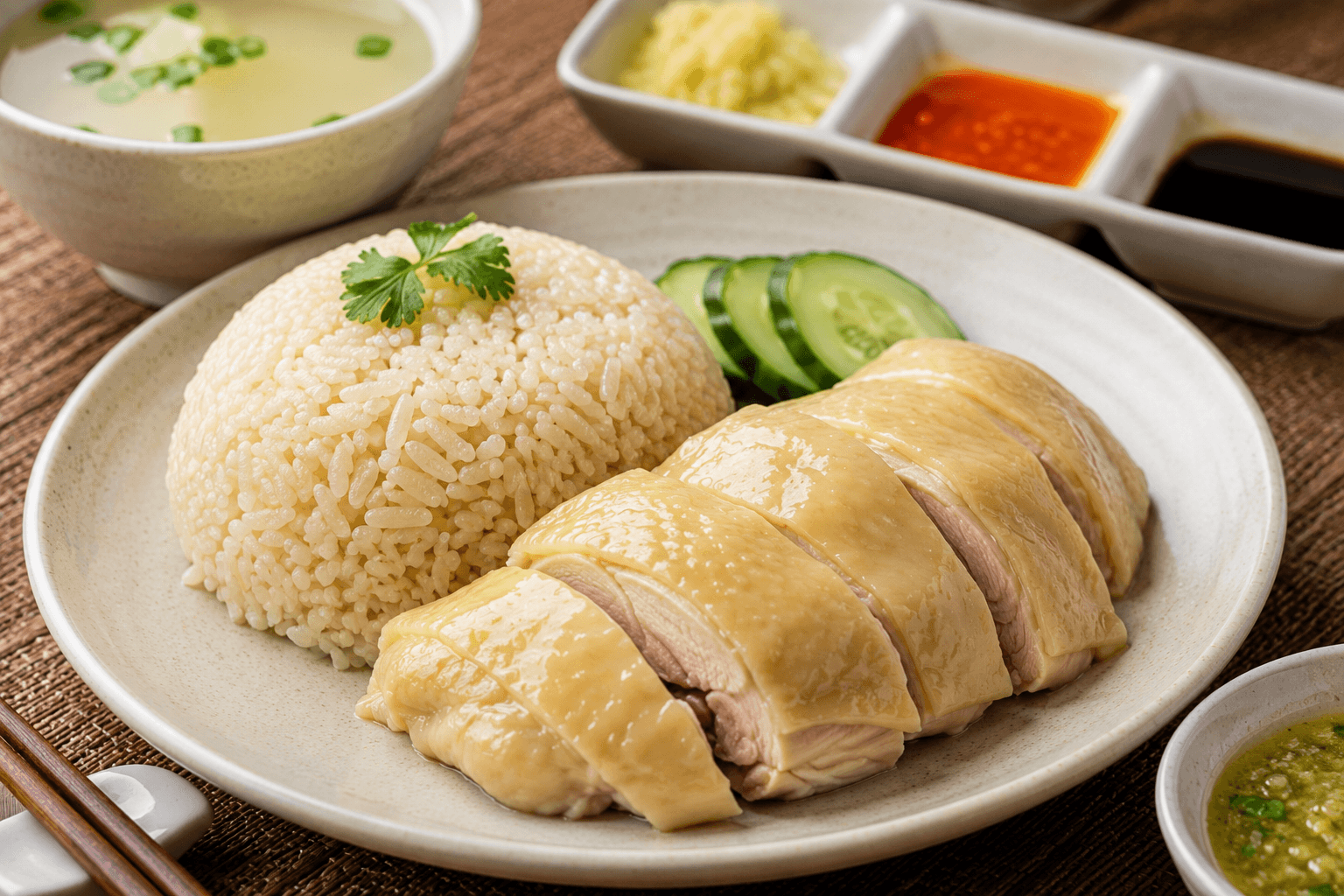
Hainanese chicken rice
Hainanese chicken rice is probably the first dish most people try in Singapore, and for good reason. It looks simple at first, but a really good plate is full of flavor.
The chicken is usually soft and juicy, while the rice is cooked in chicken broth with garlic and ginger. Most stalls also serve chilli sauce and dark soy sauce on the side.
Why people love it:
- Light but filling
- Easy for first-time visitors to try
- Affordable almost everywhere
- Found in nearly every hawker centre
Tian Tian at Maxwell Food Centre is one of the most famous spots for this dish, but many smaller stalls serve excellent versions too. Singapore street food often feels approachable because dishes like chicken rice are comforting and not overly heavy.
Chilli crab
Chilli crab is one of the most famous food in Singapore, especially for seafood lovers. The dish is known for its thick, slightly sweet, and spicy tomato-based sauce.
The crab is usually served whole, so things can get messy very quickly. Most people eat it with fried buns called mantou, which are perfect for dipping into the sauce.
A few things to expect:
- Rich and bold flavors
- Slightly spicy sauce
- Best shared with others
- Usually more expensive than hawker dishes
Some hawker stalls offer smaller and cheaper portions compared to seafood restaurants. Singapore street food is not always about budget meals, and chilli crab is a good example of that.
If you don’t mind getting your hands dirty, this is one dish worth trying at least once.
Laksa
Laksa is a spicy noodle soup made with coconut milk, seafood, and thick rice noodles. The broth is creamy, rich, and full of flavor without being too heavy.
Different stalls make it slightly differently, but most bowls include prawns, fish cake, tofu, and cockles. Some versions are spicier than others.
What makes laksa stand out:
- Creamy coconut broth
- Strong seafood flavor
- Spicy but balanced taste
- Great during rainy weather
One thing I noticed in Singapore is how seriously locals take laksa. People often debate which stall serves the best version. Singapore street food becomes much more interesting once you start comparing these small differences between hawker stalls.
Katong Laksa is one of the most popular styles to try.
Satay
Satay is one of the best late-night foods to eat in Singapore. These grilled meat skewers are cooked over charcoal and usually served with peanut sauce, cucumber, and rice cakes.
Chicken satay is the most common, but many stalls also sell beef, lamb, and prawn versions.
Why do people enjoy satay?
- Smoky grilled flavor
- Easy to share
- Great with cold drinks
- Popular during evening hours
Lau Pa Sat becomes especially busy at night because of its outdoor satay street. The smell of grilled meat fills the area long before you even reach the tables.
Singapore street food feels most lively during these evening satay sessions when locals and tourists all gather outside for dinner.
Char kway teow
Char kway teow is one of those dishes that looks simple but tastes much better than expected once you try it fresh from a hawker stall.
The noodles are fried over very high heat with dark soy sauce, egg, seafood, sausage, and bean sprouts, which gives everything a smoky flavor locals usually call “wok hei.”
Most versions come with:
- Flat rice noodles
- Shrimp or cockles
- Chinese sausage
- Egg
- Bean sprouts
It’s definitely a heavier dish compared to chicken rice or soup noodles, and yes, it can be a little oily. But honestly, that’s part of why people like it so much.
Singapore street food is often more about strong flavor than perfect presentation, and char kway teow is a good example of that. Old Airport Road Food Centre is still one of the better places to try a proper local version.
Kaya toast and kopi
Kaya toast and kopi are one of the most common local breakfasts in Singapore. It’s the kind of meal people grab before work, during early mornings, or while sitting at old coffee shops with friends and newspapers.
Kaya is a sweet coconut and egg jam spread onto crispy toast with cold butter inside. The toast is usually served with soft-boiled eggs and a cup of kopi, which is local-style coffee that tastes stronger and sweeter than regular café coffee.
A typical set usually comes with:
- Kaya toast
- Soft-boiled eggs
- Hot kopi or teh
At first, the combination sounds a little unusual, but it actually works really well together. Singapore street food is not always heavy or spicy, and breakfasts like this show a much calmer side of the local food scene.
Some older coffee shops still make kaya toast the traditional way, which honestly makes the experience feel even better.
Singapore Hawker Food Guide by Area
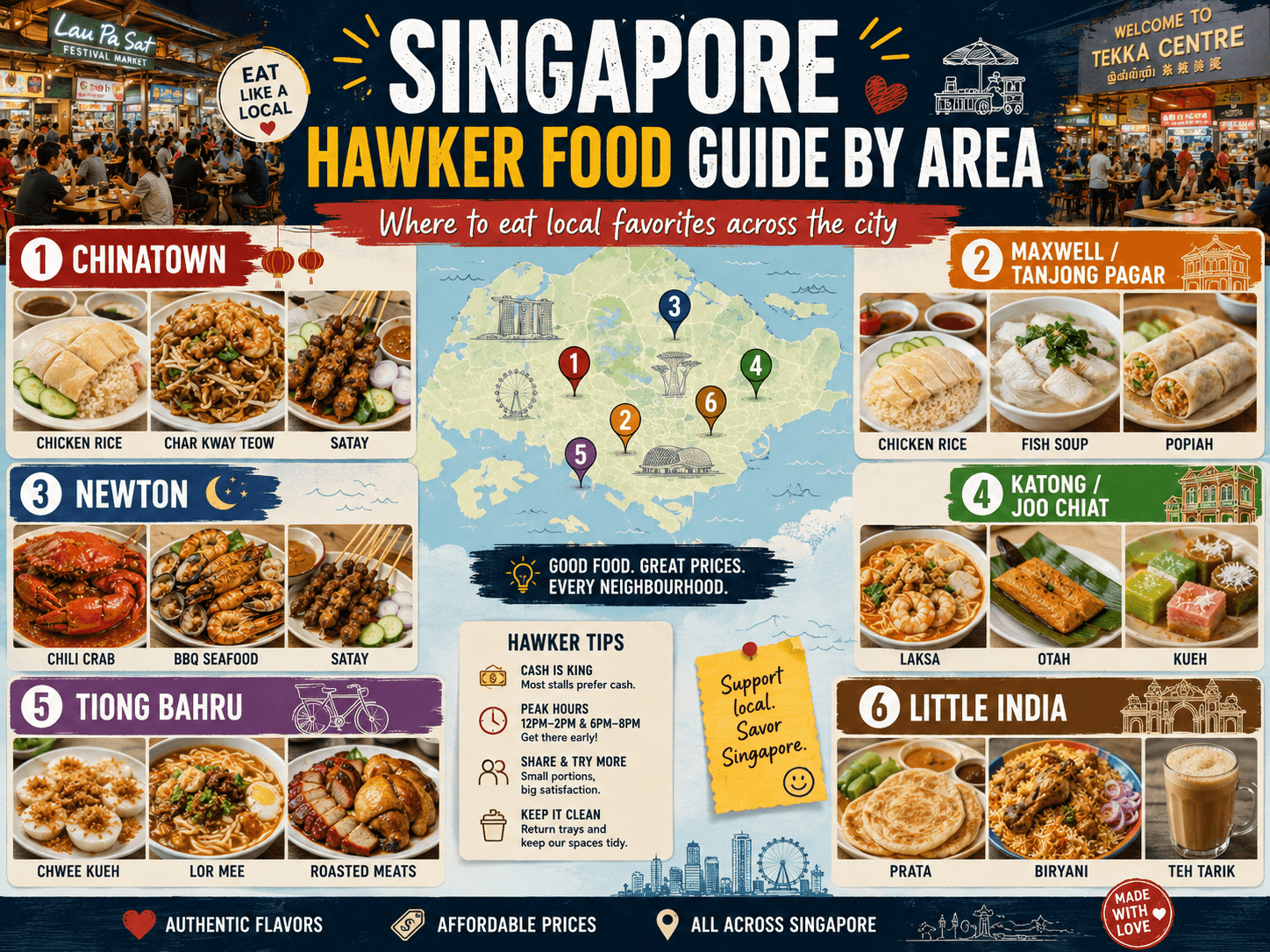
Different neighborhoods in Singapore offer completely different food experiences. Some areas are known for traditional Chinese dishes, while others are better for Indian food, cheap eats, or late-night snacks.
Best hawker food in Chinatown
Chinatown is one of the easiest places to explore if you want to try classic hawker dishes in one area. The streets stay busy most of the day, and there’s food almost everywhere you turn.
Chinatown Complex Food Centre is usually the first stop for many visitors. The place is packed with local stalls selling roast meats, dumplings, claypot rice, and traditional desserts.
A few popular dishes here:
- Soy sauce chicken rice
- Roast duck rice
- Dim sum
- Fried noodles
- Peanut soup desserts
Maxwell Food Centre is also nearby and worth visiting for chicken rice and fresh juices. Singapore street food feels very traditional in Chinatown because many stalls have been run by the same families for years.
The area is also easy to explore on foot, which makes food hopping much simpler.
Hawker centres near Marina Bay
Marina Bay is known more for luxury hotels and attractions, but there are still good hawker spots nearby if you know where to look.
Lau Pa Sat is the most famous option close to Marina Bay. During the daytime, it feels like a normal food centre. At night, the outdoor satay street becomes one of the liveliest dinner spots in the city.
Food people usually order here:
- Satay skewers
- BBQ seafood
- Fried carrot cake
- Hokkien mee
- Sugar cane juice
The location makes it convenient after visiting Marina Bay Sands or Gardens by the Bay. Singapore street food also feels more energetic here at night because of the outdoor seating and grilling stalls.
Prices are slightly higher compared to quieter neighborhoods, but the atmosphere is part of the experience.
Best local food spots in Little India
Little India has some of the most flavorful food in Singapore. The area smells like spices, curry, grilled meats, and fresh bread almost all day long.
Tekka Centre is the best-known hawker spot here. It’s especially popular for Indian Muslim dishes and large meal portions at reasonable prices.
Some local favorites include:
- Fish curry
- Briyani
- Roti prata
- Murtabak
- Teh tarik
One thing people love about this area is how authentic the food feels. Many restaurants and stalls still follow traditional cooking styles that have been around for generations.
Singapore street food becomes much more diverse once you explore Little India because the flavors are completely different from those in Chinatown or Marina Bay. This is also one of the best areas to experience the local food Singapore residents eat regularly.
Cheap eats in Bugis and Kampong Glam
I ended up eating around Bugis quite a few times because the food was cheaper than I expected for such a busy part of Singapore. There are small food spots, dessert stalls, and hawker meals almost everywhere once you start walking around the area.
Albert Centre Market & Food Centre is one of the easiest places to find affordable local food without dealing with huge tourist crowds. Most meals are simple, quick, and filling.
Some good things to try:
- Chicken rice
- Laksa
- Fried carrot cake
- Curry puffs
- Ice desserts
Kampong Glam feels a little different compared to other food areas in the city. The mix of Malay food, grilled meats, cafés, and dessert places gives the neighborhood a more laid-back atmosphere.
Singapore street food around Bugis and Kampong Glam feels especially nice in the evening when people slow down, sit outside, and grab dinner after shopping or sightseeing nearby.
Famous Food in Singapore Tourists Should Not Miss

Singapore is one of those cities where food quickly becomes part of the trip itself. From cheap hawker meals to late-night snacks, there’s always something worth trying around the corner.
Most iconic local dishes
Some dishes are so popular in Singapore that almost every visitor ends up trying them at least once. These meals are easy to find across hawker centres, coffee shops, and local restaurants.
A few dishes people remember most:
- Hainanese chicken rice
- Laksa
- Chilli crab
- Satay
- Char kway teow
- Bak kut teh
Chicken rice is usually the safest place to start if it’s your first time trying Singapore street food. It’s simple, comforting, and available almost everywhere in the city.
Laksa is another favorite because of its rich coconut broth and spicy seafood flavor. Chilli crab, on the other hand, is messier and more expensive, but still one of the most famous food in Singapore that many tourists look forward to.
Most locals also have strong opinions about where to find the best version of each dish, which makes food hunting part of the fun.
Michelin-rated hawker stalls
One thing that surprises many travelers is how affordable Michelin-recognized food can be in Singapore. Some hawker stalls have received international attention while still serving meals for just a few dollars.
Liao Fan Hawker Chan became famous worldwide for its soy sauce chicken rice. Even after becoming popular, people still queue for it daily.
Other well-known Michelin-recognized stalls include:
- Hill Street Tai Hwa Pork Noodle
- Tian Tian Chicken Rice
- Hong Lim Market noodle stalls
- Famous laksa stalls in Katong
The long lines can look intimidating, but they usually move faster than expected. Singapore street food stands out because high-quality meals are still available without expensive restaurant prices.
If you want shorter waits, try visiting before lunch or later in the afternoon.
Best late-night food spots
Singapore stays active late into the night, especially when it comes to food. Some hawker centres remain busy well after dinner hours, particularly on weekends.
Lau Pa Sat is one of the most popular late-night spots because of its outdoor satay street. The atmosphere changes completely after sunset once the grills start going.
Other good late-night food areas include:
- Newton Food Centre
- East Coast Lagoon Food Village
- Geylang food streets
- Bugis night food spots
Satay, seafood, fried noodles, and BBQ dishes are usually the most popular late-night choices. Singapore street food often feels more social at night because people gather outdoors for long dinners and drinks after work.
If you enjoy lively food scenes, evening visits are usually the best time to explore.
Most popular desserts and drinks
Singapore’s dessert scene is underrated, especially after eating spicy or heavy hawker meals. Many local desserts are simple, refreshing, and perfect in hot weather.
Popular desserts and drinks include:
- Ice kacang
- Chendol
- Grass jelly
- Mango sago
- Sugar cane juice
- Bandung
- Kopi and teh tarik
Chendol is one of the most common desserts you’ll see around hawker centres. It’s made with shaved ice, coconut milk, green jelly noodles, and palm sugar syrup.
Fresh sugar cane juice is another favorite during humid afternoons. Singapore street food is not only about savory dishes, and trying local desserts is honestly one of the easiest ways to cool down after a long day of sightseeing.
Singapore Street Food Etiquette & Tips
Eating at hawker centres is simple once you understand how things work. A few small local habits can make the experience smoother, especially during busy meal hours.
How to order food at hawker centres
Most hawker centres work on a self-service system. You walk up to the stall, place your order, pay, and collect the food yourself once it’s ready.
At popular stalls, there’s usually a queue. People normally wait patiently, even during rush hours. Cutting lines is taken seriously, so it’s best to check where the queue starts before ordering.
A few useful tips:
- Look at what locals are ordering
- Keep tissues nearby because some stalls are messy
- Check menus before joining long lines
- Ask about spice levels if needed
Many stalls also display photos, which helps if you’re unfamiliar with certain dishes. Singapore street food feels easy to explore once you get comfortable ordering directly from hawkers.
Some older stalls may only speak basic English, but simple orders usually work fine.
Understanding tray return rules
Singapore is very strict about cleanliness, especially inside hawker centres. In recent years, tray return rules have become much more common across the city.
After finishing your meal, you’re expected to:
- Return trays to collection stations
- Throw away tissues and leftovers
- Leave tables clean for the next person
Most hawker centres now have clearly marked tray return areas, so they’re easy to spot. Staff may remind visitors if trays are left behind during busy hours.
The system actually keeps dining areas cleaner and more organized throughout the day. Singapore street food centres can get crowded quickly, so these small rules help maintain the overall experience for everyone.
How to reserve seats like locals
One thing many first-time visitors notice is that locals often “reserve” tables before ordering food. This practice is commonly called chope-ing in Singapore.
People usually leave small items on the table to save seats, including:
- Tissue packets
- Umbrellas
- Water bottles
- Shopping bags
At first, it can feel strange seeing empty tables with tissues placed on them, but it’s completely normal in Singapore.
If you’re dining during lunch or dinner rush, finding a table first is usually the smarter move. Singapore street food areas become very busy around peak hours, especially in popular hawker centres like Maxwell or Lau Pa Sat.
Just avoid taking seats that already have personal items on them.
Cash vs card payment tips
Many hawker stalls now accept digital payments, but cash is still useful in several places, especially at older stalls.
Some payment methods commonly accepted:
- Cash
- NETS
- PayNow
- Credit cards
- Mobile wallets
Smaller family-run stalls sometimes prefer cash for faster transactions. Keeping small notes and coins with you makes ordering easier during busy hours.
Prices are usually affordable, so you rarely need large amounts of money at hawker centres. Singapore street food remains one of the easiest ways to eat well in the city without spending too much.
If you’re unsure about payment methods, most stalls display accepted options near the counter.
Cheap Food in Singapore for Budget Travelers
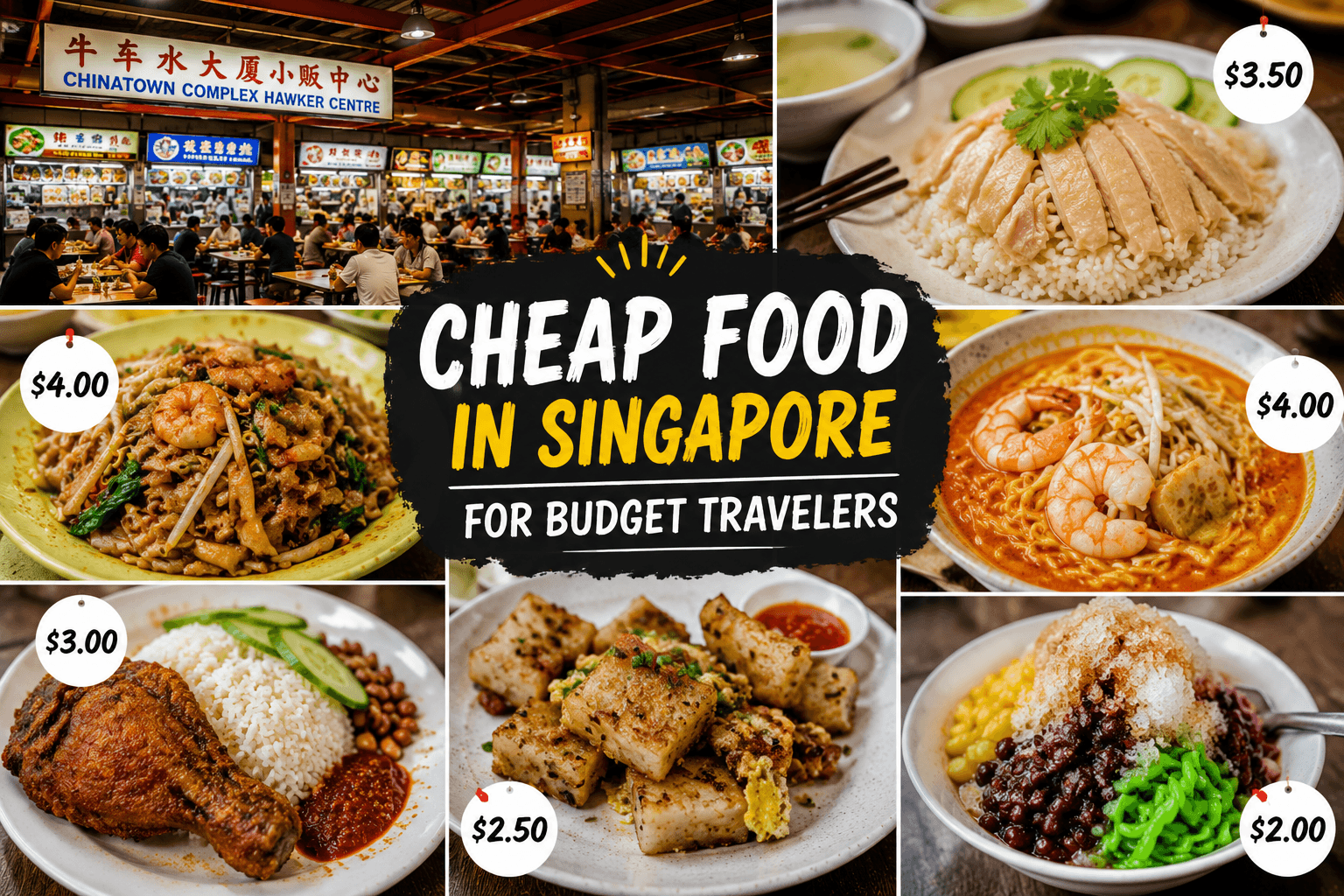
Singapore has a reputation for being expensive, but food is one area where travelers can still save money. Hawker centres make it possible to eat filling local meals without stretching your budget too much.
Meals under SGD 5
Finding meals under SGD 5 in Singapore is still possible if you eat at local hawker centres instead of tourist restaurants. Many classic dishes remain affordable, especially in neighborhood food spots.
Some budget-friendly meals include:
- Chicken rice
- Wanton noodles
- Kaya toast sets
- Fishball noodles
- Plain prata with curry
Portions are usually enough for one person, and the quality is often surprisingly good for the price. Singapore street food is popular partly because cheap meals still taste fresh and satisfying.
Drink stalls also help keep costs low. A kopi or iced tea usually costs much less than café drinks around tourist areas.
Best budget hawker centres
Some hawker centres are known for having lower prices compared to central tourist spots. These places are usually busier with locals and regular customers.
Good budget-friendly hawker centres include:
- Old Airport Road Food Centre
- Tekka Centre
- Tiong Bahru Market
- Chinatown Complex Food Centre
- Albert Centre Market
Meals in these places often cost less than food courts inside shopping malls. You also get a wider mix of traditional dishes and larger portions.
Singapore street food feels more local in these neighbourhood hawker centres because many stalls mainly serve residents instead of tourists. Visiting slightly outside Marina Bay or Orchard Road usually helps save money.
Affordable breakfast options
During my first few mornings in Singapore, I noticed most people were not sitting in fancy cafés. They were eating at small coffee shops and hawker stalls before work.
The breakfasts are usually simple but filling.
You’ll commonly find:
- Kaya toast with eggs
- Roti prata
- Nasi lemak
- Chee cheong fun
- Kopi or local tea
Prices are reasonable too, so it’s easy to eat well without spending much in the morning.
Singapore street food feels a lot quieter at breakfast time. There’s less noise, shorter queues, and more locals casually sitting with coffee before starting the day.
Cheap late-night food spots
Late-night meals do not have to be expensive in Singapore. Several hawker centres and food streets stay active well after dinner hours.
Popular budget-friendly night food spots include:
- Lau Pa Sat
- Newton Food Centre
- Geylang
- East Coast Lagoon Food Village
Common late-night meals:
- Satay
- Fried noodles
- BBQ seafood
- Roti prata
- Soup dishes
Prices at night are usually similar to daytime hawker meals unless you order seafood. Singapore street food becomes more lively after dark, especially on weekends when people gather for supper after work or nightlife activities.
If you want cheap late-night food, prata shops are usually one of the safest options.
Singapore Street Food for Families & Kids
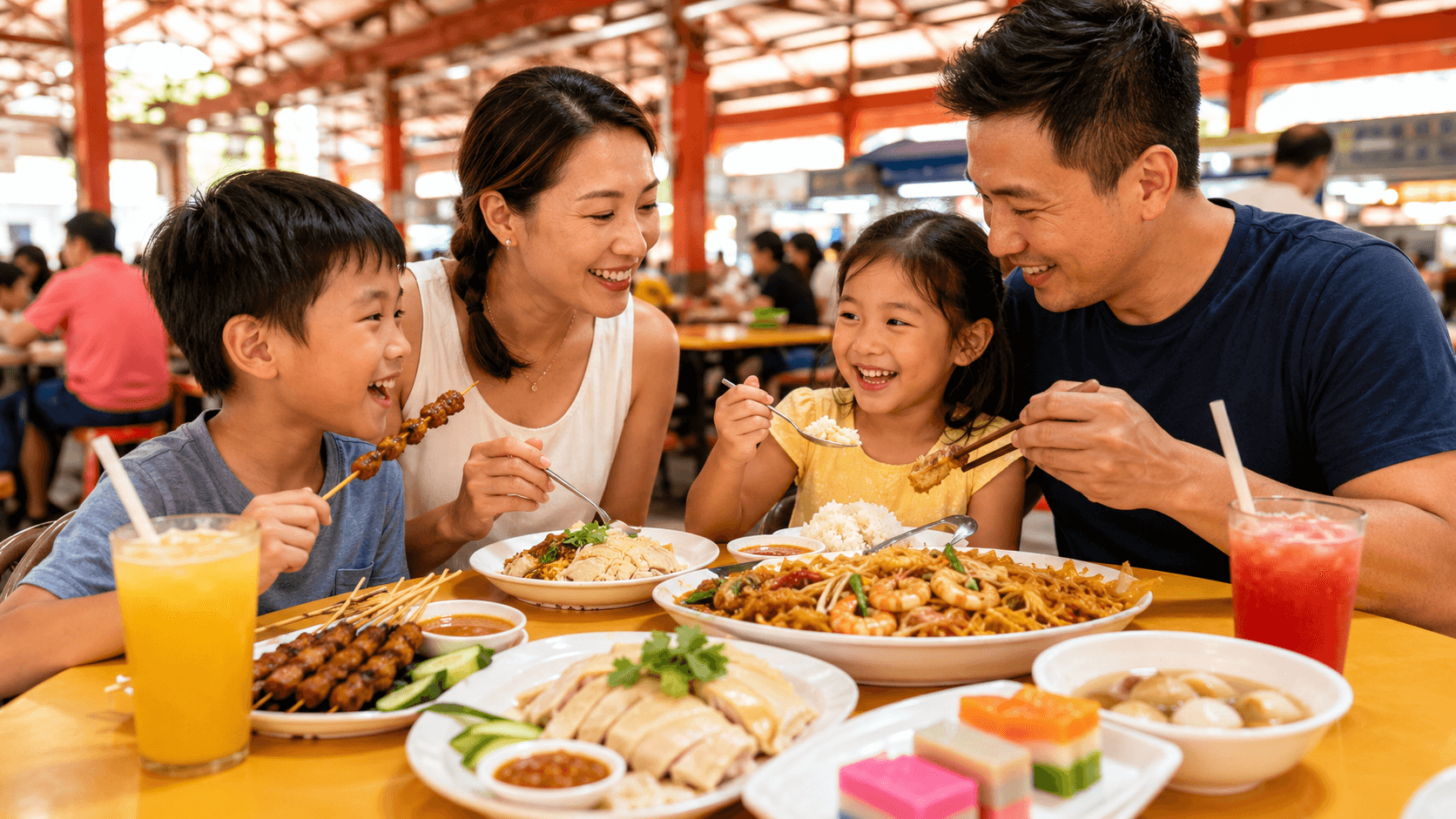
Singapore is one of the easiest cities in Asia for family-friendly dining. Hawker centres are casual, affordable, and usually have enough variety for both adults and children.
Kid-friendly local dishes
When families visit hawker centres for the first time, chicken rice is usually the dish I notice parents ordering first for their kids. It’s simple, not spicy, and easy to eat.
Other dishes children usually enjoy:
- Fried rice
- Wanton noodles
- Fishball soup
- Kaya toast
A lot of stalls can also leave out chilli if needed, which helps when ordering for younger kids.
Singapore street food is actually easier for families than many people expect because hawker centres have so many food choices in one place. If one dish doesn’t work, there’s always something else nearby to try.
Hawker centres with easier seating
Some hawker centres are more family-friendly than others, especially during quieter hours. Larger seating areas and cleaner layouts make dining easier with children.
Family-friendly hawker centres include:
- Lau Pa Sat
- Maxwell Food Centre
- Newton Food Centre
- Satay by the Bay
These places usually have:
- Wider seating areas
- Better ventilation
- Cleaner walkways
- More drink stalls nearby
Visiting before peak lunch or dinner crowds also helps a lot. Singapore street food centres can become noisy and crowded during rush hours, which may feel stressful with younger kids.
Early lunches are usually much more comfortable for families.
Best dessert stalls for families
Whenever kids start getting tired after walking around Singapore, dessert usually fixes the mood pretty quickly. Luckily, hawker centres and food streets have plenty of cold desserts that work well in the hot weather.
Some popular options are:
- Ice kacang
- Chendol
- Mango sago
- Ice cream sandwiches
- Grass jelly drinks
The ice cream sandwich carts are usually the easiest to spot around shopping areas and tourist streets. Kids normally enjoy picking different ice cream flavors and choosing between rainbow bread or wafers.
Singapore street food also feels more fun at night because many dessert stalls stay open late, especially around Marina Bay, Bugis, and Kampong Glam, where people stop for sweets after dinner.
Hygiene and comfort tips for parents
Singapore’s hawker centres are generally cleaner than many travelers expect. Hygiene rules are strict, and cleaning staff regularly clear tables throughout the day.
A few useful tips for families:
- Carry tissues and wet wipes
- Avoid peak lunch crowds
- Choose shaded seating when possible
- Bring small cash notes for faster ordering
Most hawker centres also have nearby washrooms and drink stalls, which makes dining easier with children.
Singapore street food feels more family-friendly compared to many other large Asian cities because the dining spaces are usually organized, safe, and easy to navigate.
Local Food Singapore Travelers Often Miss
Most visitors try the famous dishes first, but Singapore’s food scene goes far beyond chicken rice and chilli crab. Some of the best meals are usually the ones tourists discover later in the trip.
Lesser-known local dishes
A lot of travelers stick to the popular hawker meals they see online, but there are many underrated dishes worth trying around the city.
Some local favorites people often miss:
- Mee rebus
- Satay bee hoon
- Popiah
- Oyster omelette
- Yong tau foo
Mee rebus is a noodle dish served with thick sweet potato gravy and boiled egg. Popiah, on the other hand, is a fresh spring roll filled with vegetables and sauce.
These dishes may not appear in every travel guide, but locals still eat them regularly. Singapore street food becomes much more interesting once you start trying meals beyond the usual tourist favorites.
Some smaller hawker stalls also specialize in only one traditional dish, which usually means they’ve perfected it over the years.
Traditional breakfast foods
I remember being confused the first time I saw people eating soft-boiled eggs with soy sauce for breakfast in Singapore. But after trying it once with kaya toast and kopi, it honestly started making sense.
Breakfast here is usually warm, quick, and filling.
You’ll see people ordering things like:
- Roti prata
- Nasi lemak
- Kaya toast
- Chwee kueh
- Chee cheong fun
Most local coffee shops start getting busy pretty early in the morning, especially in residential areas.
Singapore street food feels very different at breakfast time. It’s quieter, slower, and mostly full of locals eating before work instead of tourists taking photos everywhere.
Regional influences in Singapore cuisine
One thing that makes Singapore food unique is the mix of cultures behind it. Chinese, Malay, Indian, and Peranakan cooking styles all influence the dishes found across the city.
That’s why one hawker centre can sell:
- Indian curry
- Chinese noodles
- Malay satay
- Peranakan laksa
This mix happened because Singapore has always been a trading city with different communities living closely together. Over time, recipes blended and evolved into the local dishes people eat today.
Singapore street food reflects this cultural mix better than almost anything else in the city. You can literally taste different regional influences just by walking between food stalls in the same hawker centre.
Hidden hawker gems locals love
Some of the best food in Singapore comes from smaller stalls tourists rarely hear about. These places may not appear on travel videos, but locals keep returning because the food stays consistently good.
Neighborhood hawker centres like:
- Tiong Bahru Market
- ABC Brickworks Food Centre
- Redhill Food Centre
- Whampoa Food Centre
Often feel less crowded and more local compared to tourist-heavy spots.
Many hidden stalls focus on one specialty dish only. Sometimes there’s no large signboard or social media hype, just regular customers lining up quietly for lunch.
Singapore street food often feels most authentic in these smaller neighbourhood hawker centres where people are simply there to eat good food without long tourist queues or flashy setups.
Final Verdict on Singapore Street Food
After spending time eating around different hawker centres, it’s easy to understand why so many people talk about the food scene in Singapore. Every area feels a little different, and even simple meals somehow end up being memorable.
You can eat chicken rice one day, satay the next, then randomly find a small stall serving something even better than the famous places online.
Singapore street food is also much more affordable than many travelers expect, especially if you mainly eat at hawker centres.
Honestly, some of the best food experiences in the city happen at plastic tables surrounded by locals instead of inside expensive restaurants.