

Singapore Oceanarium at a Glance
| Quick Information | Details |
|---|---|
| Location | 24 Sentosa Gateway, Singapore 098137 |
| Themed zones | 22 immersive zones |
| Singapore Oceanarium tickets | You can purchase them from the product card below |
| What to see | Marine habitats, ocean exhibits, immersive experiences, and live marine animals |
| Recommended visit time | Allow several hours to explore the main habitats and experiences |
| Operating hours | Vary by date; check the official calendar before visiting |
| Location area | Resorts World Sentosa, Sentosa |
| Re-entry | Available under applicable ticket terms |
Explore the Different Zones at Singapore Oceanarium

The Singapore Oceanarium zones take visitors through the ocean’s story, from the origins of marine life to modern ocean habitats and the future of our seas. The experience combines live animal habitats with immersive projections, interactive displays, and educational exhibits.
The visitor journey is divided into six broad themes, covering 22 exhibits and experiences.
From the Ocean’s Origins to the Surface
The journey begins with In the Beginning, which explores how life developed in the oceans. You’ll encounter marine life ranging from tiny plankton to sea jellies and learn how ocean ecosystems have changed over time.
Some highlights include:
- Drop of Water: Explores the microscopic world of ocean life.
- Ocean Wonders: Features thousands of Moon Jellies in a large circular habitat.
- Ancient Waters: Looks at prehistoric marine life and the early oceans.
- Conquering Land: Explores how marine life eventually adapted to life on land.
The experience then moves into At the Surface, focusing on coastal environments and Singapore’s marine ecosystems.
Sunlit Ocean Habitats
The Sunlight section takes you into shallow marine environments where sunlight reaches the seafloor. It highlights the rich biodiversity found around coral reefs, kelp forests, and other sunlit habitats.
Look out for:
- Shark Seas: A closer look at sharks and their role in marine ecosystems.
- Coral Gardens: Colourful coral habitats filled with reef species.
- Reef Animals: Showcases the variety of creatures that live around coral reefs.
- Kelp Forest: Introduces visitors to the unique ecosystem formed by underwater kelp.
You can also see the Aquarist Lab, giving visitors a glimpse into some of the work involved in caring for marine animals.
Open Ocean Experiences
As you move into Into the Deep, the environments become darker, and the focus shifts to animals living farther below the ocean surface.
This section explores how marine animals move through different depths and habitats. Key areas include:
- Open Ocean Currents: Explores movement through the open sea.
- Vertical Migrators: Look at animals that travel between different depths.
- Horizontal Migrators: Species that move across large areas of the ocean.
- Benthos: Introduces life found on or near the seafloor.
- Artificial Habitats: Explores how human-made structures can become marine habitats.
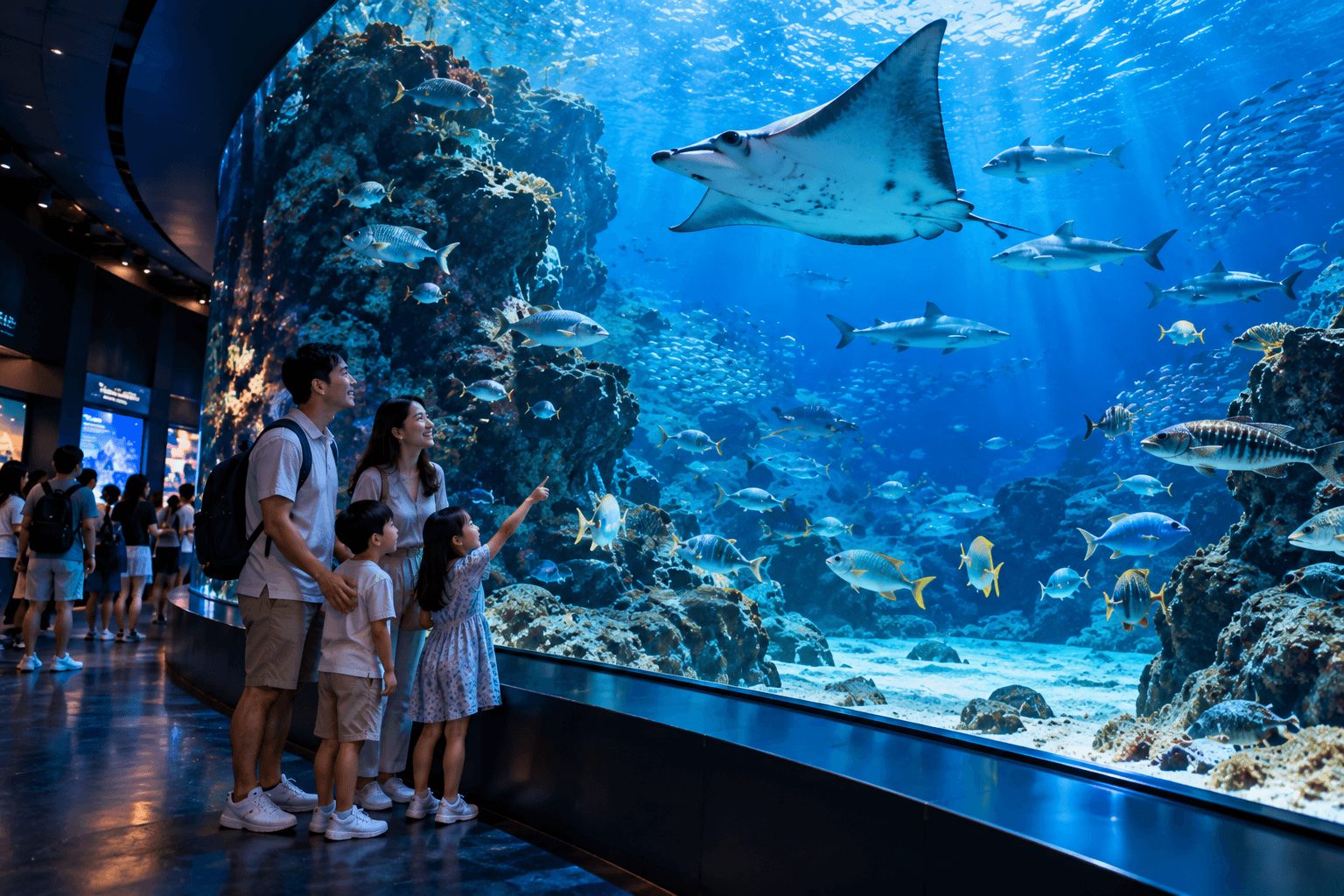
The Open Ocean experience is one of the major highlights, with a huge viewing panel creating an expansive underwater scene. Visitors may spot manta rays, spotted eagle rays, zebra sharks, and other marine animals moving through the habitat.
Into the Deep and the Abyss
The deeper you go, the more unusual the marine environments become. The Abyss focuses on the extreme conditions found in the deepest parts of the ocean.
Here, visitors can explore:
- Deep Ocean Exploration: Introduces the challenges of exploring the deep sea.
- Life in the Deep: Highlights animals adapted to darkness, cold, and high pressure.
- Whale Fall and Seamount: Shows how a whale carcass can support an entire deep-sea ecosystem.
- Trenches: Takes visitors into some of the deepest and least explored areas of the ocean.
The Singapore Oceanarium exhibits help show just how different deep-sea environments are from the colourful habitats found closer to the surface.
Immersive and Interactive Experiences
The final theme, A New Horizon, shifts the focus from discovering the ocean to thinking about its future. Instead of only observing marine life, visitors can explore how changes in the environment may affect ocean ecosystems.
Highlights include:
- Ocean’s Future: Uses immersive visuals to explore environmental changes affecting the oceans.
- Hallway of Hope: Encourages visitors to think about ocean conservation and the role people can play.
- Interactive displays: Add hands-on elements to the educational experience.
- Immersive projections: Bring different ocean environments and stories to life.
Together, these experiences make the Oceanarium more than a traditional aquarium visit, combining real marine habitats with technology and educational storytelling.
Things to Do at Singapore Oceanarium

Beyond exploring the different habitats, there are several things to do at Singapore Oceanarium that can make your visit more interactive. You can watch scheduled animal feeding sessions, join educational presentations, or book experiences that take you behind the scenes.
Watch Animal Feeding and Spotlight Programmes
Feeding sessions let you see how the Oceanarium's animal care teams work with marine animals and how different species behave during feeding.
Current scheduled programmes include:
- Shark Seas Dive Feeding: Tuesdays and Thursdays at 2:30 PM.
- Open Ocean Dive Feeding: Daily except Mondays and Fridays at 4:00 PM.
- Open Ocean Discovery Presentation: Includes information about animals such as Giant Groupers, Manta Rays, and Scalloped Hammerheads, with opportunities to interact with divers through hand signals.
- Animal Spotlight: Sea Jellies: A 45-minute behind-the-scenes experience that includes a feeding session.
- Animal Spotlight: Seahorses: A 45-minute experience focused on seahorse care and feeding.
Programme timings can change, so check the daily schedule before your visit.
Explore Interactive and Educational Experiences
The Oceanarium combines live habitats with interactive displays and immersive experiences, so you can learn about marine ecosystems while moving through the exhibits.
Depending on the experience available during your visit, you can:
- Learn how marine animals adapt to different ocean environments.
- Discover more about deep-sea ecosystems.
- Explore Singapore's coastal biodiversity.
- Take part in interactive educational activities.
- Learn about ocean conservation and environmental changes.
Join Behind-the-Scenes Experiences
If you want more than a standard visit, the Oceanarium offers additional experiences that take you closer to its animals and animal-care work.
Current options include:
- Singapore Oceanarium Insider Experience: A 3.5-hour experience with expert-led, behind-the-scenes access.
- Animal Spotlight: Sea Jellies: Learn how sea jellies are cared for and see a feeding session.
- Animal Spotlight: Seahorses: Discover more about seahorse care and feeding.
- Ocean in Focus: Into the Abyss: A 1.5-hour experience exploring life in the deep sea.
These experiences have their own schedules and requirements, so check availability before planning your visit.
Check Out Seasonal Programmes and Events
The Oceanarium also hosts limited-time events throughout the year. These are separate from the permanent Singapore Oceanarium exhibits and can change with the season.
For example, Into the Glowcean is scheduled from 5 September to 1 November 2026. The current programme includes glowing marine-life installations, seasonal activities, and special presentations.
If you're visiting during this period, you can look out for activities such as:
- Oceanic Glow: Glowing marine-life sculptures displayed across selected areas.
- Skeleton Dive Feed: A themed feeding session at Open Ocean.
- Light Painting Live: Scheduled performances inspired by marine life.
- Symphony in the Sea: Selected live performances at Open Ocean.
- Seasonal family activities: Including crafts and other limited-time experiences.
Because seasonal programmes have fixed dates and may change from year to year, always check the current event schedule before your visit.
What Animals Can You See at Singapore Oceanarium?
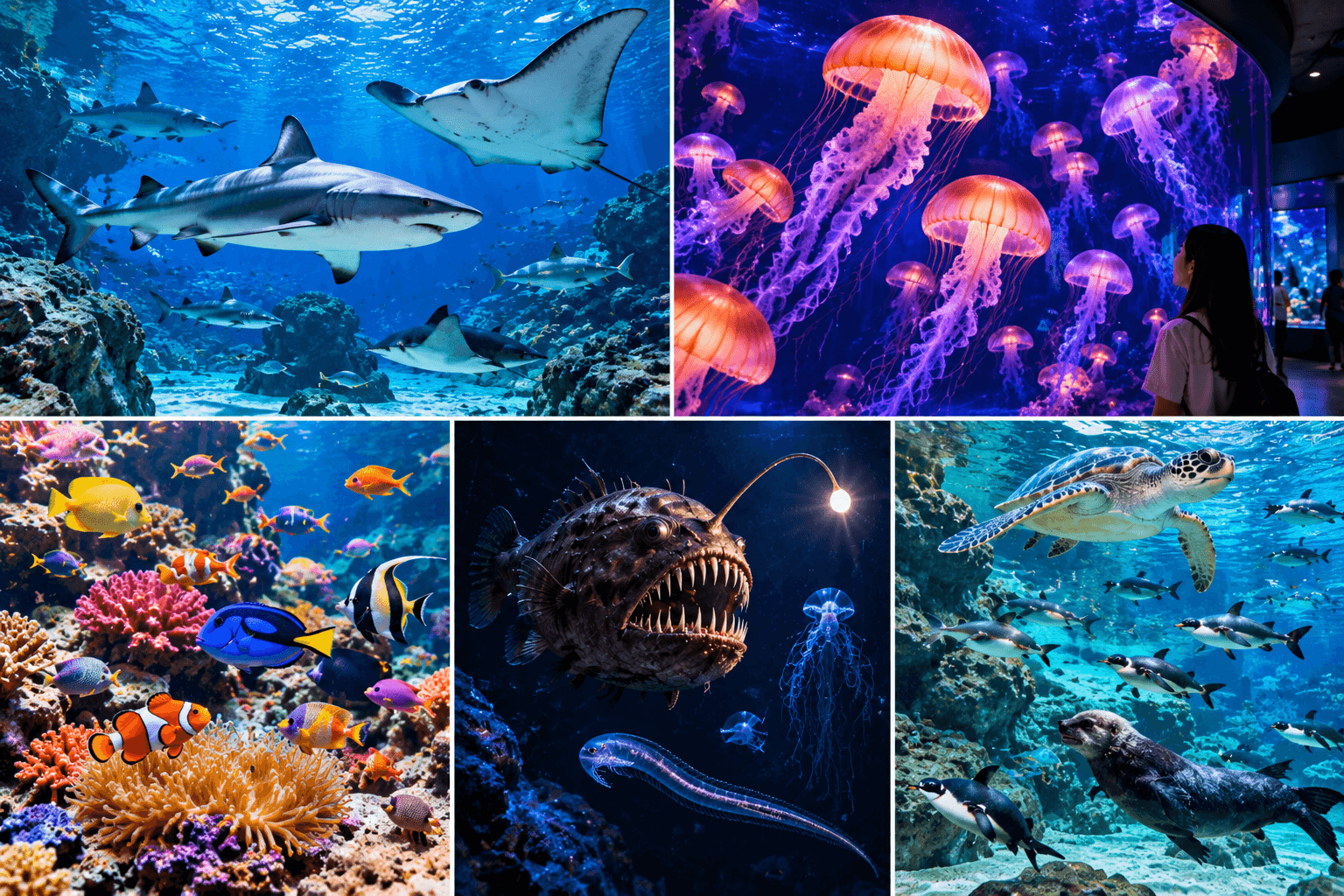
The Singapore Oceanarium animals range from familiar sharks and rays to sea jellies, reef fish, seahorses, and species adapted to the deep sea. The Oceanarium also features amphibians and other animals that help tell the wider story of how life evolved and adapted across different environments.
Here are some of the marine animals you may encounter during your visit.
Sharks and Rays
Sharks and rays are among the most noticeable animals at the Oceanarium, particularly in the larger habitats. Different species can be seen moving through the water, giving visitors a chance to observe their size, shape, and swimming behaviour.
Examples include:
- Sand Tiger Shark
- Scalloped Hammerhead
- Sandbar Shark
- Zebra Shark
- Manta Ray
- Spotted Eagle Ray
- Indo-Pacific Leopard Shark
- Blotched Fantail Ray
Some habitats also use interactive displays to explain shark biology and their role in marine ecosystems.
Sea Jellies
Sea jellies are another major highlight, especially in Ocean Wonders. The habitat features thousands of Moon Jellies, along with other species displayed in cylindrical habitats.
You may see:
- Moon Jellies
- Atlantic Sea Nettles
- Fried Egg Sea Jellies
- White Spotted Sea Jellies
The Oceanarium also has a dedicated sea jelly nursery and breeding programme, which visitors can learn about through its behind-the-scenes experiences.
Tropical Fish and Coral Reef Species
The Oceanarium is home to many smaller fish and reef species that can be easy to miss when you're focused on the larger animals. Take your time around the reef and coastal habitats to spot them.
Depending on the habitat, examples include:
- Banggai Cardinalfish
- Yellow Tang
- Sargassum Fish
- Archerfish
- Longsnout Seahorse
- Green Moray
- Australian Lungfish
- Arapaima
Some exhibits also feature local coastal species from Singapore, including animals associated with mangrove and intertidal environments.
Deep-Sea Marine Life
The deeper sections introduce animals that have adapted to environments with little or no sunlight. These species can look very different from the colourful fish found in shallow waters.
Examples include:
- Japanese Isopod
- Deepsea Akaza Prawn
- Australian Ghostshark
- Australian Ghostshark
- Other deep-sea species displayed in the deep-ocean habitats
The deep-sea exhibits also explore adaptations such as bioluminescence and survival under extreme pressure, helping visitors understand why these environments are so different from surface waters.
Other Fascinating Marine Animals
The animal collection extends beyond sharks, rays, and reef fish. Several habitats feature animals that help show how diverse ocean and coastal ecosystems can be.
Keep an eye out for:
- Horseshoe Crabs
- Seahorses
- Tasmanian Giant Crabs
- Knobbly Sea Stars
- Spotted Seahorses
- Moray Eels
You can also encounter animals such as Axolotls and Poison Dart Frogs in the Conquering Land experience, which explores the transition from aquatic environments to life on land.
The exact animals visible during your visit can vary between habitats and programmes, so it is worth taking your time rather than rushing through the exhibits.
Singapore Oceanarium Opening Hours and Best Time to Visit
Singapore Oceanarium Opening Hours
The opening hours vary by date, so check the official calendar before your visit. As of September 2026, the listed hours are generally 10:00 AM to 8:00 PM, although some dates have earlier closures.
How Long Do You Need at the Singapore Oceanarium?
The Oceanarium recommends allowing around 3.5 hours for a full visit. You can stay until closing once inside, with no fixed time limit.
Allow extra time if you plan to attend animal presentations, feeding sessions, or book a behind-the-scenes experience.
Best Time to Visit Singapore Oceanarium
For a more relaxed experience:
- Weekday mornings are a good option for visitors who want to explore at a quieter time.
- Check the daily programme schedule before choosing your arrival time.
- Avoid peak periods if you prefer fewer crowds.
- If you have a timed programme, plan to arrive early enough to reach the meeting point.
How to Avoid Crowds
Time-entry ticketing is used during peak periods to manage visitor flow. If your ticket has a selected entry time, arrive within that slot; a 15-minute grace period is available, but entry afterward depends on crowd conditions.
How to Get to Singapore Oceanarium
The Oceanarium is at Resorts World Sentosa, making it easy to reach by MRT, Sentosa Express, walking, taxi, or ride-hailing services.
Getting to Sentosa by MRT
The easiest public transport option is to take the MRT to HarbourFront Station, which connects to VivoCity shopping mall.
From there:
- Follow the signs to Level 3 of VivoCity.
- Take the Sentosa Express into Sentosa.
- Get off at Resorts World Station.
- Walk towards Resorts World Sentosa and follow the signs for the Oceanarium.
Getting to Singapore Oceanarium by Sentosa Express
The Sentosa Express runs from VivoCity into Sentosa and is a convenient option if you are already near HarbourFront.
After entering Sentosa, get off at Resorts World Station, which is the closest stop for the Oceanarium. From the station, follow the signs towards Resorts World Sentosa.
Walking from Resorts World Sentosa
If you are already at Resorts World Sentosa, you can simply walk to the Oceanarium.
The attraction is located at 24 Sentosa Gateway, within the Resorts World Sentosa complex. Follow the directional signs once you reach the resort area.
Getting There by Taxi or Ride-Hailing
Taxis and ride-hailing services can drop you at Resorts World Sentosa. This can be a convenient option if you are travelling with children, carrying luggage, or coming directly from your hotel.
For navigation, use: Singapore Oceanarium, 24 Sentosa Gateway, Singapore 098137
Once you arrive at Resorts World Sentosa, follow the signs to the Oceanarium entrance.
What to Know Before Visiting Singapore Oceanarium

A few practical details can make your visit to the Singapore Oceanarium easier, especially if you're travelling with children or planning to spend several hours inside.
What to Wear
There is no special dress code for a regular visit, but comfortable clothing and shoes are recommended since you’ll be walking through multiple exhibits.
If you plan to try Pier Adventure or join a behind-the-scenes experience, check the specific requirements beforehand. Pier Adventure, for example, requires covered shoes.
What to Bring
Keep your visit simple and bring only what you need.
- Your physical ticket or e-ticket
- Mobile phone for your ticket and the Oceanarium app
- Comfortable walking shoes
- A small bag or backpack
- Any essential items needed for children
Photography is allowed, but flash photography is not permitted. Bags may also be inspected at the entrance.
Food and Drink Rules
Outside food and drinks are not permitted inside the Oceanarium, except for baby food, infant formula, and food required for guests with special dietary needs.
There are food and drink outlets inside, including Explorer's Nook, Tide Deli, and Ocean Bites, offering options such as pastries, sandwiches, salads, snacks, and drinks.
Accessibility and Visitor Facilities
The Oceanarium has facilities designed to make the attraction accessible to a wide range of visitors. These include:
- Elevators and ramps
- Accessible restrooms
- Nursing rooms
- Prayer rooms
- Stroller access
- Wheelchair access
- Free Wi-Fi
Is Singapore Oceanarium Suitable for Children?
Yes. Children can explore the marine habitats, interactive experiences, and educational displays, while families can also use facilities such as nursing rooms and stroller access.
Children under 4 years old enter free, while children aged 4–12 require an admission ticket. Parents should supervise children throughout the visit.
For older children, additional experiences such as Pier Adventure may also be available, subject to age, height, and safety requirements.
Attractions Near Singapore Oceanarium

Since the Oceanarium is located within Resorts World Sentosa, you can easily combine your visit with other attractions nearby. This makes it possible to plan a full day around the resort instead of travelling between different parts of Singapore.
Universal Studios Singapore
Universal Studios Singapore is one of the main attractions next to the Oceanarium. The theme park has seven themed zones with rides, shows, character appearances, and attractions based on popular films and television franchises.
It can be a good addition if you want to mix a marine-life visit with a full day of rides and entertainment.
Tip: If you plan to visit both attractions on the same day, allow plenty of time for each rather than trying to rush through the Oceanarium.
Adventure Cove Waterpark
Adventure Cove Waterpark is another nearby option within Resorts World Sentosa. It combines water rides with marine experiences and is particularly suitable if you want something more active after exploring the Oceanarium.
Popular experiences include:
- Adventure River: A relaxing float through themed environments.
- Rainbow Reef: A snorkelling experience with tropical marine life.
- High-speed water slides: For visitors looking for more excitement.
- Bludder Bay: A large wave pool for swimming and play.
Other Sentosa Attractions
If you have more time, there are plenty of other attractions across Sentosa beyond Resorts World Sentosa. However, they are not all immediately next to the Oceanarium.
Depending on your interests, you could add:
- WEAVE – a retail, dining, and lifestyle destination within Resorts World Sentosa.
- Harry Potter: Visions of Magic – an immersive experience located within Resorts World Sentosa.
- Other Sentosa attractions can be added if you're staying on the island for a full day or longer.
For a simple itinerary, combining the Singapore Oceanarium with Universal Studios Singapore or Adventure Cove Waterpark is the most straightforward option because these attractions are all within the Resorts World Sentosa area.
Singapore Oceanarium Visitor Tips
A few simple tips can help you make better use of your time and avoid common problems during your visit.
- Check the operating hours before you go. Hours can change by date, so check the official schedule for your visit day.
- Check the daily programme schedule. Feeding sessions and presentations run at specific times and may change without notice.
- Arrive within your selected time slot if time-entry ticketing applies. A 15-minute grace period is available, but later entry depends on crowd conditions.
- Keep your e-ticket ready on your phone or bring a printed copy for admission.
- Wear comfortable shoes because the visit involves walking through multiple habitats and exhibits.
- Bring a small bag rather than heavy luggage. Lockers are currently not available inside the Oceanarium.
- Do not bring outside food or drinks, except permitted items such as baby food, infant formula, and food required for special dietary needs.
- Turn off your camera flash when taking photos. Photography is allowed, but flash can disturb the animals.
- Allow around 3.5 hours if you want enough time to explore the main experience without rushing.
- Consider booking special experiences in advance if you want a behind-the-scenes programme, as these have their own schedules and requirements.
- Families can bring strollers and wagons, and nursing rooms are available inside.
- Keep your ticket and hand stamp if you leave, as same-day re-entry is allowed during regular operating hours.
Final Thoughts
The Singapore Oceanarium offers much more than a traditional aquarium visit, combining live marine habitats with immersive exhibits, interactive experiences, and educational programmes. From colourful reef environments and large open-ocean habitats to deep-sea displays, there is plenty to explore across its 22 themed zones.
For the smoothest visit, check the opening hours and daily programme schedule before you go, allow around 3.5 hours to explore, and book any special experiences in advance if they are part of your plan.
If you're already spending time at Sentosa, the Oceanarium can also be combined with nearby attractions such as Universal Studios Singapore or Adventure Cove Waterpark for a fuller day out.