
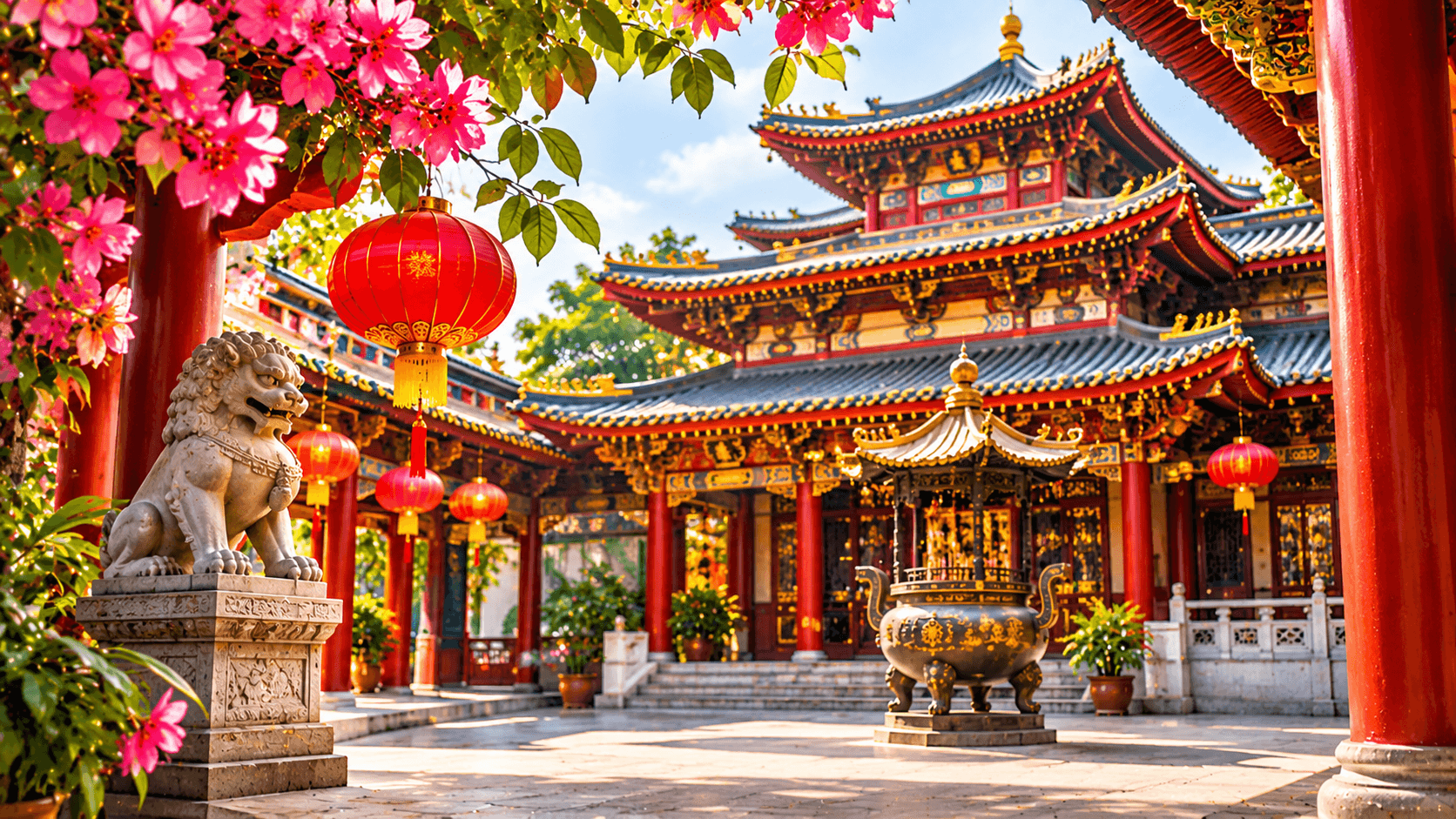
Singapore Cultural Experiences at a Glance
Singapore’s cultural experiences range from heritage neighbourhoods and museums to religious landmarks, walking tours, and local food. Here’s a quick overview of the main areas and experiences covered in this guide.
| Experience Type | Where to Go |
|---|---|
| Chinese heritage | Chinatown |
| Indian heritage | Little India |
| Malay and Muslim heritage | Kampong Gelam |
| Peranakan culture | Peranakan Museum, Katong-Joo Chiat |
| Heritage walks | Chinatown, Little India, Kampong Gelam |
| Hawker food culture | Hawker centres across Singapore |
Chinese Heritage Experiences in Singapore
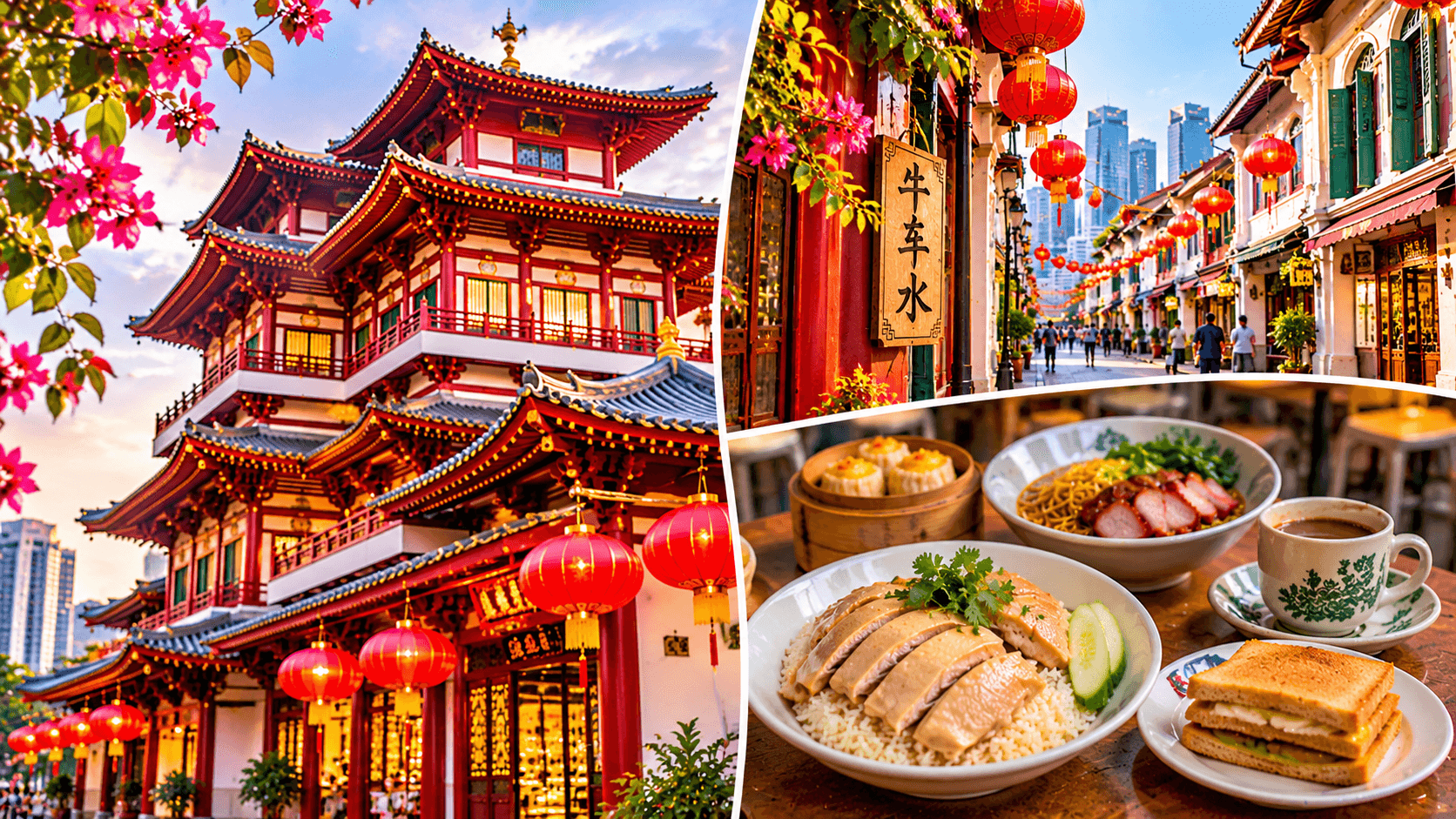
Chinatown is one of the main places to explore Chinese heritage and enjoy authentic Singapore cultural experiences. A short walk through the area can take you from historic temples and clan associations to traditional shophouses, food centres, and streets that reflect the history of Singapore’s Chinese community.
1. Explore Chinatown's Heritage and Temples
Begin your walk along South Bridge Road, where several significant religious buildings are located close together. The Buddha Tooth Relic Temple is one of Chinatown’s most recognisable landmarks, with a Tang-style exterior and a museum inside. A few minutes away, Thian Hock Keng Temple offers a different look at Chinese religious heritage and was historically associated with Hokkien immigrants.
You can also visit Sri Mariamman Temple, Singapore’s oldest Hindu temple. Although it is not a Chinese temple, its location in the heart of Chinatown reflects the area’s multicultural history.
For a simple walking route, follow:
Buddha Tooth Relic Temple → South Bridge Road → Sri Mariamman Temple → Pagoda Street → Chinatown Street Market
Along the way, look for the preserved shophouses and older streets that give Chinatown much of its character. The Chinatown Heritage Centre is another useful stop if you want more historical context about the early Chinese immigrant communities and their living conditions.
What to see:
- Buddha Tooth Relic Temple
- Thian Hock Keng Temple
- Sri Mariamman Temple
- Pagoda Street
- Chinatown Street Market
- Chinatown Heritage Centre
Plan around 2–3 hours if you want to visit the temples, walk through the heritage streets, and stop at the market without rushing.
To learn more about the lives of early Chinese immigrants in Singapore, visit the Chinatown Heritage Centre and explore its recreated homes, personal stories, and heritage exhibits.

2. Explore Chinatown's Food Culture
Chinatown is also a good place to understand Singapore’s Chinese food traditions through everyday dishes rather than formal dining. Maxwell Food Centre is a convenient starting point, with multiple stalls serving local favourites in one location.
Try dishes such as Hainanese chicken rice, wanton noodles, char kway teow, congee, and kaya toast. You’ll also find traditional drinks such as kopi and teh at local coffee shops.
Instead of treating the food stop as just another meal, look at how dishes have developed within Singapore’s multicultural food scene. Hainanese chicken rice, for example, reflects the influence of Hainanese immigrants, while other dishes found around Chinatown show influences from different Chinese dialect groups and Southeast Asian cooking traditions.
For a more local-style experience, visit a hawker centre during a regular meal period and order from different stalls. Prices are generally lower than at sit-down restaurants, although popular stalls may have queues during lunch.
Good to know: Chinatown is busiest around lunchtime and during major festivals. If you want a quieter food experience, arrive earlier in the day.
Want to explore Chinatown's local food scene with a guide? Join a Chinatown food tour to sample popular Singaporean dishes and discover the flavours behind the area's hawker culture.

Indian Heritage Experiences in Singapore
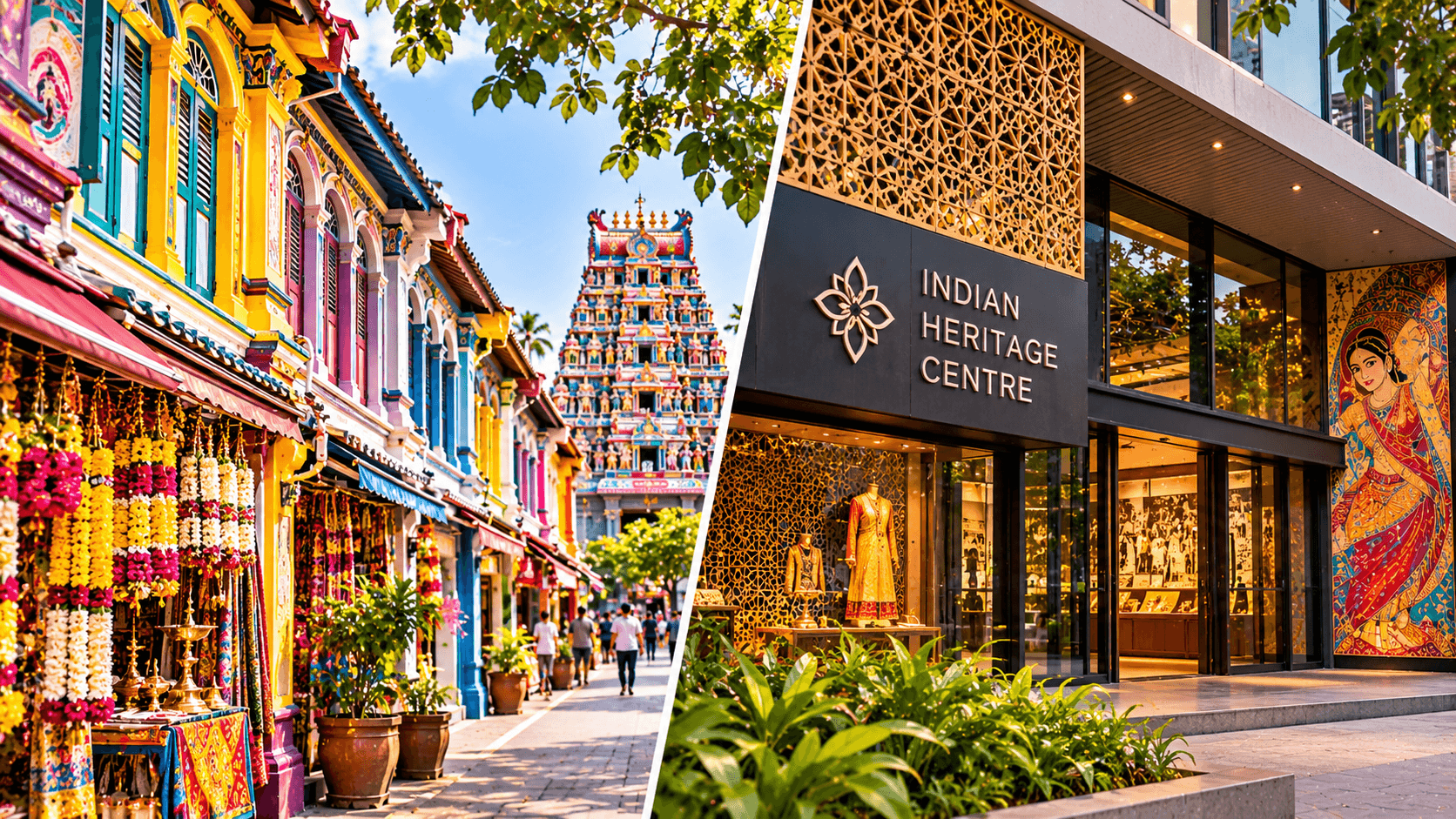
Little India is one of the most concentrated places to experience Singapore’s Indian heritage. Its streets combine Hindu temples, traditional shops, Indian restaurants, colourful shophouses, and cultural institutions within a relatively small area.
3. Explore Little India's Heritage Streets
Start your walk around Serangoon Road, the main street running through Little India. The area is known for its historic shophouses, flower stalls, jewellery shops, sari stores, spice shops, and restaurants serving South Indian and North Indian food. Exploring these streets is one of the most colourful Singapore cultural experiences, offering a closer look at the area's traditions and everyday life.
One of the key landmarks is Sri Veeramakaliamman Temple, a Hindu temple dedicated to the goddess Kali. Its detailed sculptures and colourful façade make it one of Little India’s most recognisable religious sites.
Continue towards Campbell Lane and Dunlop Street, where you’ll find traditional businesses alongside cafés and newer shops. Tan Teng Niah, a brightly coloured former Chinese villa, is also worth seeing because it reflects the mixed communities that have long been part of Little India.
For a short walking route, follow:
Sri Veeramakaliamman Temple → Serangoon Road → Campbell Lane → Tan Teng Niah → Dunlop Street
Set aside around 2 hours for the walk if you want time to enter the temple, browse the shops, and stop for food.
4. Visit the Indian Heritage Centre
The Indian Heritage Centre is a useful stop if you want more historical context after exploring Little India. The museum traces the history and heritage of Indian communities in Singapore and Southeast Asia through galleries, objects, photographs, and exhibitions.
Its exhibits help explain how different Indian communities contributed to Singapore’s development, rather than presenting Indian culture as a single tradition.
Allow around 1–2 hours for a visit, depending on how closely you explore the galleries. You can pair the museum with a walk around Little India before or after your visit.
For a more complete cultural experience, combine the museum with Serangoon Road, Sri Veeramakaliamman Temple, and Campbell Lane. This gives you both the historical background and a chance to see how Indian culture is represented in the neighbourhood today.
Want to explore Little India's colourful streets, historic temples, and local traditions with a guide? Join a Little India walking tour for a closer look at this vibrant cultural neighbourhood.

Malay and Muslim Heritage Experiences in Singapore
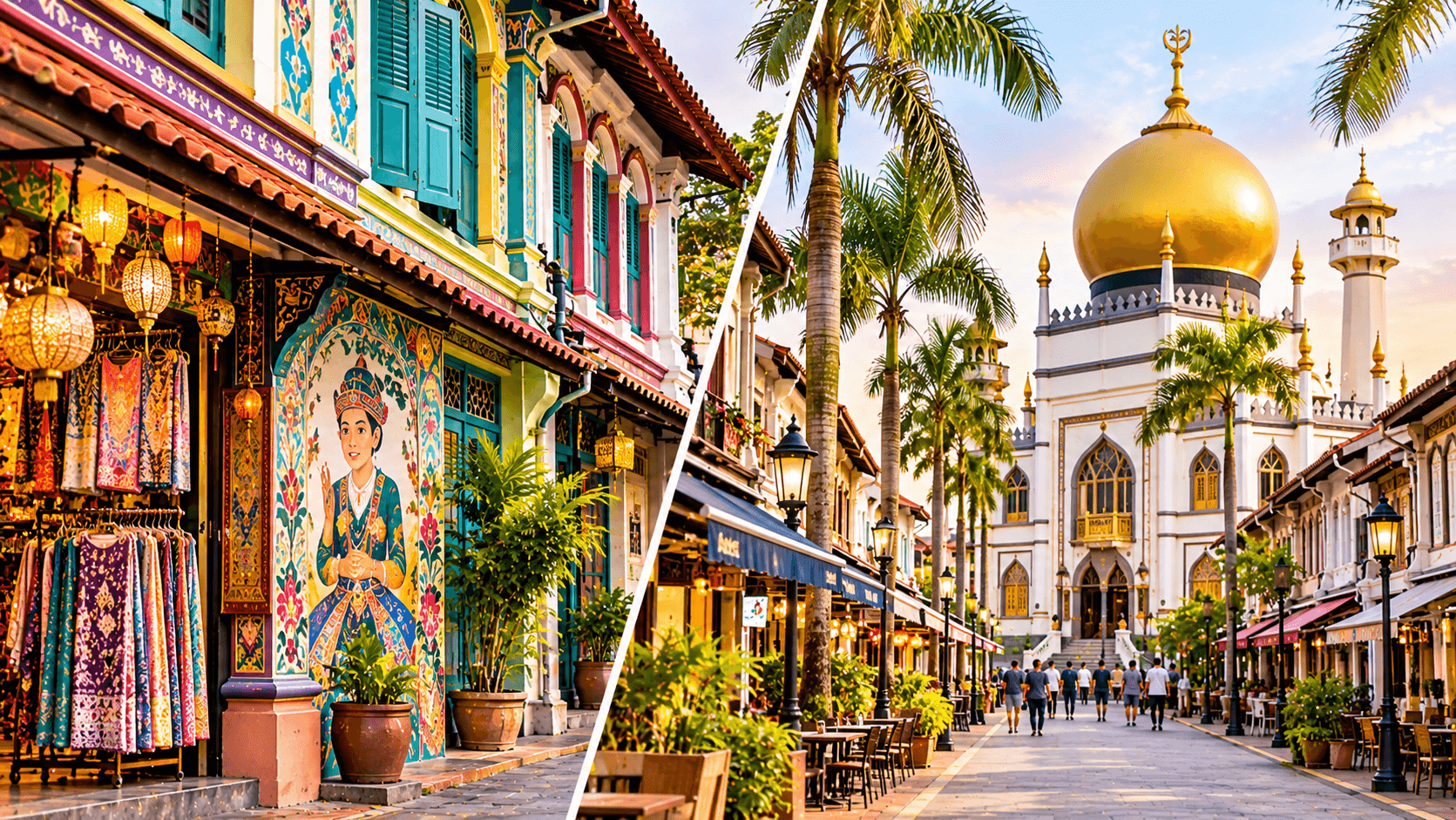
Kampong Gelam is one of the main areas to explore Singapore’s Malay and Muslim heritage and enjoy meaningful Singapore cultural experiences. The neighbourhood combines historic religious landmarks with traditional shops, textile stores, restaurants, and conserved shophouses.
5. Explore Kampong Gelam
Start around Arab Street and Haji Lane, then walk through the surrounding streets to see the area’s mix of Malay, Arab, and wider Muslim influences.
Kampong Gelam was historically associated with Singapore’s Malay royalty and Muslim communities. Today, its heritage is visible in the preserved shophouses, textile shops, traditional businesses, and restaurants that line the neighbourhood.
Take time to explore Arab Street, particularly if you’re interested in fabrics, carpets, traditional clothing, and Malay-Muslim businesses. Haji Lane has a more contemporary feel, with cafés, boutiques, and murals occupying many of its narrow shophouses.
You can spend around 1–2 hours walking through the neighbourhood, or longer if you plan to stop for food or shopping.
6. Explore Sultan Mosque and Bussorah Street
The Sultan Mosque is the main landmark to visit in Kampong Gelam. Its large golden domes and distinctive architecture make it one of Singapore’s most recognisable mosques, while the surrounding area provides a closer look at the neighbourhood’s Muslim heritage.
After seeing the mosque, walk along Bussorah Street, a pedestrian-friendly street lined with restaurants, shops, and conserved shophouses. The street runs towards the mosque and is a convenient place to combine architecture, local businesses, and food in one short walk.
If you visit the mosque, check the visitor hours and follow the required dress and photography rules. Non-Muslim visitors can enter designated areas when access is available, but the mosque remains an active place of worship.
For a simple route, follow:
Sultan Mosque → Bussorah Street → Arab Street → Haji Lane
This route works well as a 2–3 hour cultural stop, especially if you include lunch or an afternoon meal in Kampong Gelam.
Peranakan Culture and Heritage in Singapore
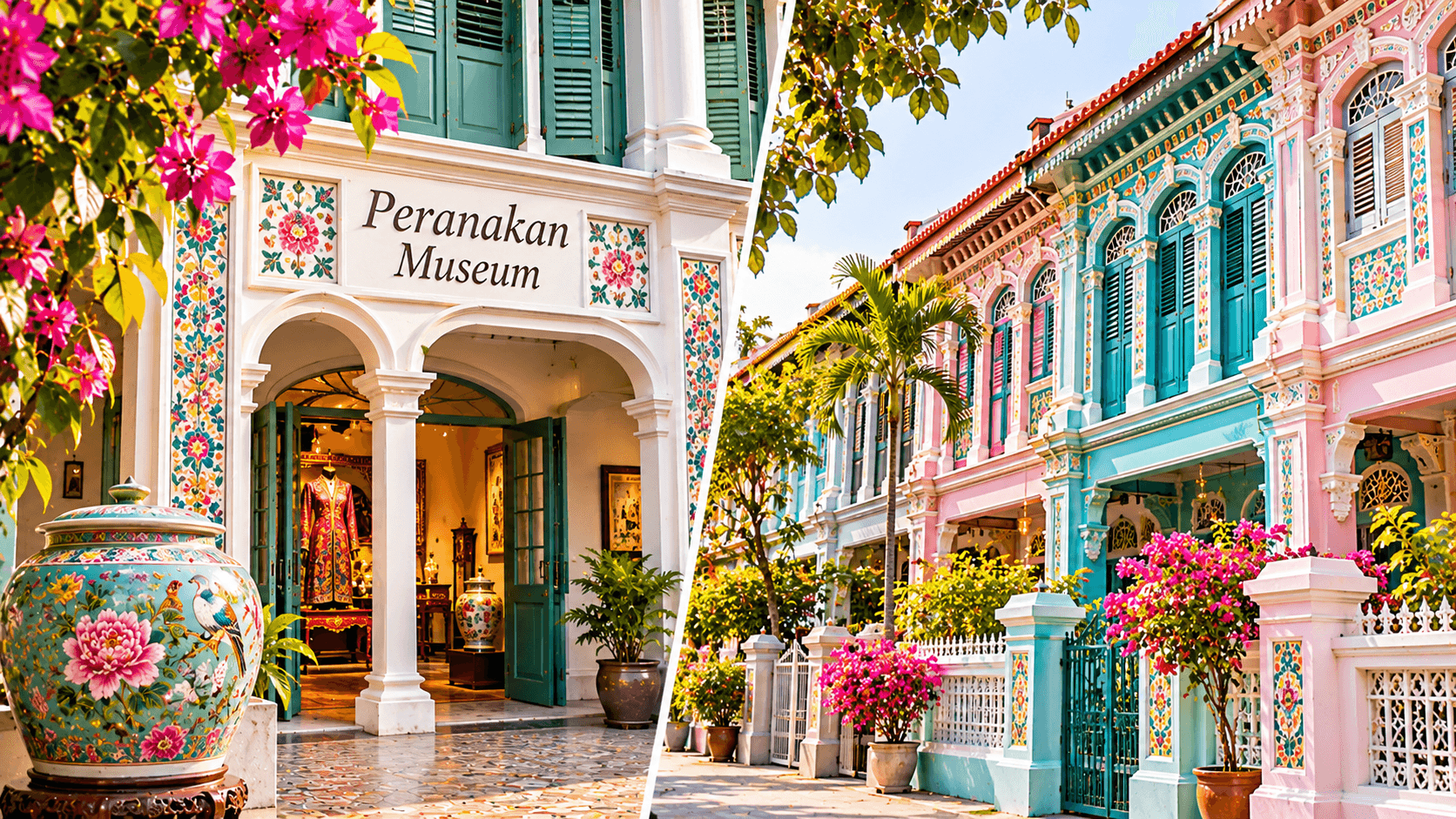
Peranakan culture is another important part of Singapore’s heritage, combining Chinese, Malay, and other regional influences in its food, clothing, architecture, and traditions. You can learn about this history in a museum or see it reflected in the shophouses and food of Katong-Joo Chiat.
7. Visit the Peranakan Museum
The Peranakan Museum is one of the best places to learn about Peranakan heritage and enjoy meaningful Singapore cultural experiences. Its galleries explore the community’s history, family life, religion, clothing, jewellery, food traditions, and decorative arts.
Look out for details such as beaded slippers, traditional clothing, ceramics, furniture, and wedding objects. These collections show how Peranakan families developed their own cultural practices while drawing influences from different parts of Southeast Asia.
The museum is located near Armenian Street and City Hall, so it can easily be combined with other central Singapore attractions.
Plan around 1–2 hours for the museum. If you want to understand Peranakan culture before visiting the neighbourhoods where it is still visible, this is a good place to start.

8. Explore Katong-Joo Chiat's Peranakan Heritage
For a different side of Peranakan culture, head east to Katong-Joo Chiat. The neighbourhood is particularly known for its rows of colourful Peranakan-style shophouses, especially along Koon Seng Road.
Rather than visiting a single attraction, spend time walking through the neighbourhood and looking at the architectural details. Decorative tiles, patterned façades, timber shutters, and narrow shophouses are some of the features that make the area distinctive.
Food is another reason to visit. Katong-Joo Chiat has long been associated with Peranakan and Eurasian food, as well as local dishes such as Katong laksa.
A simple route can include:
Koon Seng Road → Joo Chiat Road → East Coast Road
Allow around 2–3 hours if you want to walk through the heritage streets, take photos, and stop for a meal or coffee. The neighbourhood is residential as well as commercial, so keep noise low and avoid blocking entrances when taking photos.
Experience Singapore's Living Culture
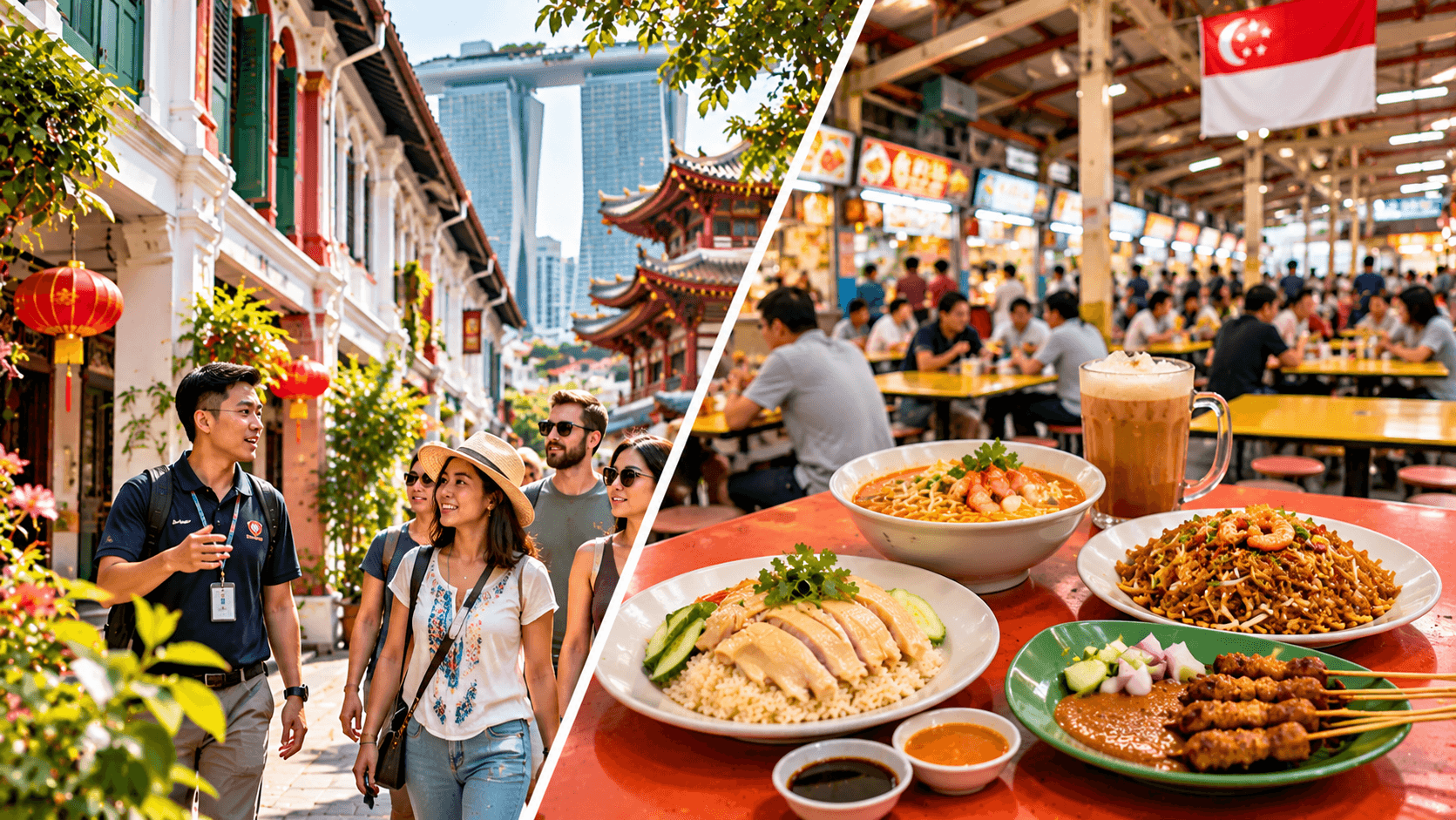
Singapore’s culture is not limited to museums and historic buildings. You can also enjoy authentic Singapore cultural experiences through neighbourhood walks, local guides, and the hawker centres where people eat as part of everyday life.
9. Take a Singapore Heritage or Cultural Walking Tour
A guided heritage walk can add context to places that you might otherwise simply pass by. Local guides can explain how different communities settled in Singapore, why particular streets developed around certain trades, and how older neighbourhoods have changed over time.
Choose a tour based on the area you want to understand rather than trying to cover the whole city in one walk. Popular options include:
- Chinatown for Chinese immigrant history, temples, and traditional trades
- Little India for Indian heritage, religious sites, and local businesses
- Kampong Gelam for Malay and Muslim history and architecture
- Katong-Joo Chiat for Peranakan architecture and food
Most walking tours take around 2–3 hours, so you can combine one with a meal or another nearby attraction.
If you prefer exploring independently, you can also follow a self-guided route using heritage information and maps. This gives you more flexibility to stop at temples, shops, cafés, or food centres along the way.
Explore Singapore's four ethnic neighbourhoods on a guided cultural tour and discover the traditions, architecture, and history that make each area unique.

10. Experience Singapore's Hawker Food Culture
Hawker food is one of the simplest ways to experience Singapore’s everyday food culture. Instead of treating hawker centres as just cheap places to eat, pay attention to the range of dishes and the different culinary influences represented at the stalls.
Try a few local favourites such as:
- Hainanese chicken rice
- Laksa
- Char kway teow
- Nasi lemak
- Roti prata
- Satay
- Hokkien prawn noodles
- Kaya toast and kopi
You can visit a hawker centre in the morning for breakfast, around lunchtime for a fuller selection, or in the evening when many centres become busier.
For a cultural experience, order from different stalls rather than choosing only one dish. You’ll get a better sense of the Chinese, Malay, Indian, and other influences that have shaped food culture in Singapore.
How to Plan a Cultural Day in Singapore
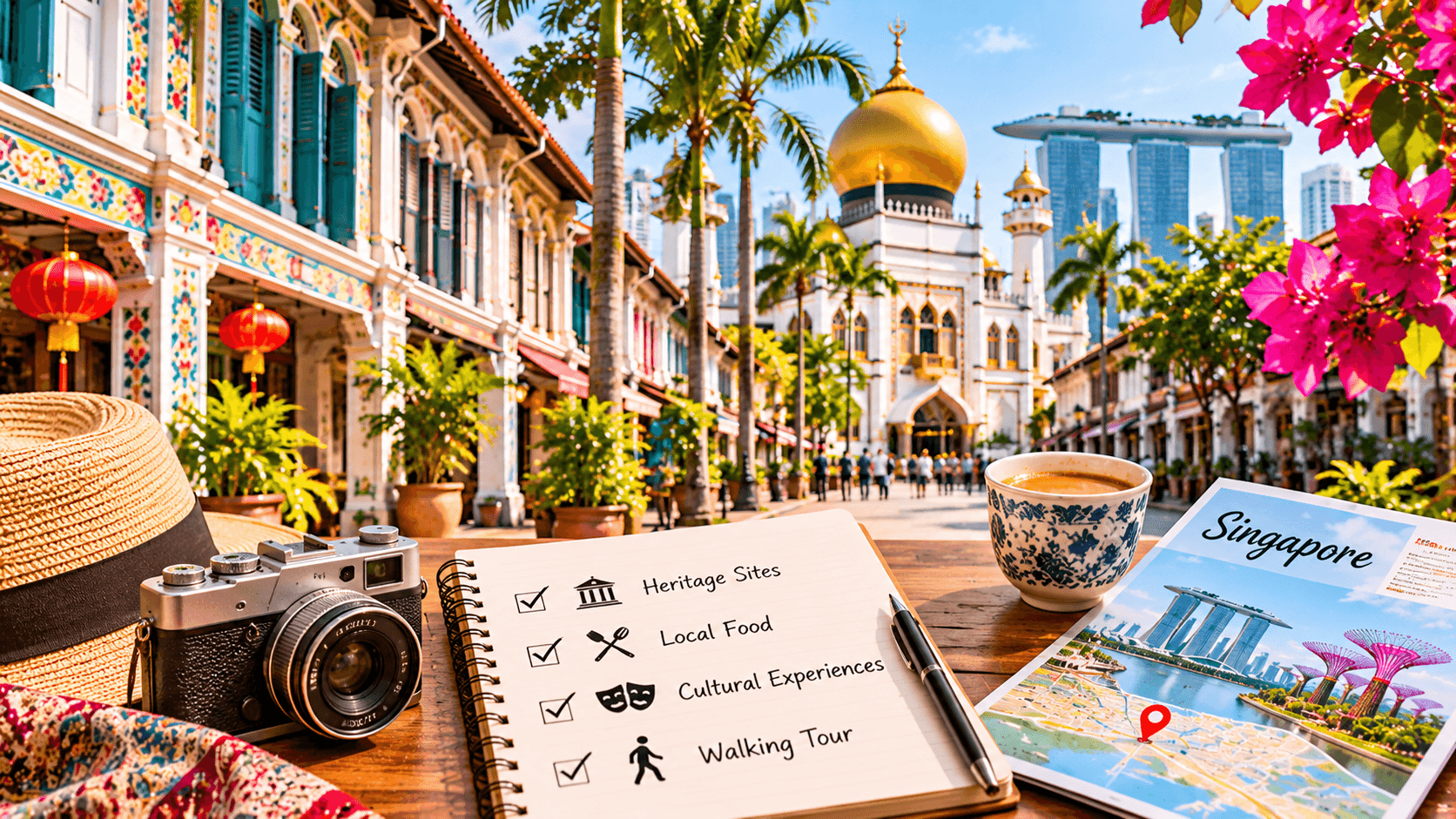
You can enjoy several Singapore cultural experiences in one day if you group nearby areas instead of travelling across the city between every stop. Keep some space between major attractions for food, shopping, and short walks through the neighbourhoods.
Combine Nearby Heritage Areas
Grouping attractions by location saves time and makes the day feel less rushed. For example, you can spend the morning exploring Chinatown and visit its temples, heritage streets, and food spots before moving to another part of the city.
Other useful combinations include:
- Little India: Indian Heritage Centre, Sri Veeramakaliamman Temple, Serangoon Road
- Kampong Gelam: Sultan Mosque, Bussorah Street, Arab Street, Haji Lane
- Katong-Joo Chiat: Koon Seng Road, Joo Chiat Road, local food spots
- Chinatown: Buddha Tooth Relic Temple, Pagoda Street, Chinatown Street Market
Mix Museums With Neighbourhood Exploration
Museums are useful for understanding the history behind the places you visit. After learning about a community indoors, continue outside to see its influence in architecture, shops, religious sites, and food.
For example, you can pair the Indian Heritage Centre with a walk through Little India or visit the Peranakan Museum before exploring Peranakan-style shophouses in Katong-Joo Chiat.
Leave Time for Local Food
Food is an important part of Singapore’s cultural experience, so avoid filling your itinerary with attractions from morning to night. Set aside time for a hawker centre, traditional coffee shop, or neighbourhood restaurant.
A simple approach is to plan:
- Breakfast at a local kopitiam
- Lunch at a hawker centre
- An afternoon snack or traditional dessert
- Dinner in the neighbourhood you are exploring
This also gives you a chance to experience how locals eat rather than treating food as just a quick stop between attractions.
Consider a Guided Cultural Tour
A guided walking tour can be useful if you want more context about Singapore’s history and communities. Instead of choosing a general city tour, look for one focused on a specific neighbourhood or cultural theme.
Chinatown, Little India, Kampong Gelam, and Peranakan heritage are all suitable for area-specific walks. Most Singapore cultural tours take a few hours, leaving you time to explore independently afterwards.
Check Opening Hours Before Visiting
Museums and heritage attractions have their own opening schedules, while religious sites may have specific visiting periods or restrictions. Check the latest details before building your itinerary.
Pay particular attention to:
- Museum opening hours and last admission
- Religious-site visitor rules
- Photography restrictions
- Festival or ceremony closures
- Public holiday opening hours
Checking these details in advance can save you from reaching a place when it is closed or when visitor access is limited.
Best Time to Experience Singapore's Culture
There is no single best time to explore Singapore’s culture. The right timing depends on whether you want quieter heritage streets, comfortable walking conditions, cultural festivals, or more time indoors at museums.
Best Time of Day for Heritage Neighbourhoods
Morning is a good time to explore Chinatown, Little India, and Kampong Gelam. You can walk through the streets before the afternoon heat and enjoy some of the best Singapore cultural experiences before combining your visit with lunch at a nearby hawker centre or restaurant.
Late afternoon is another useful option if you want to combine sightseeing with dinner. Singapore can be hot and humid, so carry water and plan short breaks during longer walks.
Experiencing Cultural Festivals and Celebrations
Visiting during a cultural festival can add decorations, markets, performances, and special events to your itinerary. Depending on your travel dates, you may see celebrations connected with:
- Chinese New Year
- Deepavali
- Hari Raya Aidilfitri
- Mid-Autumn Festival
- Vesak Day
Festival dates change each year, and some celebrations take place around active religious sites. Check the event schedule and any visitor guidelines before planning a visit.
Weekdays vs Weekends
Both weekdays and weekends have their advantages, depending on what you want to do.
| When | Better For | What to Expect |
|---|---|---|
| Weekdays | Museums, heritage walks, quieter sightseeing | Generally easier to explore attractions without large weekend crowds |
| Friday | Kampong Gelam and Muslim heritage | Some religious sites may have different visitor arrangements around Friday prayers |
| Saturday | Food, markets, busy neighbourhoods | More people around popular hawker centres and shopping areas |
| Sunday | Relaxed neighbourhood visits | Some smaller shops and businesses may have different opening hours |
What to Do During Rainy Weather
Singapore’s tropical weather means rain can arrive even when you have planned an outdoor day. Keep a few indoor attractions in your itinerary so you can still enjoy Singapore cultural experiences without losing the day.
Good rainy-day options include:
- Peranakan Museum
- Indian Heritage Centre
- Chinatown Heritage Centre
- Museums and galleries around the Civic District
- Hawker centres and traditional food shops
For light rain, you can also continue with a shorter neighbourhood walk and move indoors for food, coffee, or a museum when the weather gets heavier.
Tips for Experiencing Singapore's Culture Respectfully
Many of the cultural attractions in Singapore are also active places of worship and residential neighbourhoods. A few simple habits can help you explore these places without disturbing local communities or religious practices.
Dress Appropriately at Religious Sites
Temples, mosques, and other religious sites may have their own dress requirements. Wear clothing that covers your shoulders and knees when visiting places of worship, particularly when entering religious buildings.
Some sites provide coverings for visitors, but it is better not to rely on this. Keep a light scarf or suitable outer layer with you if you plan to visit several religious sites in one day.
Follow Photography Rules
Not every part of a religious site or museum can be photographed. Look for signs before taking pictures, and avoid photographing people during prayers or ceremonies without permission.
Keep in mind:
- Follow no-photography signs.
- Ask before photographing people closely.
- Avoid using flash where it is not permitted.
- Do not block entrances or worshippers while taking photos.
Respect Religious Customs
Singapore’s temples, mosques, and other religious buildings are active places of worship, not simply tourist attractions. They are also important places to understand Singapore traditions and enjoy respectful cultural experiences in Singapore. Follow instructions from staff or volunteers and keep your voice low when inside.
Depending on the site, you may also need to remove your shoes, avoid certain areas, or follow a particular route through the building.
Be Mindful When Visiting Residential Areas
Neighbourhoods such as Katong-Joo Chiat are living communities as well as heritage areas. Avoid treating residential streets like photo sets.
When exploring:
- Keep noise levels down.
- Do not enter private property.
- Avoid blocking driveways or entrances.
- Take photos from public areas.
- Give residents space when walking through quieter streets.
Try Local Food and Traditions Respectfully
Trying local dishes is a good way to experience Singapore’s culture, but remember that food traditions can have religious and cultural significance. Check ingredients if you have dietary restrictions and follow the practices of the food centre or restaurant you are visiting.
When eating at hawker centres, return your tray where required and keep your table clear for the next customer. Small habits like these make it easier to experience local food culture without disrupting the everyday routines of the people who use these spaces.
Final Thoughts
Singapore’s culture is best experienced by combining different parts of the city rather than visiting only one museum or landmark. Walk through Chinatown, explore Little India, spend time in Kampong Gelam, look for Peranakan architecture in Katong-Joo Chiat, and make room for local food along the way.
You can fit several of these Singapore cultural experiences into a single day by choosing nearby areas and planning around opening hours. For a deeper understanding of the city, combine heritage sites with neighbourhood walks and everyday experiences such as eating at a hawker centre.