
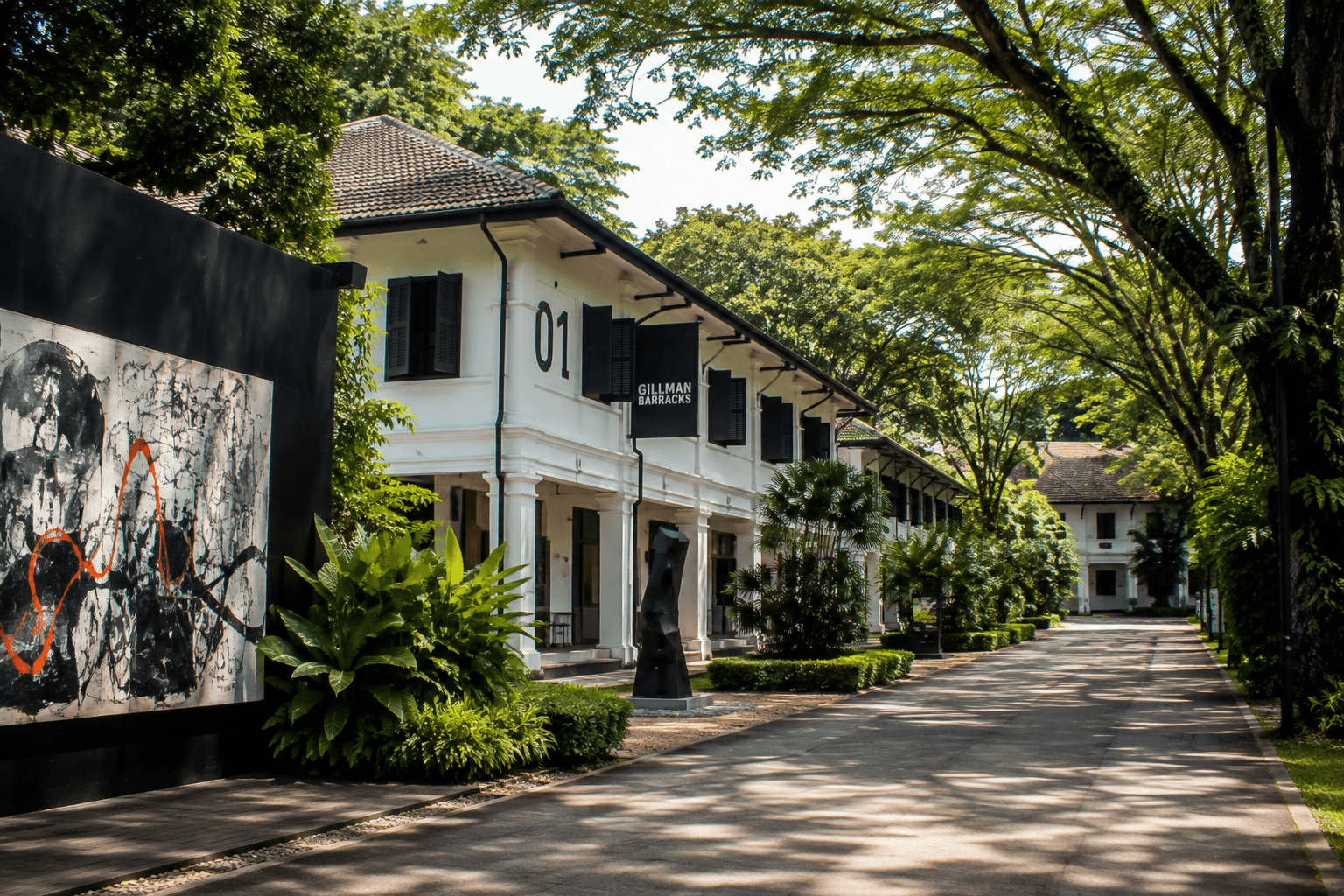
If you've already explored Singapore's major museums and want to see contemporary art in a completely different setting, Gillman Barracks Singapore is a place to put on your list. Tucked away on Lock Road, this former military compound now brings together art galleries, historic buildings and leafy paths in one unusual setting.
What makes a visit interesting is the contrast. You can walk into a gallery to see contemporary paintings, photography or experimental works, then step outside and find yourself surrounded by old barracks buildings and mature trees. There is no single museum route to follow, so you can move between exhibitions at your own pace and discover something different around each corner.
The galleries also give you a chance to see Singaporean and international contemporary artists in smaller, more intimate spaces. Whether you're genuinely into art or simply enjoy discovering unusual places, Gillman offers a different kind of cultural afternoon, where the artwork, architecture and history are all part of the experience.
This guide covers what to see at Gillman Barracks, the galleries worth knowing about, its military history, and how to make the most of your visit.
Gillman Barracks Singapore at a Glance
| Quick Detail | What to Know |
|---|---|
| Location | Lock Road Singapore |
| What it is | Former military barracks turned Singapore contemporary arts precinct |
| Main draw | Contemporary art galleries, exhibitions and heritage architecture |
| What you'll find | Art galleries, studios, creative spaces, outdoor areas and heritage buildings |
| Best for | Art lovers, photography, culture and visitors interested in Singapore's history |
| Time to allow | Around 2–3 hours for a relaxed visit |
| Admission | Precinct access is free; individual galleries may have their own admission policies |
| Best approach | Check current Gillman Barracks exhibitions and gallery opening days before visiting |
| Location highlight | The contrast between former military buildings, contemporary art and greenery |
What Is Gillman Barracks Singapore?
Gillman Barracks is a former military compound that has been repurposed as an arts destination. Its appeal comes from the combination of contemporary galleries and the original barracks setting, rather than from a single large museum or headline attraction.
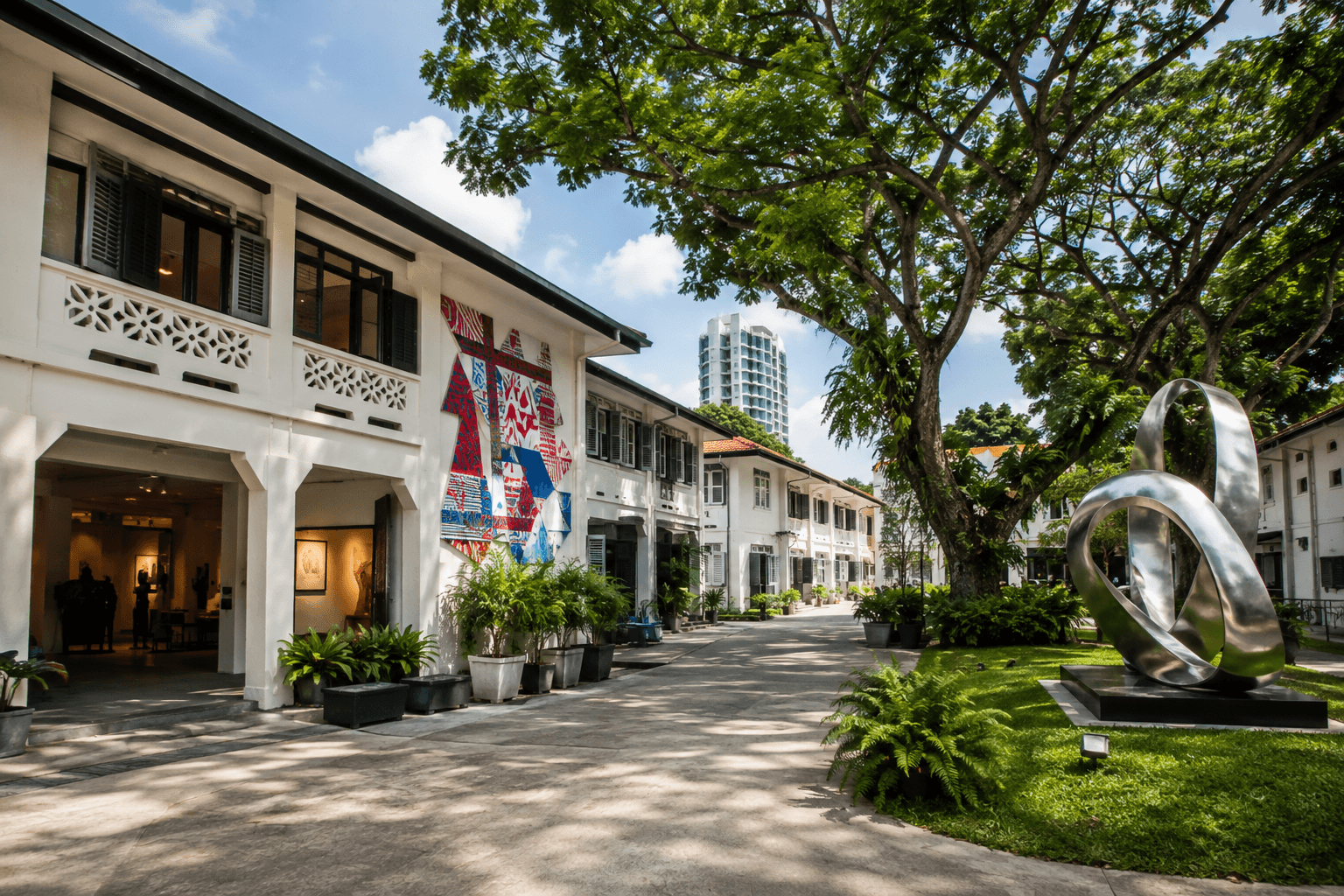
From Military Barracks to Contemporary Art Destination
The site was originally developed as a British military facility and later became home to the Singapore Armed Forces. In 2012, it was relaunched as an arts cluster, bringing commercial galleries and creative organisations into the conserved buildings.
Today, the former barracks are used by galleries and art businesses presenting modern and contemporary works by Singaporean and international artists. The buildings themselves are part of the experience.
Instead of entering a purpose-built gallery complex, you move between separate low-rise blocks along tree-lined paths, giving the visit a distinctly different atmosphere.
Why Gillman Barracks Is Different From Singapore's Main Museums
Gillman Barracks doesn't operate like the National Gallery Singapore or Singapore Art Museum. There is no single collection or fixed museum route to follow. Instead, individual galleries curate their own exhibitions, which means your experience depends on what is showing when you visit.
That also means you can:
- Walk into one gallery for a short exhibition visit.
- Spend longer at another if a particular artist interests you.
- Move between galleries without committing to an entire museum programme.
- Come back several months later and find a completely different selection of work.
For visitors who prefer smaller exhibitions and contemporary commercial galleries, this can feel much more intimate than a large museum.
Understanding the Site's Mix of Art, Heritage and Greenery
What makes it particularly distinctive is the setting. The art spaces occupy former military buildings, while trees, lawns and open areas remain between them.
As you walk around, you'll notice the contrast:
| Part of the Experience | What You Get |
|---|---|
| Contemporary art | Rotating exhibitions by Singaporean and international artists |
| Military heritage | Conserved barracks buildings and the original compound layout |
| Outdoor setting | Tree-lined paths, lawns and open spaces between galleries |
| Creative atmosphere | Smaller galleries, artist programmes and cultural events |
This combination means the visit isn't simply about going from one exhibition room to another. The buildings and grounds help explain why Gillman feels different from Singapore's conventional museum district.
The History Behind Gillman Barracks
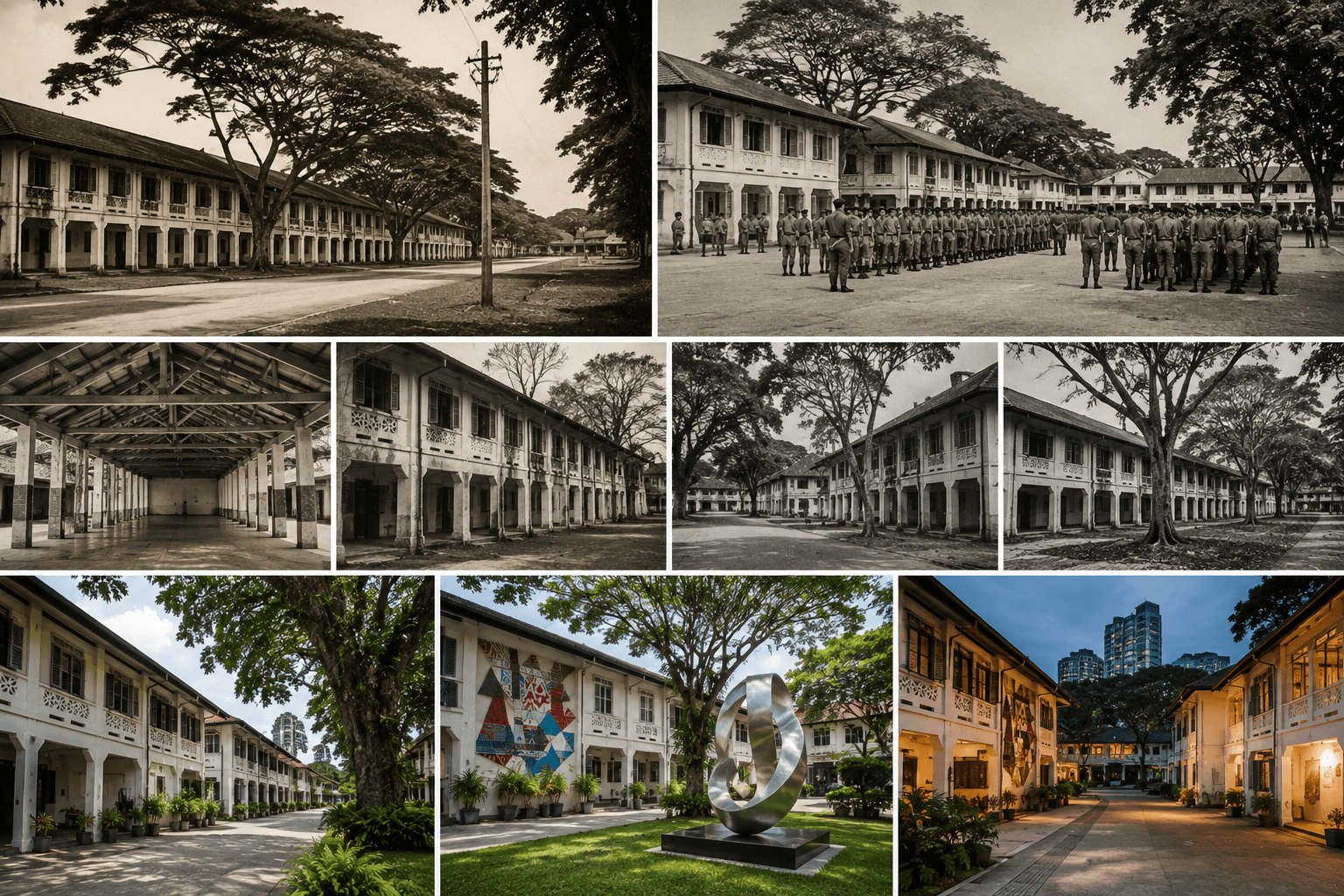
Before Barracks became associated with contemporary art, it was part of Singapore's military landscape. Its location near Alexandra Road made it strategically important, and the site later played a role in key events of the Battle of Singapore in 1942.
Why the British Military Built the Barracks
It was developed during the period when the British were strengthening Singapore's land and coastal defences. The barracks provided accommodation and facilities for British Army personnel stationed in the Alexandra area.
Its position was significant because it sat close to Alexandra Road, Pasir Panjang and the approaches to Singapore's western harbour area. The surrounding military zone included other defence facilities, creating a larger network rather than an isolated barracks.
Gillman Barracks During Singapore's Colonial Era
The site was an active military installation during the final years of British rule. British soldiers and their families lived and worked here, giving the compound a very different role from the arts precinct visitors see today.
The Barracks also became part of the fighting during the Japanese invasion of Singapore in February 1942. The area around Pasir Panjang and Alexandra was heavily contested as Japanese forces advanced towards the city.
That wartime connection gives the site more historical weight than its preserved architecture alone might suggest.
How the Military Site Became an Arts Precinct
After the British military presence ended, the site was used by the Singapore Armed Forces, including as a training ground.
Its next major transformation came in 2012, when it was repositioned as an arts destination. The former military buildings were adapted for galleries and creative organisations, bringing a new public function to the compound while retaining much of its original physical character.
The change can be viewed as a simple timeline:
| Period | Role of the Site |
|---|---|
| Colonial era | British military barracks |
| 1942 | Site involved in fighting during the Battle of Singapore |
| Post-war period | Continued military use |
| Later years | Used by the Singapore Armed Forces |
| From 2012 | Repositioned as an arts and cultural precinct |
The Heritage Details Still Visible Around the Grounds
The easiest way to appreciate Barracks' history is to look beyond the exhibitions. The low-rise barracks blocks, verandahs, wide internal spaces and layout of the compound still reflect its military origins. Rather than being replaced by a modern gallery complex, the buildings were adapted for their new purpose.
That creates an unusual contrast when you visit: a contemporary artwork might be displayed inside a building that once accommodated military personnel, while the surrounding paths and mature greenery still retain the atmosphere of the old compound.
The heritage isn't presented as a separate attraction. It is built into the setting you'll be moving through as you explore the galleries.
Explore Art at Gillman Barracks Singapore
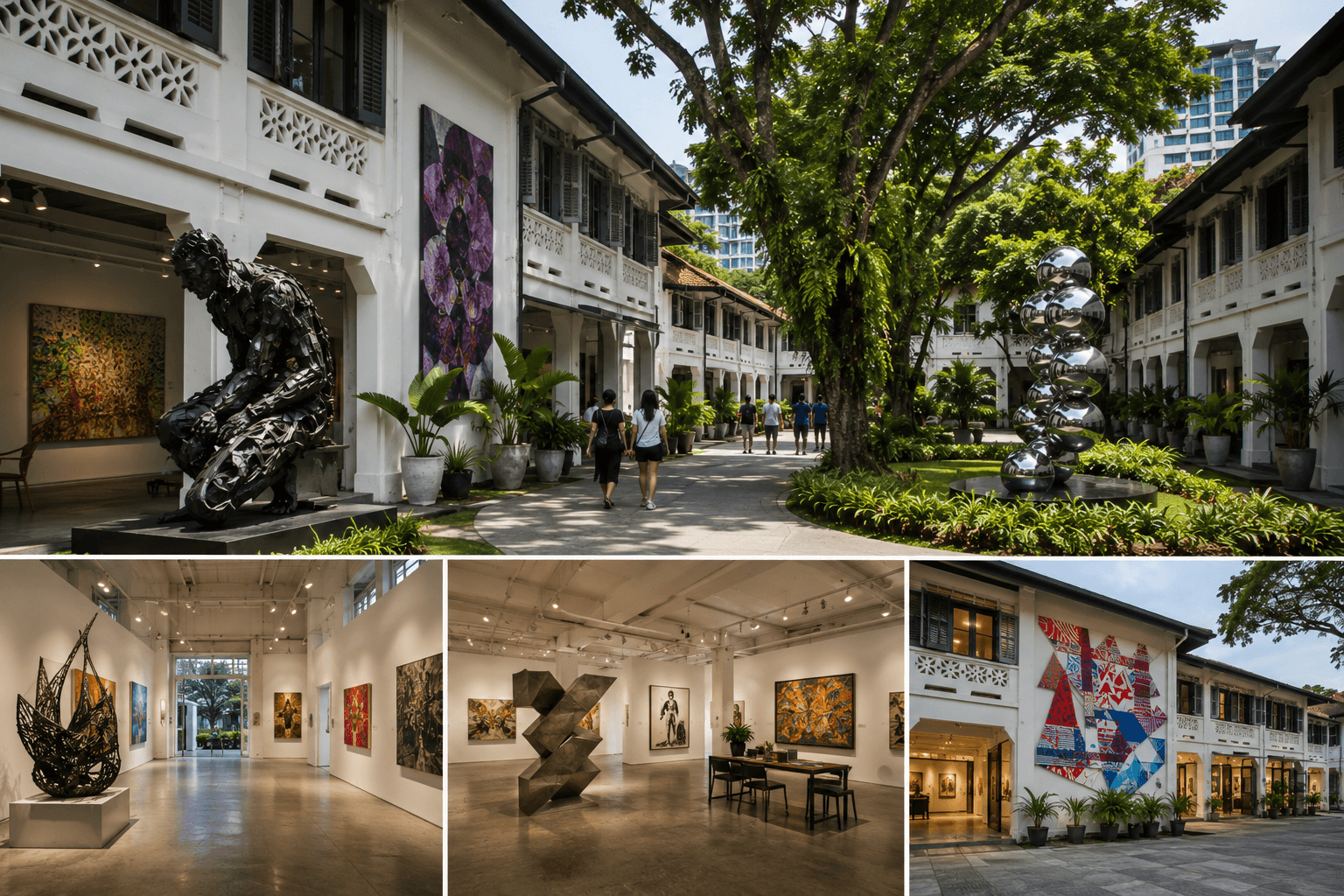
If you're visiting it specifically for the art, don't treat the precinct like a museum with one fixed route. The galleries have different programmes, artists and exhibition schedules, so the most useful approach is to check what's showing and then choose the spaces that match your interests.
Contemporary Galleries to Look Out For
Several galleries make up the current art scene at Barracks, each with a different focus.
| Gallery | What to Look For |
|---|---|
| FOST Gallery | Contemporary art with a strong focus on artists working in Singapore and Southeast Asia |
| Mizuma Gallery | Contemporary works from Singapore, Japan and the wider Asian art scene |
| Ota Fine Arts | International contemporary art, with a strong connection to Japanese and Southeast Asian artists |
| Yeo Workshop | Experimental and socially engaged contemporary art, particularly from Southeast Asia |
| Richard Koh Fine Art | Modern and contemporary works, with an emphasis on artists from Southeast Asia |
| Sundaram Tagore Gallery | International contemporary artists working across painting, photography, sculpture and mixed media |
| Yavuz Gallery | Contemporary practices from Asia and beyond, often featuring artists working across different media |
With the galleries spread across different buildings, you can combine your exhibition visits with a walk through the historic grounds. That makes it easy to choose two or three exhibitions instead of trying to explore everything.
How Exhibitions Change Throughout the Year
This is where Gillman Barracks differs from a conventional museum. There isn't a permanent exhibition that you can rely on seeing every time you visit.
For example, Mizuma Gallery's 2026 programme has included between arrangements, featuring Dylan Chan, Ezzam Rahman and Perception3, followed by Contemplative Materials, featuring Iswanto Soerjanto, Liu Liling and Sarah Isabelle Tan.
At Yeo Workshop, the 2026 programme has included Luke Heng's Mechanics of the Snap, Citra Sasmita's Women Who Carry the Mountain and Fearsome Engines, a group exhibition featuring Charles Lim, Debbie Ding, Hà Ninh Pham and Martin Constable.
The current programme also includes Scenes from Another Life: Imagined Narratives inspired by film, art and pop culture, featuring Noor Mahnun (Anum), Hoa Dung Clerget, Justin Loke, and Shayne Phua.
So if you have a particular artist or type of contemporary art in mind, check the individual gallery's current programme before making the trip.
Public Art and Installations Around the Former Barracks
The art experience doesn't stop at the gallery doors. Gillman Barracks has also hosted site-specific installations, outdoor works, and public programmes, particularly during major art events such as Singapore Art Week.
One good example is Gather at Gillman, held during Singapore Art Week 2026. The programme brought together exhibitions, food, and public activities across the precinct, turning the former barracks into a larger art-going environment rather than a collection of separate galleries.
Walking between the galleries reveals another layer of the art experience, where contemporary works stand out against old military buildings, mature trees, and open spaces. Outdoor setting is worth paying attention to as you move between buildings.
What First-Time Visitors Should Know About Gallery Visits
Don't assume every gallery operates on the same schedule. Opening days and hours can vary, and some galleries may close on Sundays, Mondays, or public holidays. A simple way to plan your visit is:
A simple way to plan your visit is:
- Choose two or three galleries with exhibitions that interest you.
- Check their current opening hours before leaving.
- Allow around 20–40 minutes per gallery, depending on the exhibition.
- Leave some time to walk between the buildings and explore the former barracks grounds.
- If you're visiting during Singapore Art Week or another major art event, allow extra time for talks, openings and temporary installations.
Most gallery visits are also free, but individual exhibitions or special programmes can have different arrangements.
If you're new to contemporary art, don't worry about understanding every work immediately. At Gillman Barracks, part of the fun is simply seeing how different artists use the same former military setting in completely different ways.
Gillman Barracks Singapore Beyond the Galleries
The galleries are the main reason to come to Barracks, but the space between them is part of the experience too. Instead of treating the precinct as a collection of gallery entrances, take some time to notice how the former military compound has been adapted for its new role.
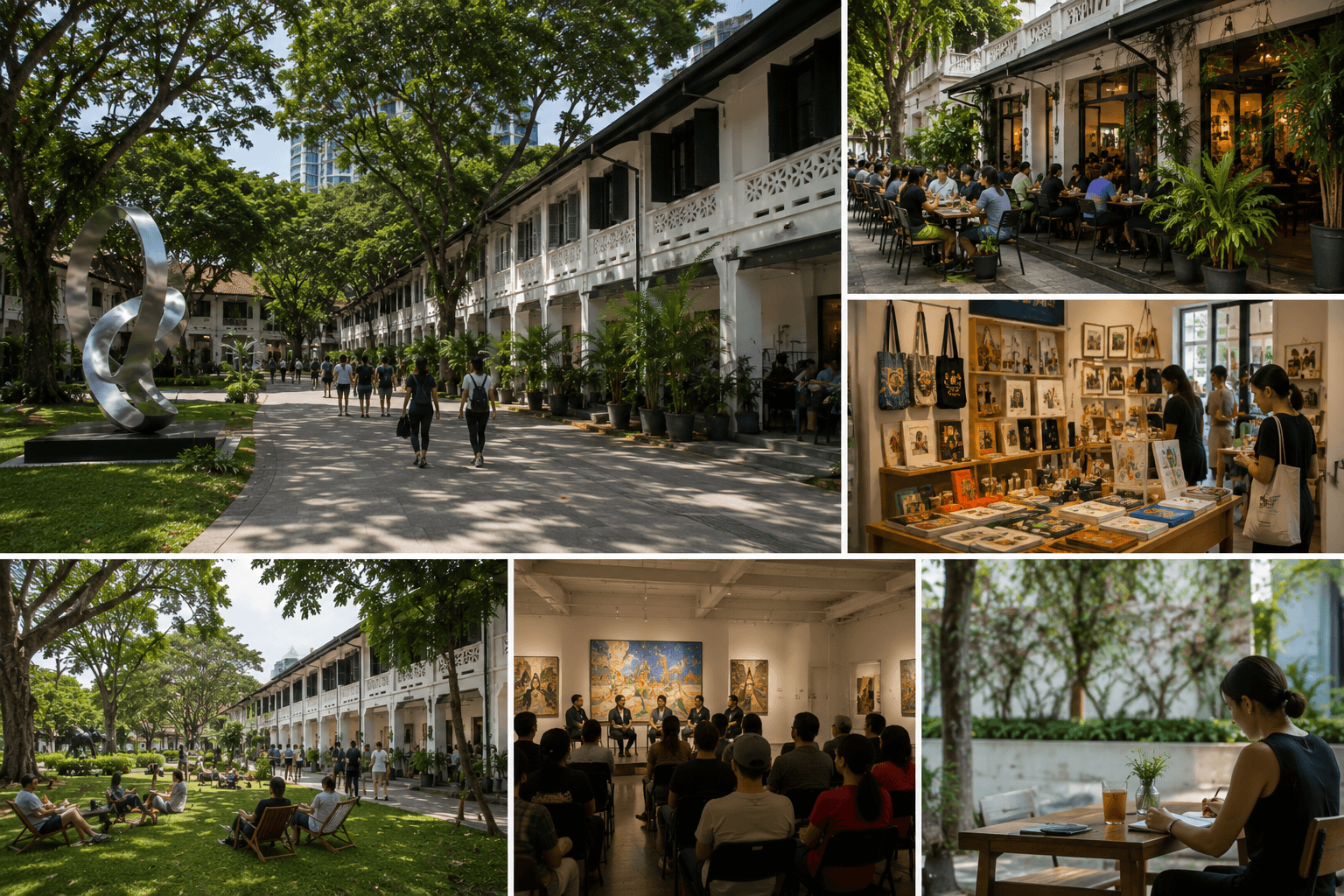
Walk Through the Historic Grounds
Give yourself some time to walk between the buildings rather than going straight from one exhibition to the next.
The former barracks are arranged around open courtyards, lawns and tree-lined paths, and the buildings retain their low-rise military character. This makes the short walks between galleries feel quite different from moving between rooms in a conventional museum.
If you're visiting in the afternoon, the shaded areas around the buildings also give you useful places to pause between exhibitions.
Military Architecture at Gillman Barracks
One of the most interesting parts of Gillman Barracks is the contrast between its military-era architecture and its current role as an arts precinct. The buildings retain features linked to their original use, while their interiors now house contemporary galleries and creative organisations.
As you explore the grounds, look for:
- Low-rise barracks blocks
- Covered walkways and verandahs
- Repeated windows and doors
- Open spaces between the buildings
- The campus-like layout of the former compound
The contrast becomes more noticeable as you move between galleries. The exhibitions can change completely from one building to another, while the same historic setting continues to shape the experience.
Rather than presenting the site's military past through a separate museum display, Gillman Barracks lets you experience that history through the architecture, layout, and buildings themselves.
Check for Events Before You Visit
The programme can change significantly during major art periods, particularly Singapore Art Week. If you're visiting during one of these periods, check for scheduled artist talks, exhibition openings, workshops, and special programmes before you arrive.
These can turn a straightforward gallery visit into a fuller afternoon at the precinct. If there isn't a major event taking place, you can keep things simple: choose the galleries you want to see, allow time to walk between them, and explore the grounds at your own pace.
When Is the Best Time to Visit Gillman Barracks?
There isn't one perfect season for Gillman Barracks. The exhibition calendar matters much more than the weather, because the galleries are the main reason most visitors make the trip. Your timing can also change the atmosphere from a busy art-event afternoon to a much quieter gallery visit.
Visiting During Major Art Events
If you want to see Gillman at its most active, plan your visit around Singapore Art Week, usually held in January. During the event period, the precinct can have a much fuller programme, with new exhibitions, gallery openings, artist-led activities, talks and other public events happening across the site. This is the better option if you enjoy:
- Seeing several exhibitions in one visit
- Meeting artists or gallery teams
- Special installations and temporary projects
- A busier, more social art atmosphere
The trade-off is that the precinct can feel considerably busier than it does during an ordinary weekday.
Why Exhibition Schedules Matter More Than the Season
Unlike an outdoor attraction where the weather determines much of the experience, Gillman Barracks is driven by what's happening inside its galleries. A visit in February could be far more interesting to you than one in November if the galleries are showing exhibitions that match your interests.
Before travelling, check:
- Which galleries are currently open
- Current and upcoming exhibitions
- Exhibition closing dates
- Gallery opening days and hours
- Any talks or special programmes scheduled for that day
This is particularly important because there is no single exhibition programme covering the whole precinct. Each gallery manages its own schedule.
How to Plan a Quieter Gallery Visit
If you'd rather look at the artwork without crowds, choose a weekday outside a major art event. Late morning or early afternoon can work well, as you have more time to move between galleries without the heavier visitor traffic that can accompany exhibition openings and weekend programmes.
For a relaxed visit, choose two or three current exhibitions rather than trying to enter every gallery. You'll have enough time to actually look at the work, walk around the former barracks, and stop for a break without turning the visit into a checklist.
If you're particularly interested in photography, painting, sculpture or Southeast Asian contemporary art, build your visit around the galleries currently showing that type of work rather than choosing a date first.
Final Thoughts
Gillman Barracks is a good choice when you want to experience Singapore's art scene without the formality of a traditional museum. You can spend an afternoon moving between contemporary exhibitions, then step outside into the old military grounds and see how the same buildings have taken on a completely different purpose.
What makes the visit more memorable is that the setting is part of the story. You're not simply looking at contemporary art in a gallery; you're seeing it inside former military buildings, surrounded by greenery and traces of the site's earlier life.
If you're visiting for the first time, don't try to rush through every gallery. Pick the exhibitions that genuinely interest you, give yourself time to explore the grounds between them, and let the contrast between art, architecture, and history shape the visit.
For travellers who have already explored Singapore's major museums, it offers something different: a smaller, more exploratory art experience where you decide what catches your attention rather than following a fixed museum route.