
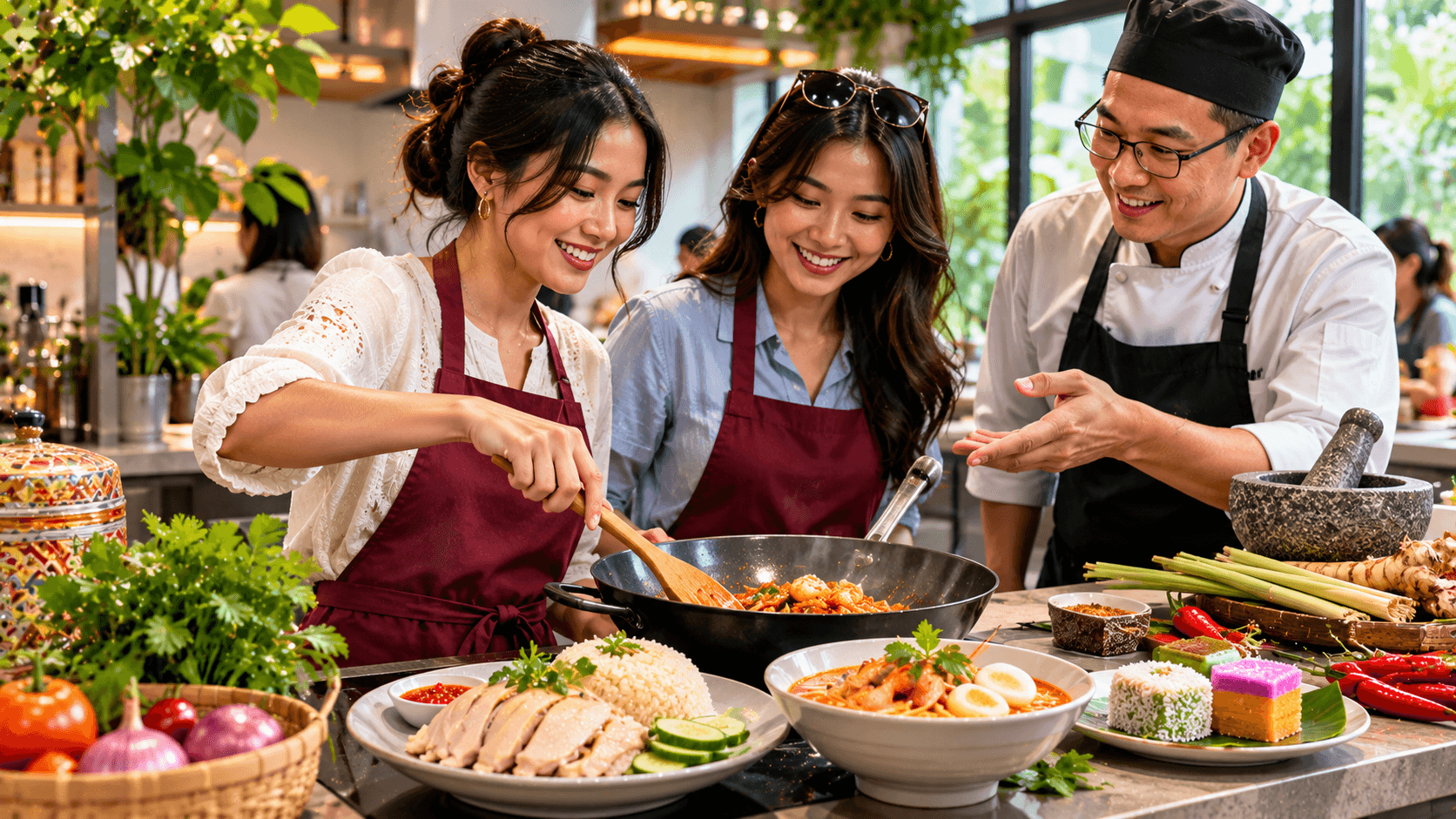
5 Best Cooking Classes in Singapore
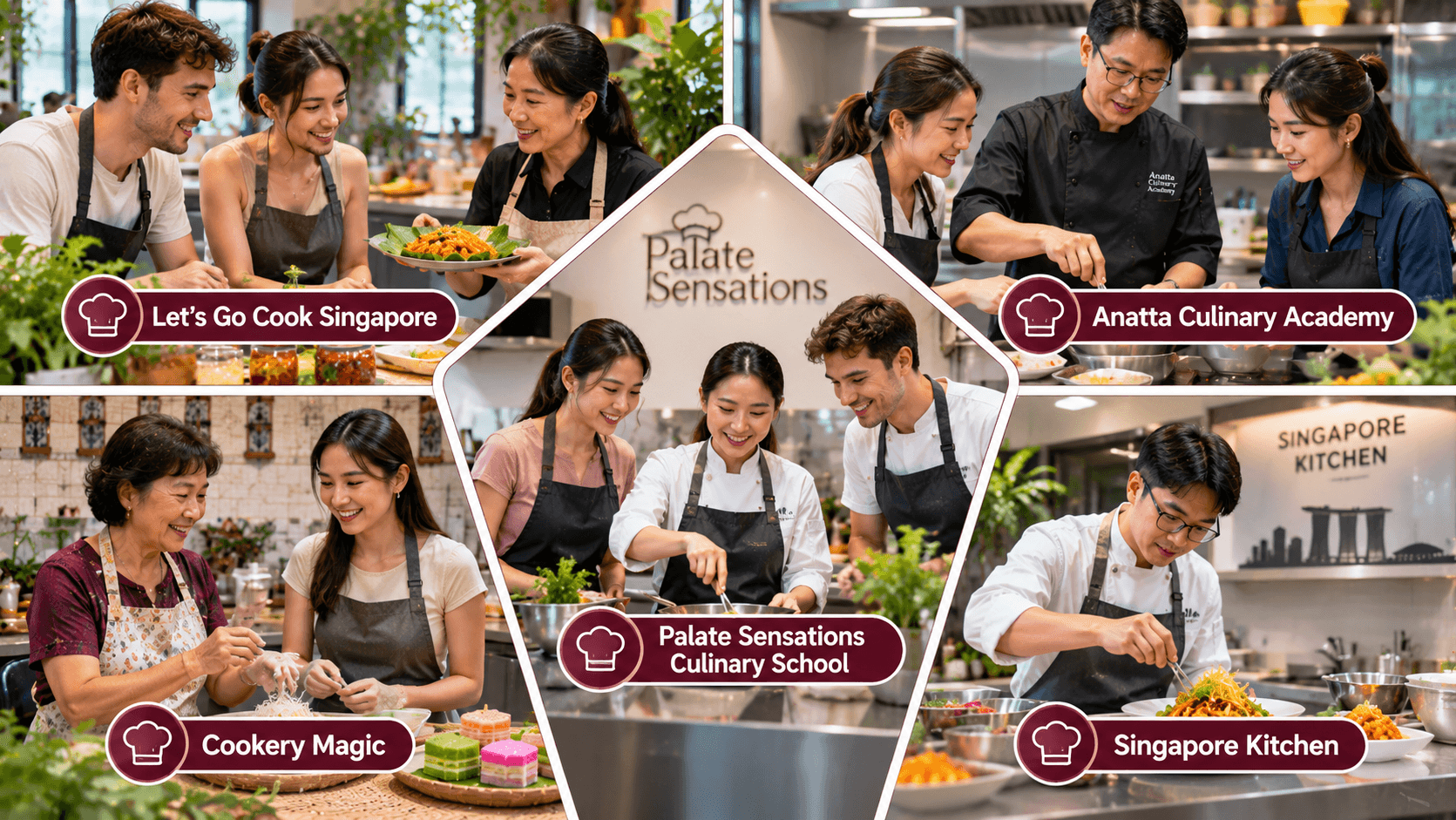
1. Let’s Go Cook Singapore
Let’s Go Cook Singapore is a good choice for travellers who want to learn local recipes and understand the food traditions behind them. Its hands-on classes cover familiar Singaporean favourites, including Hainanese chicken rice, laksa, fried Hokkien noodles and traditional desserts.
One popular option is the Market to Table Culinary Experience. It starts with a visit to a local wet market, where participants learn how to select and buy ingredients. The group then heads to the cooking studio to prepare dishes using those ingredients.
Other experiences include:
- Flavours of Singapore: A practical cooking session featuring local main dishes and a traditional dessert or side.
- Discover Hainan: Combines a short cultural walking tour with a lesson in Hainanese dishes.
- Discover Hokkien: Introduces participants to Hokkien food traditions through a walking tour and cooking session.
- Pandan Party: Focuses on local desserts made with pandan.
This is one of the more suitable options if you want a Singapore cooking experience that combines food, culture and local market visits. It also works well for visitors who want more than a standard cooking demonstration.
2. Anatta Culinary Academy
Anatta Culinary Academy offers hands-on cooking classes Singapore covering local favourites, Asian cuisines and international dishes. Its local food workshops are particularly interesting for anyone who wants to learn traditional recipes and practical cooking techniques.
Depending on the scheduled class, you may learn to prepare dishes such as bak kut teh, wanton mee, Hainanese curry rice and Peranakan specialities. Some sessions also focus on traditional kueh and other local desserts.
Examples of its local Singapore cooking workshops include:
- Bak Kut Teh: Learn to prepare the peppery pork rib soup with traditional side dishes.
- Wanton Mee: Make egg noodles and wanton wrappers from scratch, then prepare the filling and signature sauce.
- Ayam Buah Keluak: Explore a classic Peranakan dish and learn how to prepare its distinctive spice paste and gravy.
- Local Dessert Classes: Practise traditional methods used to make Malay and Peranakan sweets.
Anatta is worth considering if you want a more focused lesson on a particular dish rather than a general introduction to Singaporean cuisine. Check its class schedule before booking, as individual workshops run on selected dates.
3. Palate Sensations Culinary School
Palate Sensations Culinary School is suited to people who want to develop broader cooking skills while exploring different cuisines. The school offers hands-on Asian and Western cooking and baking classes, with professional chefs guiding participants through recipes and techniques.
Its programme covers a range of culinary interests, including Chinese, Peranakan and other Asian cuisines. Rather than simply following instructions, students learn the techniques and principles behind each recipe. This can help you understand how ingredients work together and how to recreate dishes at home.
The school also offers classes for adults and children, along with private events and group cooking activities. Its studio is located at Biopolis, within walking distance of Buona Vista MRT station.
Choose Palate Sensations if you want a structured cooking lesson with room to explore different cuisines. It may be a better fit for food enthusiasts interested in improving their overall kitchen skills rather than learning only one traditional Singaporean dish.
4. Cookery Magic
Cookery Magic offers a more personal approach to learning local food. Its classes take place in a home-kitchen setting, where participants learn to prepare Singaporean and Asian dishes while hearing the stories and traditions behind them.
The menus cover several regional styles, including Nonya, Malay and Chinese cooking. Depending on the session, you may learn recipes such as Nonya laksa, chicken satay, char kway teow, curry dishes and local desserts.
A typical class teaches three to four dishes over approximately three hours. You can join an existing session or arrange a private cooking experience with friends or family. There is also a special Pulau Ubin cooking experience for those who want to explore a different side of Singapore's food heritage.
Cookery Magic is a good option if you prefer a relaxed setting and smaller groups. It allows you to learn traditional recipes in a home environment rather than a formal culinary school.
5. Food Playground
Food Playground is another option for visitors who want to explore Singapore's food culture through practical cooking. Its Cultural Cooking Class takes place in Chinatown and introduces participants to local ingredients, traditional recipes and the multicultural influences behind Singaporean food.
The three-hour experience includes an introduction to local food traditions, a guided cooking lesson and a shared meal featuring the dishes prepared during the session. Recipes vary by day, with examples including laksa, nasi lemak, curry chicken, char kway teow and traditional desserts.
A few details make this class worth considering:
- Beginner-friendly format: Instructors guide participants through each stage, so previous cooking experience is not required.
- Local food focus: Lessons explore dishes associated with Singapore's Malay, Chinese and Peranakan food traditions.
- Shared meal: Participants sit down together to enjoy the food they have prepared.
- Dietary options: The provider states that it can accommodate vegetarian and gluten-free requirements, with other requests discussed before booking.
Food Playground is particularly suitable for tourists who want a social, hands-on introduction to Singaporean cuisine. Its Chinatown location also makes it easy to combine the class with a visit to nearby heritage attractions.
What Can You Learn to Cook in Singapore?
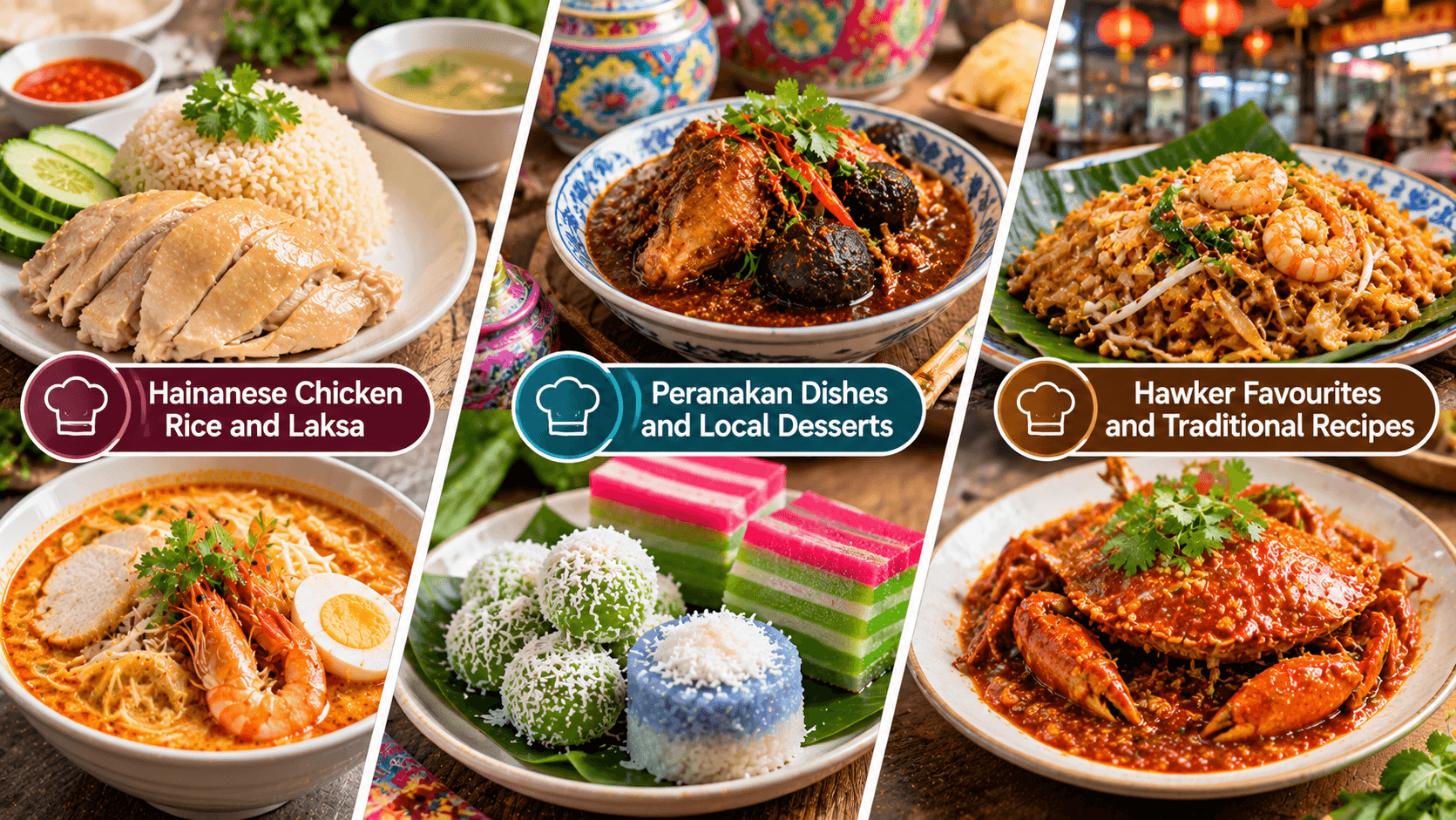
Most local cooking classes in Singapore teach a mix of Chinese, Malay and Peranakan recipes. Depending on the school and session, you can learn to prepare popular dishes such as Hainanese chicken rice, laksa, nasi lemak, char kway teow and traditional local desserts. Some workshops also introduce the ingredients, cooking methods and cultural influences behind these recipes.
Hainanese Chicken Rice and Laksa
Hainanese chicken rice and laksa are two popular dishes to look for when choosing a local food cooking class in Singapore. Both are closely associated with the city's food culture, but they require different preparation methods and ingredients.
- Hainanese Chicken Rice: Learn to poach chicken, prepare fragrant rice using chicken stock and make the accompanying chilli and ginger sauces. Some lessons also explain how pandan leaves and other ingredients add flavour to the rice.
- Laksa: Prepare rice noodles with a rich, spicy coconut-based broth. The lesson may cover how to blend spices and aromatics into a laksa paste before adding ingredients such as prawns, fish cake and tofu puffs.
- Cooking techniques: Depending on the class, you may also practise preparing stocks, balancing spices and combining sauces to create the familiar flavours of these dishes.
These recipes are a good starting point if you want to learn to cook Singapore food at home. However, check the class menu before booking, as not every workshop covers both dishes.
Peranakan Dishes and Local Desserts
Peranakan cuisine is another important part of Singapore's food heritage. It combines Chinese and Malay influences, using ingredients such as coconut milk, chilli, lemongrass, galangal and aromatic spice pastes.
A Peranakan cooking class in Singapore may introduce you to recipes such as:
- Ayam Buah Keluak: Chicken cooked in a rich gravy with buah keluak nuts, which give the dish its distinctive earthy flavour.
- Nyonya Laksa: A noodle dish served in a spicy coconut-based broth made with a blend of herbs and spices.
- Nonya Curry: A fragrant curry prepared with a spice paste, coconut milk and meat or vegetables.
- Traditional Kueh: Colourful bite-sized sweets made with ingredients such as glutinous rice flour, coconut milk, pandan and palm sugar.
Some workshops also teach local desserts, including ondeh-ondeh, a soft pandan-flavoured ball filled with melted gula melaka and coated in grated coconut. These lessons are useful if you want to explore more than Singapore's well-known main dishes.
Hawker Favourites and Traditional Recipes
Singapore's hawker food reflects the city's multicultural communities and long-standing cooking traditions. Some hands-on cooking classes introduce participants to these everyday favourites, showing how to prepare the sauces, spice pastes and ingredients that give each dish its flavour.
Depending on the workshop, you may learn to make:
- Char Kway Teow: Flat rice noodles stir-fried over high heat with soy sauce, garlic, bean sprouts and other ingredients.
- Nasi Lemak: Fragrant coconut rice served with sambal, anchovies, peanuts, egg and other accompaniments.
- Hokkien Mee: Egg and rice noodles cooked with seafood and a rich prawn-based stock.
- Chicken Satay: Marinated meat grilled on skewers and served with a thick peanut sauce.
- Kaya: A sweet coconut and egg jam flavoured with pandan, commonly enjoyed with toast.
These dishes offer a taste of the recipes found in local hawker centres and home kitchens. If you're interested in Singapore's food culture, choose a workshop that explains the origins of its dishes as well as the techniques used to prepare them.
How to Choose a Cooking Class in Singapore
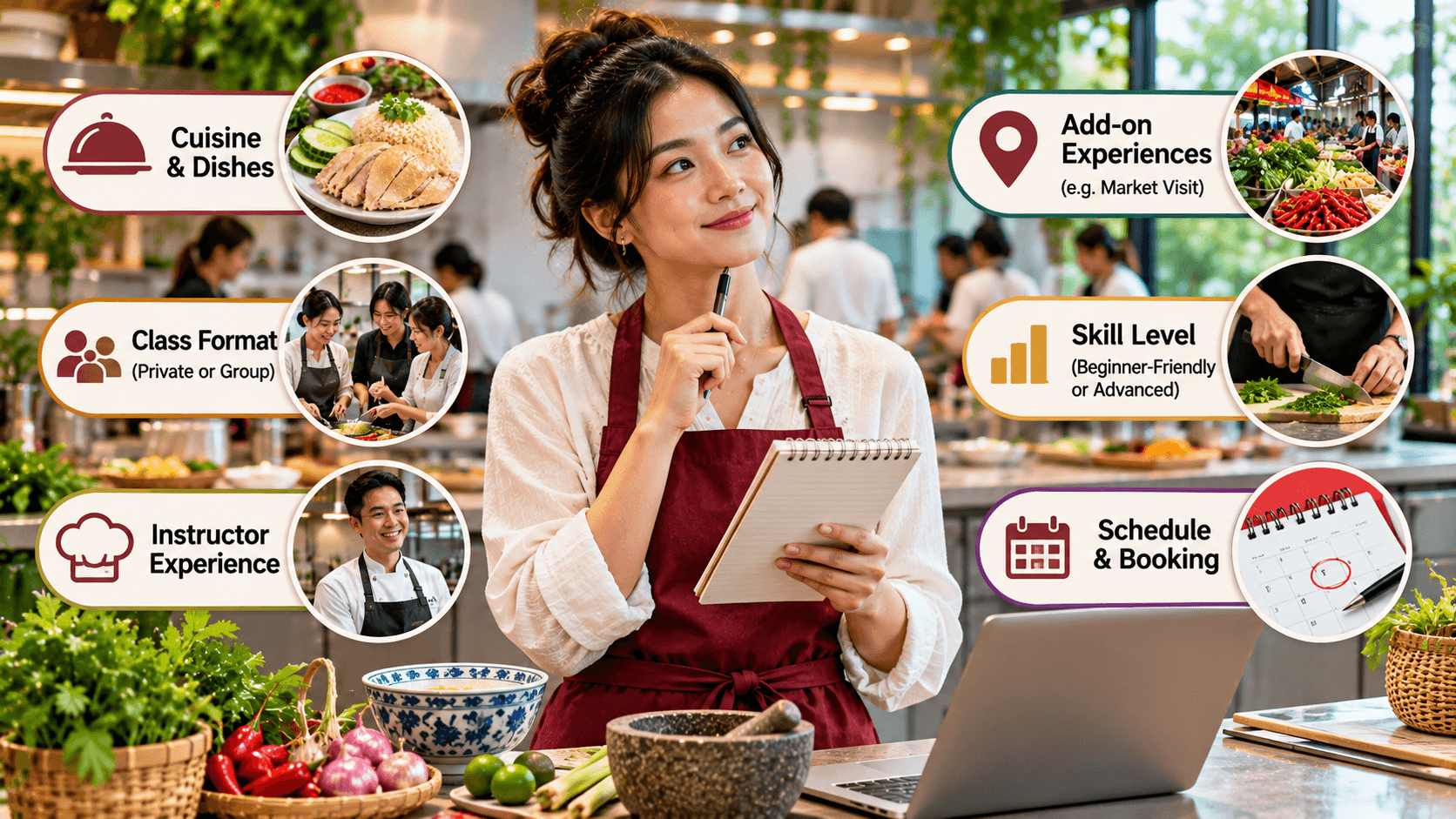
The right cooking class depends on what you want to learn, how much time you have and whether you prefer a private lesson or a group experience. Before booking, compare the class menu, duration, group size, location and whether ingredients and meals are included.
These factors can help you choose an experience that suits your visit.
Classes with Local Market Visits
A market tour and cooking class in Singapore is a good choice if you want to understand how local ingredients are selected and used. These experiences usually begin with a guided visit to a wet market, followed by a practical lesson where you prepare dishes using the ingredients you have explored.
During a market visit, you may learn about:
- Local ingredients: Identify fresh herbs, spices, seafood, vegetables and other common cooking ingredients.
- Ingredient selection: Understand how to choose fresh produce and recognise ingredients used in traditional recipes.
- Food traditions: Learn how different ingredients feature in Chinese, Malay and Peranakan cooking.
- Practical cooking: Use the ingredients in a guided session to prepare a local meal.
Let’s Go Cook Singapore offers a Market to Table experience that combines ingredient shopping with cooking. This format is especially useful for visitors who want to explore Singapore's food culture beyond the finished dishes.
Private and Group Cooking Experiences
Cooking workshops in Singapore are available in both private and shared formats. Your choice depends on whether you prefer a social activity or a more personal lesson.
Group classes usually bring together participants who follow the same menu and prepare dishes under an instructor's guidance. They are suitable for solo travellers, couples and small groups who enjoy meeting other food enthusiasts.
Private classes offer a more personalised experience. You may be able to request a particular menu, adjust the session to your group's interests or arrange a cooking activity for a family or corporate event.
Before booking, check:
- Maximum and minimum group sizes.
- Whether the class follows a fixed menu.
- If private sessions are available on your preferred date.
- Whether the price is charged per person or per group.
- If the experience includes a meal after cooking.
Classes for Beginners and Families
Many hands-on cooking classes in Singapore welcome beginners, so you don't need professional kitchen experience to participate. Instructors generally explain the recipes, demonstrate cooking techniques and guide participants through each step.
For families, look for workshops that offer child-friendly menus, suitable equipment and age-specific participation rules. Some schools also organise special sessions for children and teenagers.
Before choosing a class, consider these points:
- Beginners: Look for guided lessons with simple recipes and clear instructions.
- Families: Check the minimum age, supervision rules and whether children can participate independently.
- Couples: Consider small-group or private sessions where you can prepare a meal together.
- Food enthusiasts: Choose a specialised workshop focused on Peranakan cuisine, traditional desserts or a particular local dish.
If you're travelling with children or have specific dietary needs, contact the provider before booking to confirm whether the class can accommodate your requirements.
What to Know Before Booking a Cooking Class
Before booking a cooking class in Singapore, check the session duration, menu, price and what's included in the experience. Most practical workshops provide ingredients and cooking equipment, but inclusions can vary between providers.
Keep these points in mind:
- Class duration: Sessions may last around two to four hours, depending on the menu and whether a market visit is included.
- What's included: Check whether the fee covers ingredients, equipment, recipe notes and the meal you prepare.
- Booking requirements: Some classes require advance reservations, especially private sessions and small-group workshops. Confirm your date and arrival time before visiting.
- Dietary requirements: Inform the provider about allergies, vegetarian preferences or other dietary needs before booking. Not every menu can be adjusted.
- Clothing: Wear comfortable clothes and closed-toe shoes. Aprons may be provided, but it's best to confirm this beforehand.
- Location and transport: Check the cooking studio's address and nearest MRT station so you can plan your journey.
- Cancellation policy: Review the rescheduling and refund terms, particularly if you're visiting Singapore for a short stay.
If you're a tourist, also check whether the class offers instructions in English and whether you receive recipes to take home. These small details can make the experience easier to enjoy and help you recreate the dishes after your trip.
Final Thoughts
The best cooking classes in Singapore let you explore local food through hands-on lessons, traditional recipes and practical cooking techniques. From learning to prepare Hainanese chicken rice and laksa to discovering Peranakan dishes and local desserts, each experience offers a different way to understand Singapore's food culture.
Let’s Go Cook Singapore is worth considering for market visits, while Cookery Magic offers a home-style learning experience. Anatta Culinary Academy, Palate Sensations Culinary School and Food Playground provide other options for exploring local recipes and cooking skills.
Before booking, compare the menus, class formats, prices and inclusions. Choose an experience that matches your interests, and you'll leave with more than a good meal, you'll also have new recipes and techniques to try at home.